---------------------------------
Address
Phone: +251 988 111 222
Need help or have a question?
Contact us at: info@driveethiopia.com
Addis Ababa, Ethiopia
---------------------------------
Address
Phone: +251 988 111 222
Need help or have a question?
Contact us at: info@driveethiopia.com
Addis Ababa, Ethiopia


What to pack for Ethiopia, region by region: the core list, then the Simien and Bale highlands, Danakil heat, the Omo Valley and church dress codes.

Ethiopia sits nine degrees north of the equator, and almost everywhere you are likely to go is more than two thousand metres above sea level. Pack for the first fact and you will spend your evenings cold. That is the mistake, and it is close to universal among first-time visitors.
The core list, for almost every trip:
Then add what your route needs. The Simien and Bale highlands want serious cold-weather kit and a warm sleeping bag. The Danakil wants heat protection and far more water. The Omo Valley wants sun cover and protection from mosquitoes. The region-by-region table further down sets it out.
The rest of this guide covers what earns its space in the bag, plus the two things that are rules rather than suggestions: what you wear into a church, and what you are allowed to point a camera at.
Addis Ababa sits at 2,355 metres. The city spreads up and down the hills either side of that, so the figure you read depends on where in it the measurement was taken, but the number that matters is the one in front of the comma. You are well over two kilometres up.
Elevation, not latitude, is what sets the temperature here. In September the daily high in Addis averages around 20°C and the overnight low around 12°C. Neither of those is extreme. What catches people out is how quickly you cross the gap between them. The sun goes down, and inside an hour you want a jacket that is sitting in a wardrobe at home.
Addis is below 2,500 metres, which is where NaTHNaC puts the threshold for altitude illness, so most visitors register the height as breathlessness on stairs rather than as anything medical. Our guide for first-time visitors goes into where on an itinerary the altitude does start to count, because the Simien and Bale highlands are a different proposition.
The country asks for a wider temperature range in a single day than most trips do. Build for that and the rest is ordinary.
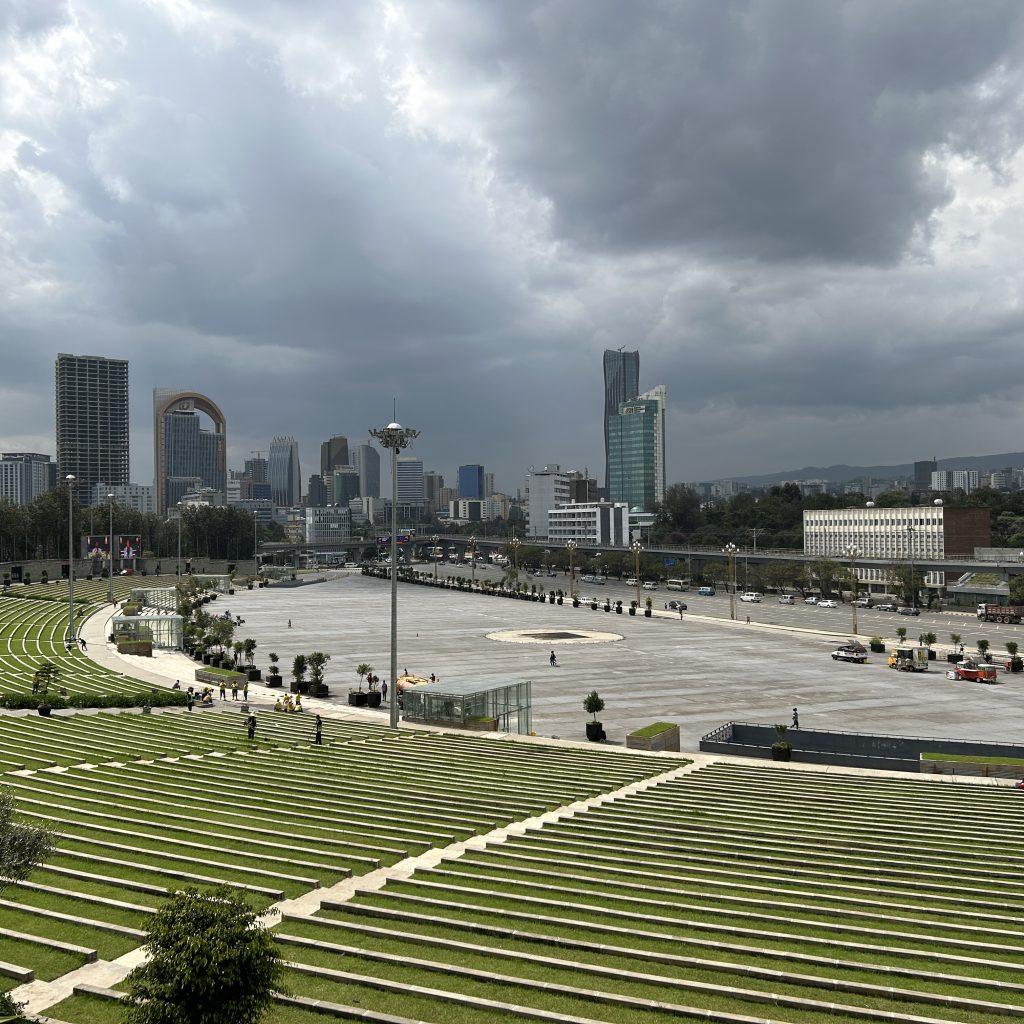
The kiremt rains run from June to September and are finishing as the month ends. September still averages around fifteen days with rain in Addis, which sounds worse than it is: these are showers with dry hours around them rather than a grey day from breakfast onwards.
The practical effect is on your kit rather than your plans. Shoes that dry overnight, a bag your camera can live in when the sky opens, and a shell you can get into quickly. Unsurfaced roads are at their worst at the start of the month and improving by the end of it.
The compensation is that the highlands are green and the light is clear, which is the opposite of how Ethiopia looks at the dusty end of the dry season. Our month-by-month guide sets out what each part of the year gives you and what it costs.
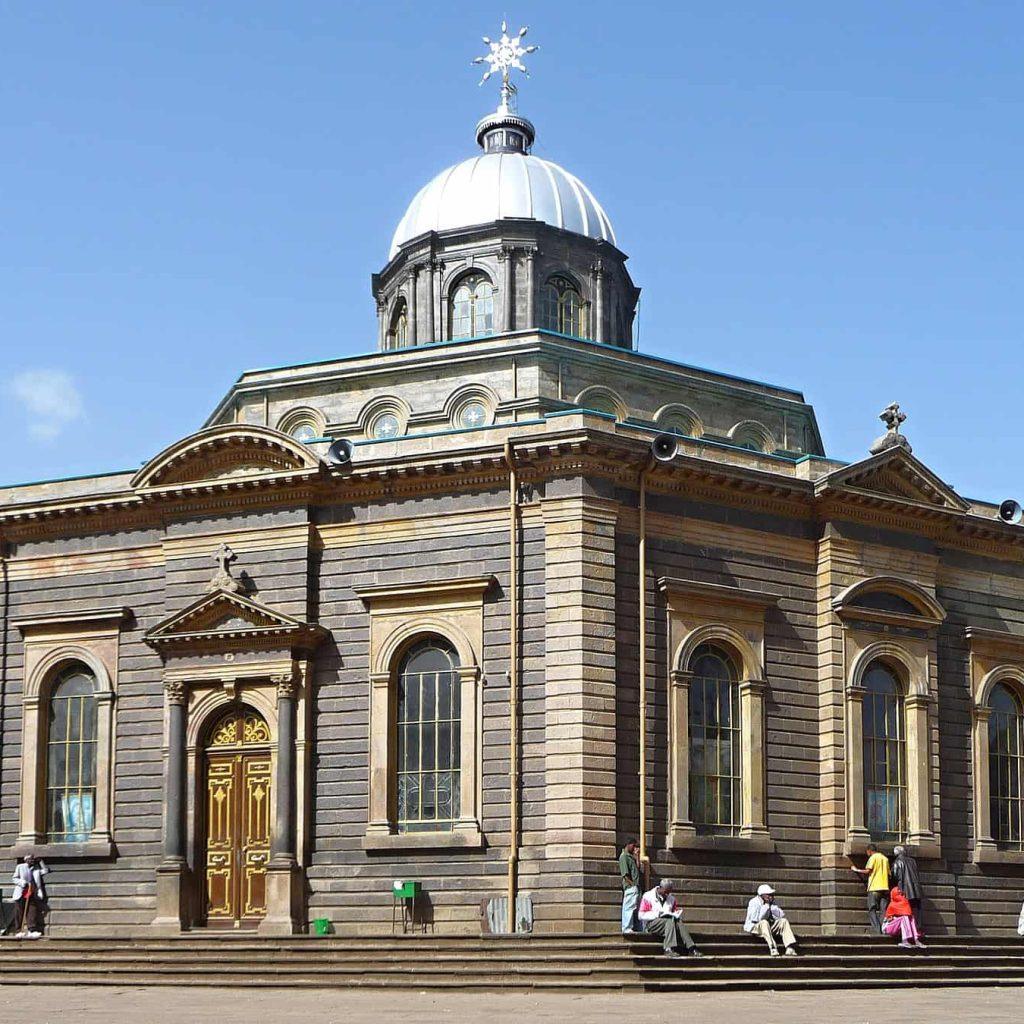
Churches and monasteries in Ethiopia are working places of worship with priests living and praying in them, not monuments with a ticket desk. Shoulders and knees covered, for men as well as women, and shoes off before you go in.
Some places will be closed to you regardless of what you are wearing. Debre Damo admits men only and is reached by climbing a leather rope up a cliff, and several Tigray churches involve a scramble that is done barefoot because the rock itself is treated as holy ground.
At a festival the dress code goes further in one direction and relaxes in another. Ethiopians turn out in white, many in a netela, the hand-woven cotton shawl with a woven border worn to church and on holy days, and a crowd at Meskel or Timkat reads as white from a distance. Nobody expects a visitor to arrive in traditional dress, but bright holiday colours will make you the most visible person in the square. Muted clothing and covered shoulders will do.
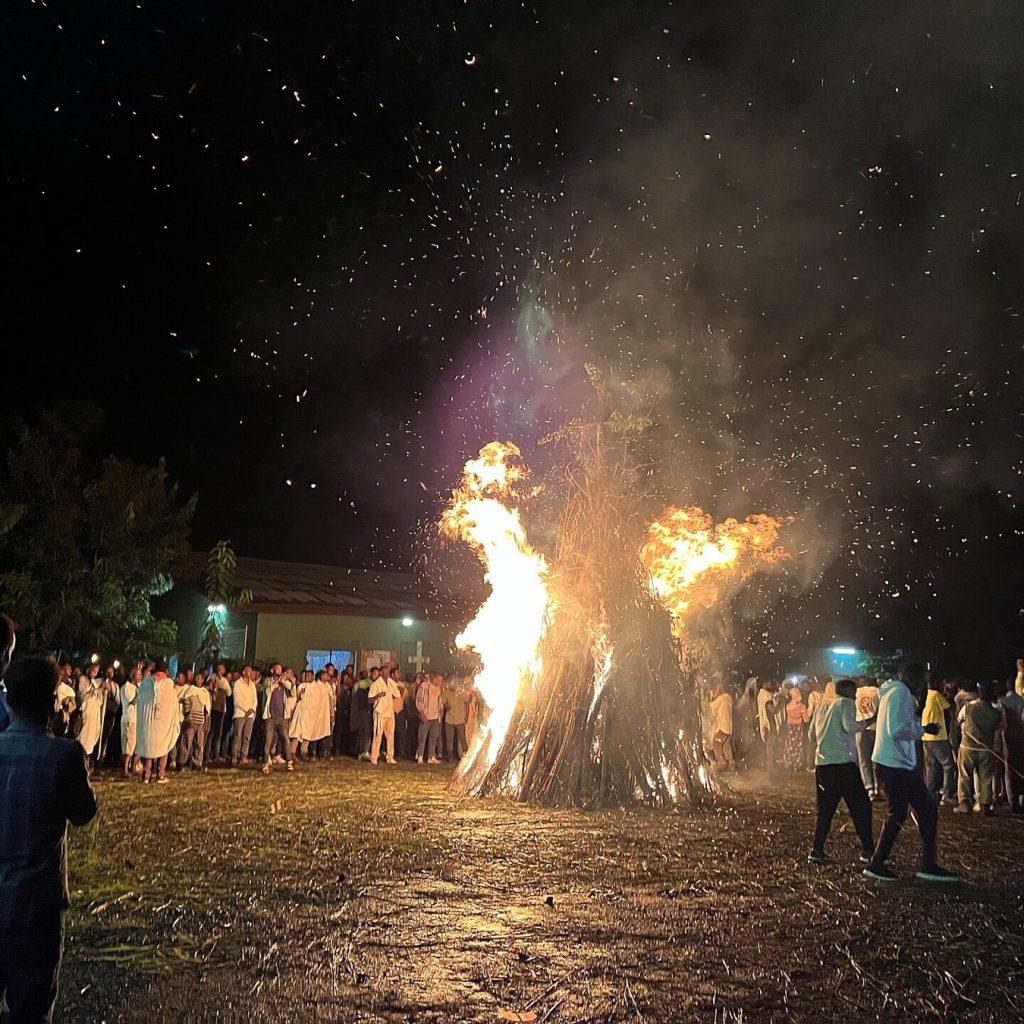
This is a specific problem and the general packing lists miss it, because it is not really about clothes. You are outdoors, standing, in a dense crowd, from the early afternoon until well after dark.
At Meskel the processions reach Meskel Square in the early afternoon, the demera is lit at nightfall, and the pyre is kept burning through the night. That is six or seven hours on your feet through the hottest part of the day and then the coldest, in that order. Whatever you carry, you carry the whole time.
What that argues for:
Roads around the square close or clog on the evening, which is worth knowing before you plan how to get back. Ask your hotel or your guide on the day rather than relying on a published time for anything, because the hour the processions arrive moves year to year.
Our Meskel Festival Tour is built around the eve rather than the feast day, and the Ethiopian festival calendar has the dates for Genna, Timkat and Fasika if you are packing for one of those instead.
Two of these are law, and getting them wrong is a different order of problem from being rude.
Photographing near military zones, near military personnel, near the Presidential Palace in Addis Ababa, or anywhere carrying a sign that prohibits it, is illegal. The signs are not always in English. If you cannot read it, assume it says no.
Drones need permission from both the Ethiopian Civil Aviation Authority and the Information Network Security Agency. This is not a formality you can complete on arrival, and travellers regularly report drones being taken at customs. If a drone matters to your trip, it has to be arranged in advance through an operator on the ground, and if it has not been arranged, leave it at home.
Photographing people is the ordinary courtesy rule, with one formalised exception. Ask first, accept a refusal, and be careful around clergy and around anyone praying. In the Omo Valley photography is arranged and paid for, usually per photograph or per person, and the terms are agreed through your guide before you arrive rather than negotiated in front of someone.
The demera is a hard photographic problem dressed up as an easy one. The fire is the only light source, the crowd around it is moving, and the interesting part is faces lit by flame rather than the flame itself.
A camera that handles high ISO will do far more for you than a long lens. Flash will not reach the pyre and will annoy everyone within range of it. Cold drains batteries faster than you expect, so spares belong in an inside pocket rather than in the bag, and if you are shooting on a phone, the burst is worth more than the single frame.
Everything above describes highland Ethiopia, which is where the cities, the churches and the festivals are. The mountains above them and the lowlands below them each need their own additions.
| Region | What you are packing for | Add to the core list |
|---|---|---|
| Simien and Bale highlands | Camps and plateaux above 3,200 metres, nights near or below freezing | Warm sleeping bag, thermal base layers, hat and gloves, windproof jacket, broken-in walking boots |
| Danakil and Afar | Heat: daytime air temperatures pass 50°C in the hot months, and there is no running water | Loose long sleeves, wide-brimmed hat, electrolyte salts, closed shoes for a night walk on lava, wet wipes |
| Omo Valley | Hot lowland, dust, long drives, malaria risk | Light long sleeves for dusk, insect repellent, a scarf against dust, small notes for photography payments |
| Addis Ababa and the historic cities | Mild days around 20°C, cool nights around 12°C, churches | The core list as it stands |
This is where the bag gets heavy. In the Simien Mountains you sleep above 3,200 metres every night on a trek, the camp at Geech sits at about 3,600 metres, and nights there get near freezing with constant wind on the escarpment. Insufficient sleeping bags ruin more Simien treks than sore legs do. If you are camping, bring a bag rated well below freezing, or check whether your operator supplies one.
Bale's Sanetti Plateau climbs above 4,000 metres, where frost, and occasionally snow, is possible. Gloves and a warm hat belong in the daypack even on a sunny morning, because the sun at that height is also strong. Pack sunscreen and lip balm alongside the fleece.
The Simien Mountains, Gondar and Lalibela are in the Amhara region. As of 25 September 2026 the UK Foreign, Commonwealth and Development Office advises against all travel to Amhara. Check your own government's current advice before you book.
The Danakil Depression is the opposite problem. Dallol holds the record for the highest average annual temperature of any inhabited place, at 34°C, and daytime air temperatures pass 50°C in the hot months. Cover up rather than strip down: loose long sleeves and a wide-brimmed hat keep you cooler than a vest. Drink continuously and take electrolyte salts, not only water.
The Erta Ale ascent is done on foot at night, over rough volcanic ground, so you need closed shoes with a good grip and a headtorch with spare batteries. There are no showers for the duration of the trip, and wet wipes earn their place.
Check the travel advice before you plan a Danakil trip. As of 25 September 2026, the UK advises against all travel within 50 kilometres of the Tigray boundary and all but essential travel to the rest of Afar. It also reports that foreign nationals are currently unable to fly into airports in Afar.
The Omo Valley is hot, dusty lowland, with long days in a vehicle on unsurfaced roads. Light, loose clothing that covers your arms and legs deals with the sun, the dust and the mosquitoes together. A scarf over your nose and mouth helps on the dustiest stretches.
Malaria risk applies to areas below 2,500 metres, which includes the Omo Valley and the Danakil. Pack insect repellent and long sleeves for dusk, and see a travel health clinic before you go about whether you need antimalarials.
Village visits and photography in the Omo are paid separately and usually in cash, so carry small notes. Our seven-day Omo Valley tour runs from Addis Ababa through Arba Minch to the lower Omo.
The core list covers it. Addis Ababa sits at around 2,355 metres, with mild days and cool nights, so the mid-layer comes out every evening. Our guide to where to stay in Addis Ababa covers the city itself.
If your trip crosses the highlands and the lowlands, you are packing for two climates and the bag gets heavier. Say so when you ask us to plan it and we will tell you which nights you will feel the cold.
Ethiopian sockets run at 220V, 50Hz, and take type C and type F plugs, the two round-pin European patterns. A dual-voltage laptop or camera charger will be fine with an adaptor. Anything from North America built for 110V needs more than an adaptor.
Small notes are worth carrying. Church entry fees and the people who look after the churches both work in cash, and nobody has change for a large note.
What should I pack for Ethiopia?
Layers, because the highlands swing between roughly 20°C by day and 12°C at night. A warm mid-layer, a light waterproof shell, long trousers, a large scarf, spare socks for the churches where shoes come off, and walking shoes you can get out of easily. Add a warm sleeping bag for the Simien and Bale highlands, heat protection and electrolytes for the Danakil, and insect repellent and sun cover for the Omo Valley.
Is Ethiopia cold?
Most of the Ethiopia visitors see is, after dark. Addis Ababa sits at around 2,355 metres, which keeps daytime temperatures mild rather than hot and drops the overnight low to about 12°C in September. Altitude governs the temperature far more than the distance from the equator does.
What should I wear to the Meskel festival?
Covered shoulders and knees, muted colours rather than bright, closed shoes you can stand in for hours, and a warm layer you carry from the afternoon. Ethiopians wear white. You are outdoors from the early afternoon until after dark, crossing the warmest part of the day and then the coldest.
What is the weather like in Ethiopia in September?
In Addis Ababa, an average daily high of around 20°C, an overnight low of around 12°C, and roughly fifteen days with rain as the kiremt rains finish. Showers rather than continuous rain, and the highlands are green and clear between them.
Do I need to cover up in Ethiopian churches?
Yes, and it applies to men too. Shoulders and knees covered, and shoes removed before entering. These are active places of worship. Some monasteries admit only men, and a few of the Tigray churches are reached barefoot because the rock is treated as consecrated ground.
Can I bring a drone to Ethiopia?
Only with permission arranged in advance from the Ethiopian Civil Aviation Authority and the Information Network Security Agency, organised through an operator on the ground. Turning up with one is how people lose them at customs.
What can I not photograph in Ethiopia?
It is illegal to photograph near military zones or military personnel, near the Presidential Palace in Addis Ababa, or anywhere displaying a sign prohibiting photography. Beyond that, ask before photographing people, and be particularly careful around clergy and around anyone at prayer.
What plug adaptor do I need for Ethiopia?
Type C or type F, the round two-pin European plugs, on a 220V 50Hz supply. Most laptop and camera chargers handle that voltage already, so an adaptor is usually all you need.
Do I need a sleeping bag for Danakil?
Usually not. Danakil trips camp outdoors on the volcano rim and the salt flats, normally on a mattress supplied by the operator, because sleeping indoors is hotter than outdoors. Erta Ale's summit is only about 613 metres high, so the nights are not mountain-cold. A light sheet or sleeping-bag liner is plenty for most people.
Do I need a sleeping bag for the Simien Mountains?
Yes, if you are camping, and a warm one. Trek camps sit above 3,200 metres, and nights at Geech, at about 3,600 metres, get near freezing with constant wind. Bring a bag rated well below freezing, or check whether your operator supplies one.
What should I pack for the Omo Valley?
Light, loose clothing that covers your arms and legs, a sun hat, sunscreen, insect repellent and a scarf against the dust. The Omo is hot lowland with malaria risk, so see a travel clinic about antimalarials, and carry small notes for village visits and photography.
How many pairs of socks should I take to Ethiopia?
More than the trip length suggests, if churches are on your itinerary. Shoes come off at every Ethiopian Orthodox church, the floors are stone and carpet, and in Lalibela alone you will do it eleven times across two days.
The right packing list depends entirely on which altitudes your itinerary crosses and which month you are in. A week in the northern highlands and a week that drops into the Danakil are not the same trip and do not want the same bag.
Send us your dates and your route and we will tell you honestly which nights are cold, which days are wet, and what you will wish you had brought. You will have a reply within two hours and a detailed itinerary with a quote within 24 hours.
Ask us to plan it, or see what we run.
