---------------------------------
Address
Phone: +251 988 111 222
Need help or have a question?
Contact us at: info@driveethiopia.com
Addis Ababa, Ethiopia
---------------------------------
Address
Phone: +251 988 111 222
Need help or have a question?
Contact us at: info@driveethiopia.com
Addis Ababa, Ethiopia


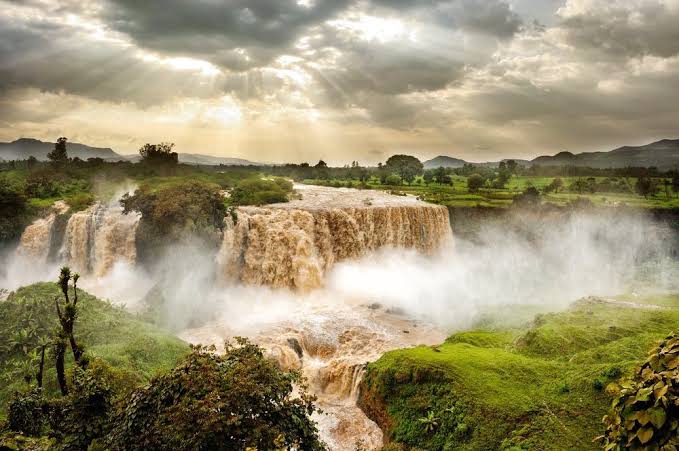
The Blue Nile's waterfall near Bahir Dar, known as Tis Issat.
The Blue Nile Falls, known locally as Tis Abay or Tis Issat ('smoking water'), is a waterfall on the Blue Nile in northern Ethiopia, about 30 km downstream of Bahir Dar. Reached by a short hike past an old Portuguese bridge, its flow is strongest during and after the rainy season.
The Blue Nile Falls sits on the Blue Nile roughly 30 km south of Bahir Dar, where the river drops over a wide basalt lip into a gorge below. In Amharic it is called Tis Abay, and the falls themselves are often called Tis Issat, meaning ‘smoking water’, for the spray and mist thrown up when the river is high. A dam and hydroelectric scheme upstream now divert part of the flow, so the volume varies through the year: the falls are at their most dramatic during and just after the main rains, and thinner in the dry months.
The Blue Nile Falls make a satisfying half-day trip from Bahir Dar and put you close to one of Africa’s great rivers near its source. The reward is not only the waterfall but the walk to reach it, across farmland and over a 17th-century stone bridge, with viewpoints that look back at the cascade and the gorge. When the river is full, the noise and spray live up to the ‘smoking water’ name. It also pairs neatly with a Lake Tana boat tour to round out a stay in Bahir Dar.
The falls have long been a landmark on the Blue Nile, which rises from Lake Tana and flows on to meet the White Nile in Sudan. The old stone bridge on the approach is usually described as a Portuguese-era bridge dating to the 17th century, one of the oldest surviving in the country and a reminder of early European contact with the highlands. In modern times the river has become central to Ethiopia’s hydroelectric plans, and upstream works have reduced the falls’ flow compared with historic descriptions.
A visit is mostly about the walk and the viewpoints:
Timing matters more here than at most sites because the flow changes so much. The falls are fullest during and shortly after the main rains, roughly late June through September and into October. The dry months from November to May are more comfortable for walking but the water can be much reduced, especially with upstream diversion. If seeing the falls in full spate is your priority, plan around the rains; if you prefer easy trails, accept a thinner flow.
| Period | What to expect |
|---|---|
| Late June to September | Main rains; strongest flow and most spray, but muddy, slippery trails. |
| October to November | Often a good balance: fuller river after the rains with easier walking. |
| December to February | Dry and comfortable to walk; reduced flow. |
| March to May | Hot and dry; flow can be low, especially before the rains break. |
The Blue Nile Falls are almost always visited from Bahir Dar, about 30 km away. Most travellers go by private vehicle or with an operator; public minibuses also run toward the trailhead village. Allow a half day for the round trip including the walk, and confirm the current drive time and road condition, which can worsen in the rains. From the parking area a footpath leads to the falls and the Portuguese bridge.
The falls are a half-day excursion rather than a destination in their own right. Combine them with Bahir Dar and Lake Tana over a two-day stay: one day for the boat tour, one for the falls, with time left to enjoy the lakeside city.
| Trip type | Suggested time |
|---|---|
| Falls only | Half a day from Bahir Dar |
| With Bahir Dar / Lake Tana | 2 days total |
| As part of the northern loop | Slots into a wider 7 to 12 day route |
There is no need to stay at the falls themselves; base yourself in Bahir Dar, roughly 30km northwest, which has the region’s best choice of guesthouses, hotels and lakeside resorts. Kuriftu Resort and Spa and Blue Nile Resort are the lakefront options, with Unison Hotel and Spa and Blue Nile Hotel as mid-range alternatives in town. From any of them the falls are an easy half-day trip, about an hour’s drive to the village of Tis Abay. Rates change, so confirm current prices when you book.
Wear sturdy shoes with grip: the paths include steps and can be slippery near the spray or after rain. Bring sun protection, water and, in the wet season, a light rain jacket and a cover for your camera. A small amount of cash covers the entrance and any guide or boat fee. Trekking poles are useful for less sure-footed walkers on the uneven sections.
The walk is generally safe but the ground near the falls can be wet and slippery, so keep back from unfenced edges, especially when the river is high. As with the wider region, northern Ethiopia’s security picture can change; check your government’s current travel advisory before you travel and follow local guidance. Going with a local guide helps with route-finding and with knowing where the safe viewpoints are.
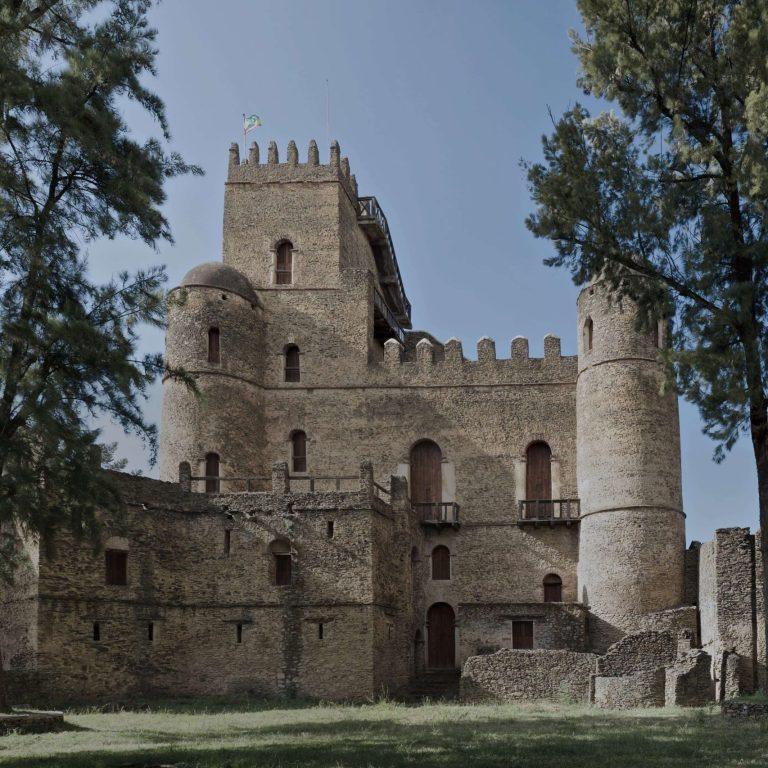
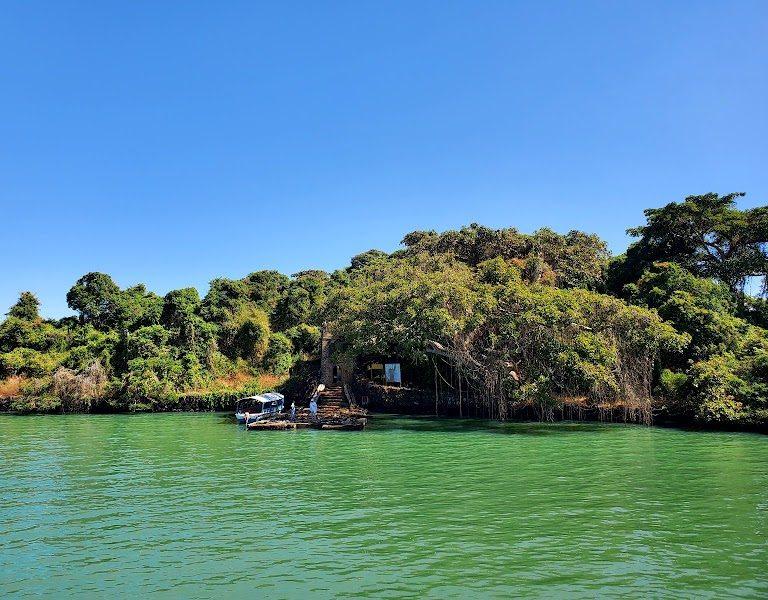
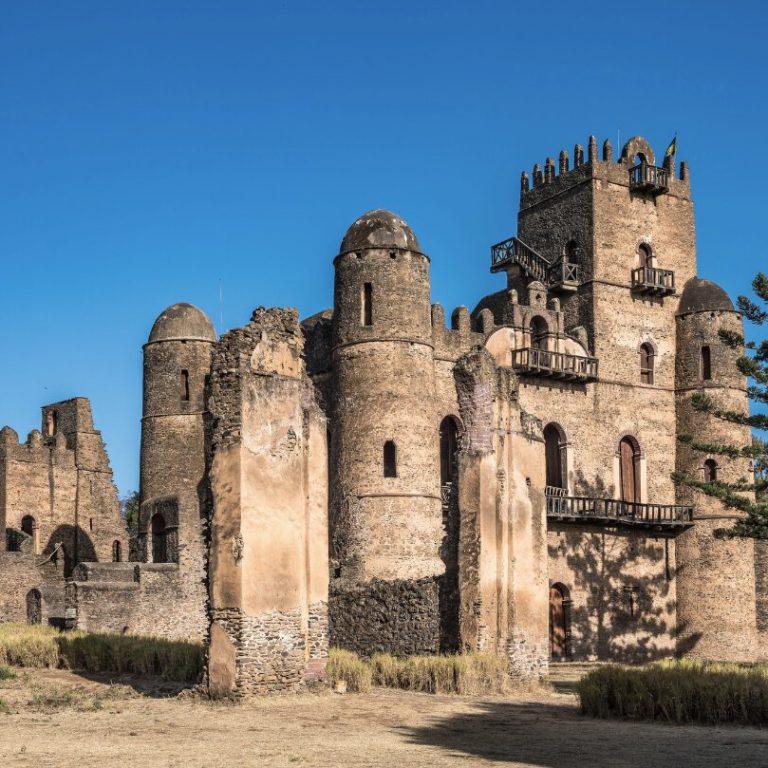
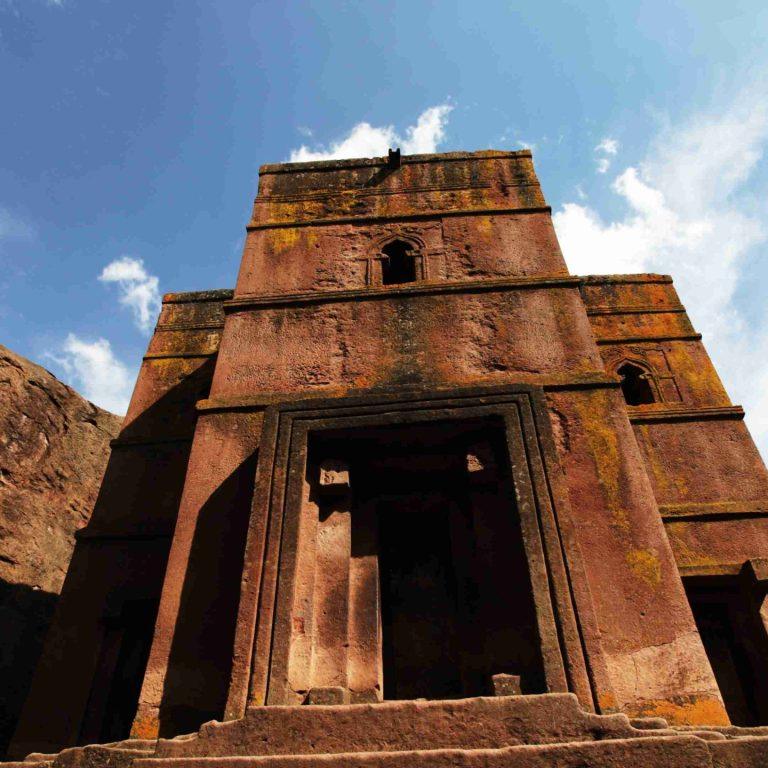
Bahir Dar and Lake Tana are the natural companions to the falls, with island monasteries and the Blue Nile’s source on the same lake. Gondar and its royal castles lie a road journey to the north, and from there travellers often continue to the Simien Mountains or on to Lalibela. Together these make up the core of Ethiopia’s northern historical circuit.
The Blue Nile Falls, or Tis Abay/Tis Issat ('smoking water'), is a waterfall on the Blue Nile about 30 km downstream of Bahir Dar in northern Ethiopia.
An upstream dam and hydroelectric scheme divert part of the river, so the falls are strongest during and just after the rains and thinner in the dry months.
They are fullest during and shortly after the main rains, roughly late June through October. December to February is drier for walking but the flow is reduced.
They are usually visited from Bahir Dar, about 30 km away, by vehicle or public minibus, followed by a short walk. Allow a half day for the round trip.
Yes, a fee is collected at the site, and there may be additional guide or boat-crossing charges. Confirm current rates locally before you go.
It is a modest hike over paths and steps, crossing the old Portuguese bridge; most visitors complete the loop within a couple of hours at an easy pace.
It is a 17th-century stone bridge on the walking route, usually described as Portuguese-era and among the oldest surviving bridges in Ethiopia.
The walk is generally safe, though wet ground near the falls calls for care. Check your government's current travel advisory for the wider region before you travel.
Lakeside city, island monasteries and the source of the Blue Nile.
Read More about Bahir Dar & Lake Tana →A 17th-century imperial capital of stone castles, churches and Timkat crowds.
Read More about Gondar →Ethiopia's holy city of 11 medieval churches carved down into living rock.
Read More about Lalibela →