---------------------------------
Address
Phone: +251 988 111 222
Need help or have a question?
Contact us at: info@driveethiopia.com
Addis Ababa, Ethiopia
---------------------------------
Address
Phone: +251 988 111 222
Need help or have a question?
Contact us at: info@driveethiopia.com
Addis Ababa, Ethiopia


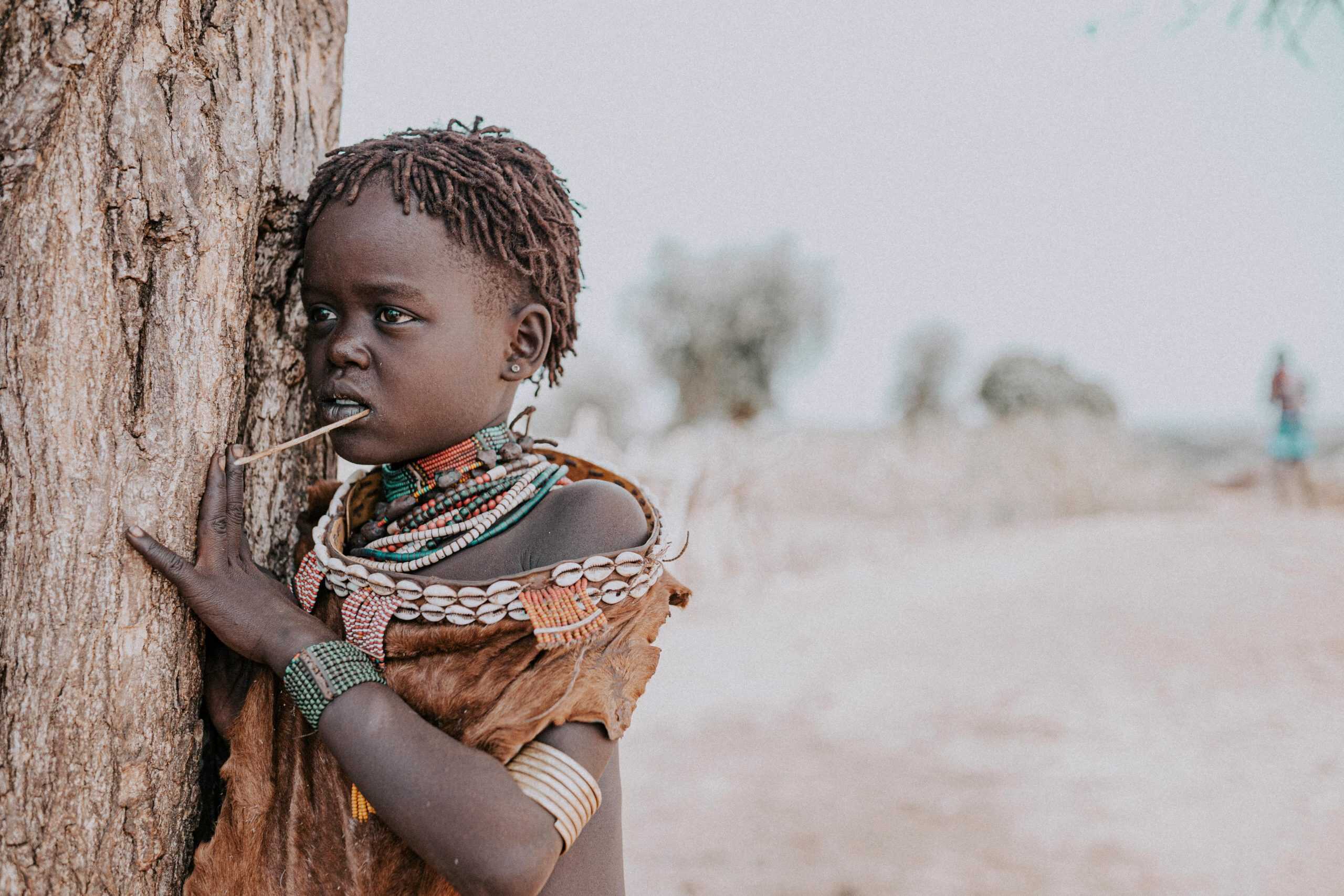
Southern Ethiopia's river valley, home to many distinct communities.
The Omo Valley is a region in southwestern Ethiopia along the Omo River, known for the many distinct communities who live there, including the Mursi, Hamer, Karo and Dassanech. The Lower Valley of the Omo is a UNESCO World Heritage Site, recognised for its long human and archaeological record.
The Omo Valley follows the Omo River through southwestern Ethiopia toward Lake Turkana on the Kenyan border. It is best known for the diversity of communities living across the lower valley, among them the Mursi, Hamer, Karo, Dassanech, Bana and others, each with distinct languages, dress and customs. The Lower Valley of the Omo is inscribed by UNESCO as a World Heritage Site, partly for its importance to the study of human origins, with hominid fossil finds in the wider region. For travellers, the draw is a landscape of savannah, river and village life quite different from the northern highlands.
People visit the Omo Valley to meet communities whose ways of life remain closely tied to livestock, the river and the land. Weekly markets bring people together to trade grain, honey, cattle and crafts, and are among the most rewarding places to spend time. Some communities are known for particular traditions, such as the Hamer bull-jumping ceremony that celebrates a young man’s coming of age, or the body and face decoration seen among the Karo. Visiting well means arriving with curiosity and respect, treating people as hosts rather than a spectacle, and following the etiquette around photography and payment described below.
The lower Omo is one of the most significant regions in the world for understanding human prehistory; fossil and archaeological finds along the river and in the wider Turkana basin have helped trace early human ancestors, which underpins the area’s UNESCO listing. The communities living here today have long-standing agricultural and pastoral traditions. In recent decades, large-scale irrigation, plantation and dam projects on the Omo River have brought significant change to the valley, affecting seasonal flooding, grazing and livelihoods, and these pressures form part of the context for any visit.
A trip is built around markets, villages and the landscape, always on the communities’ terms:
The valley is generally most accessible in the drier months, when roads and river crossings are easier and markets and ceremonies are simpler to plan around. Rains can make some tracks difficult and remote areas hard to reach. Because ceremonies such as bull-jumping are set by families rather than a calendar, ask your operator close to travel about what may be happening during your dates.
| Period | What to expect |
|---|---|
| October to February | Drier and generally easier for road travel and market visits. |
| March to May | Hot, with early rains possible; some tracks become harder. |
| June to September | Wetter in parts; remote areas can be difficult to reach. |
| Ceremony dates | Set by families, not fixed; ask your operator near your travel dates. |
The Omo Valley is a long journey from Addis Ababa in the far south of the country. Most travellers reach it overland on a multi-day trip through the southern route, often stopping at Arba Minch and Konso on the way, which lets you break the distance and see more. Some itineraries use a domestic flight to a southern airstrip to shorten the drive; confirm current routes, as these change. A capable 4×4 and a knowledgeable local guide are effectively essential for the valley’s tracks and for arranging respectful village visits.
Because of the distance and the number of communities and market days, the Omo Valley suits a longer trip. A focused visit needs several days on the ground beyond the travel days; a fuller circuit that takes in Arba Minch, Konso and multiple valley communities can run well over a week.
| Trip type | Suggested time |
|---|---|
| Short focused visit | 3 to 4 days in the valley |
| Recommended southern circuit | 7 to 10 days including Arba Minch and Konso |
| In-depth exploration | 10 days or more |
Accommodation in the valley ranges from basic guesthouses and campsites in towns such as Turmi and Jinka to a small number of lodges. In Jinka, Eco Omo Lodge is the established choice, with thatched huts on raised platforms and en-suite bathrooms. Around Turmi, Buska Lodge and Paradise Lodge are the usual bases for visits to the surrounding villages, with tented camps such as Lale’s Camp closer to the Omo River, and Kanta Lodge in Konso is the common overnight stop on the way in or out. Standards are simpler than on the northern circuit, and options in remote areas are limited, so many trips combine modest lodges with camping. Confirm current rates when you book.
Pack for hot days, dust and long drives: light, modest clothing, a hat, sunglasses and strong sun protection. Bring plenty of water, hand sanitiser, a torch and any personal medicines, as facilities are limited. Carry small notes for fees and photography, since change and card payment are not available in villages. Above all, bring a respectful approach; ask before photographing anyone, and be ready to accept no as an answer.
The Omo Valley is remote, and conditions and access can change; go with an established operator and a local guide who know the current situation. Some parts of southern Ethiopia have seen localised tension, so check your government’s current travel advisory before you travel and again close to departure. Take normal precautions with health in a remote, hot environment, and follow your guide’s advice on where it is appropriate to go and photograph.
Most Omo Valley trips connect with other southern highlights. Arba Minch, on the lakes and near Nechisar, is a common base and gateway on the way south. The Konso cultural landscape, a UNESCO site of terraced farming and walled villages, sits on the route and pairs naturally with the valley. Further north and west, the Jimma and Kaffa coffee heartland offers a different side of southern Ethiopia for those with extra time. Addis Ababa is the usual start and end point.
The Omo Valley is in southwestern Ethiopia, following the Omo River toward Lake Turkana on the Kenyan border. It is a long journey south from Addis Ababa.
Many distinct communities live in the lower valley, including the Mursi, Hamer, Karo, Dassanech and Bana, each with their own language, dress and customs.
Yes. The Lower Valley of the Omo is a UNESCO World Heritage Site, recognised in part for its importance to the study of human origins.
It is a Hamer coming-of-age ritual in which a young man leaps across the backs of cattle. Dates are set by families, not for tourists, so timing depends on chance and permission.
Always ask permission first. Photography usually involves a per-photo or per-person payment agreed in advance, and you should respect anyone who declines. Confirm current arrangements with your guide.
Allow several days in the valley beyond travel days. A fuller southern circuit taking in Arba Minch and Konso often runs seven to ten days or more.
The drier months, roughly October to February, are generally best for road travel and markets. Rains can make remote tracks difficult.
Visits are usually made with an established operator and local guide. Because conditions can change, check your government's current travel advisory before you travel.
Twin Rift Valley lakes, giant crocodiles and the gateway to the south.
Read More about Arba Minch →A UNESCO landscape of stone-terraced hills, walled villages and grave markers
Read More about Konso Cultural Landscape →Lush southwest highlands widely regarded as the birthplace of Arabica coffee.
Read More about Jimma & Kaffa →Ethiopia's high-altitude capital, home to Lucy and the gateway to every trip.
Read More about Addis Ababa →