---------------------------------
Address
Phone: +251 988 111 222
Need help or have a question?
Contact us at: info@driveethiopia.com
Addis Ababa, Ethiopia
---------------------------------
Address
Phone: +251 988 111 222
Need help or have a question?
Contact us at: info@driveethiopia.com
Addis Ababa, Ethiopia


Drive Ethiopia is Ethiopian-owned and run from Addis Ababa. We plan every trip so that more of what you spend stays with the guides, drivers, families and communities you meet, and so the places you visit stay as remarkable as you found them.
Sustainable travel isn’t a label we add at the end. It shapes who we hire, where you stay, how we plan your route and how you meet people along the way.
Your driver and guide are Ethiopian, and at places like Lalibela, Konso and the Omo Valley we also work with community guides from the area. They know the stories best, and the income stays local.
We choose locally owned hotels, lodges, guesthouses and family restaurants wherever we can, and we take you to buy crafts directly from the people who make them.
We avoid rushed “photo-stop” village visits. We brief you before you arrive, agree photography fees openly and fairly, and leave time for markets, coffee ceremonies and real conversation.
Park fees help fund Ethiopia’s protected areas. On Simien and Bale treks we work with local scouts, cooks and mule handlers, stay on the trails and give wildlife plenty of space.
Our vehicles are well maintained, and we plan routes that avoid backtracking and needless kilometres. Slower itineraries mean less time on the road and more time in each place.
We encourage refillable bottles over single-use plastic, carry rubbish out from trekking camps, and ask our partner hotels about their own waste practices.

Tourism can help protect Ethiopia’s wildlife, culture and heritage, or it can slowly wear them down. The difference comes from many small choices: who guides you, where you sleep, what you buy and how you behave when you arrive. We make those choices carefully, and we help you make them too.
A few simple habits make a big difference to the people you meet. Here’s the advice we give every traveller.
Cover shoulders and knees at churches and mosques, take your shoes off when asked and follow your guide’s lead. A few monasteries, such as Debre Damo, admit men only.
Always ask first. In the Omo Valley a small fee per photo is normal, and your guide will help you agree it fairly before you raise the camera.
Sweets, pens or money handed out on the roadside encourage begging and can keep children out of school. Ask us about supporting a local school or project instead.
Cotton scarves from Dorze weavers, baskets from Harar, coffee from farmers’ cooperatives. Avoid old crosses, manuscripts and icons, because genuine antiques need an export permit and belong in Ethiopia.
Orthodox Christians fast on most Wednesdays and Fridays and during Lent, when many restaurants serve excellent vegan “fasting food”. At Timkat or Meskel, join in quietly and follow local cues.
A coffee ceremony is a sign of welcome and takes time. Sit down, talk and stay for the rounds. It’s one of the best ways to meet people.
Bring a bottle with a filter or purifier to cut down on plastic waste, especially on long drives and treks.
Stay on trails, never feed animals and keep your distance from geladas and other wildlife, however relaxed they seem.
Tipping guides, drivers, scouts and hotel staff is customary and an important part of their income. Ask us for current guidance before you travel.
Some of our favourite experiences are also the ones that do the most good. Build any of these into your trip.
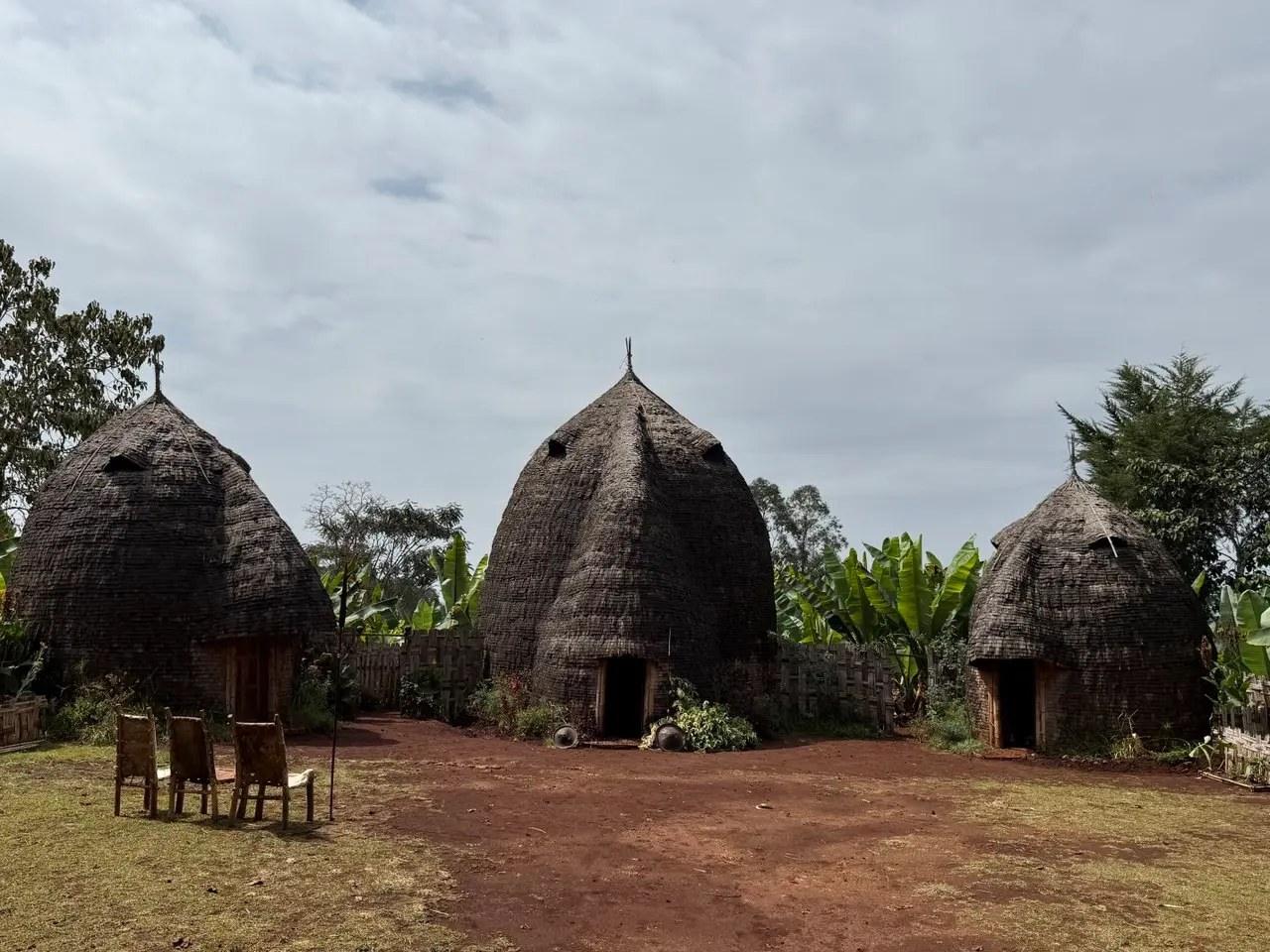
See the tall bamboo houses of the Gamo highlands and buy handwoven cotton straight from the weavers.
Explore →
Walk stone-walled villages and centuries-old farming terraces with a local Konso guide.
Explore →
Visit weekly markets with a guide from the area, where trade, not tourism, sets the pace.
Explore →
Celebrate Timkat, Meskel or Fasika alongside local communities, respectfully and with time to take it in.
Explore →It means travelling in a way that benefits the people and places you visit. In practice, we work with Ethiopian guides, drivers and community guides, choose locally owned places to stay and eat, plan unhurried routes, respect local customs and support the protection of Ethiopia’s parks and heritage sites.
Travel with a guide from the area, spend more than a single day in the region and plan your visits around weekly markets rather than quick village stops. Always ask before taking photos, agree any photo fee in advance, and avoid handing out gifts to children.
Yes. Trekkers in Simien Mountains National Park must be accompanied by a park scout. When you trek with us we arrange your scout, guide, cooks and mules, hiring from local communities around the park.
Usually, yes. Distances are long and roads can be slow, so trying to see everything means long days in the car. Choosing fewer places and staying longer is more relaxing, means less driving, and puts more of your spending into each community you visit.
Yes. Tell us your dates, interests and travel style, and we’ll suggest an itinerary built around local guides, locally owned stays and a comfortable pace.
Tell us where you’d like to go and how you like to travel. We reply to every enquiry within 2 hours and send a detailed itinerary with a quote within 24 hours.