---------------------------------
Address
Phone: +251 988 111 222
Need help or have a question?
Contact us at: info@driveethiopia.com
Addis Ababa, Ethiopia
---------------------------------
Address
Phone: +251 988 111 222
Need help or have a question?
Contact us at: info@driveethiopia.com
Addis Ababa, Ethiopia


What each dish actually is, whether it is vegan, and how hot it will be. Plus the one word that gets you a mild version and why injera is not gluten-free.
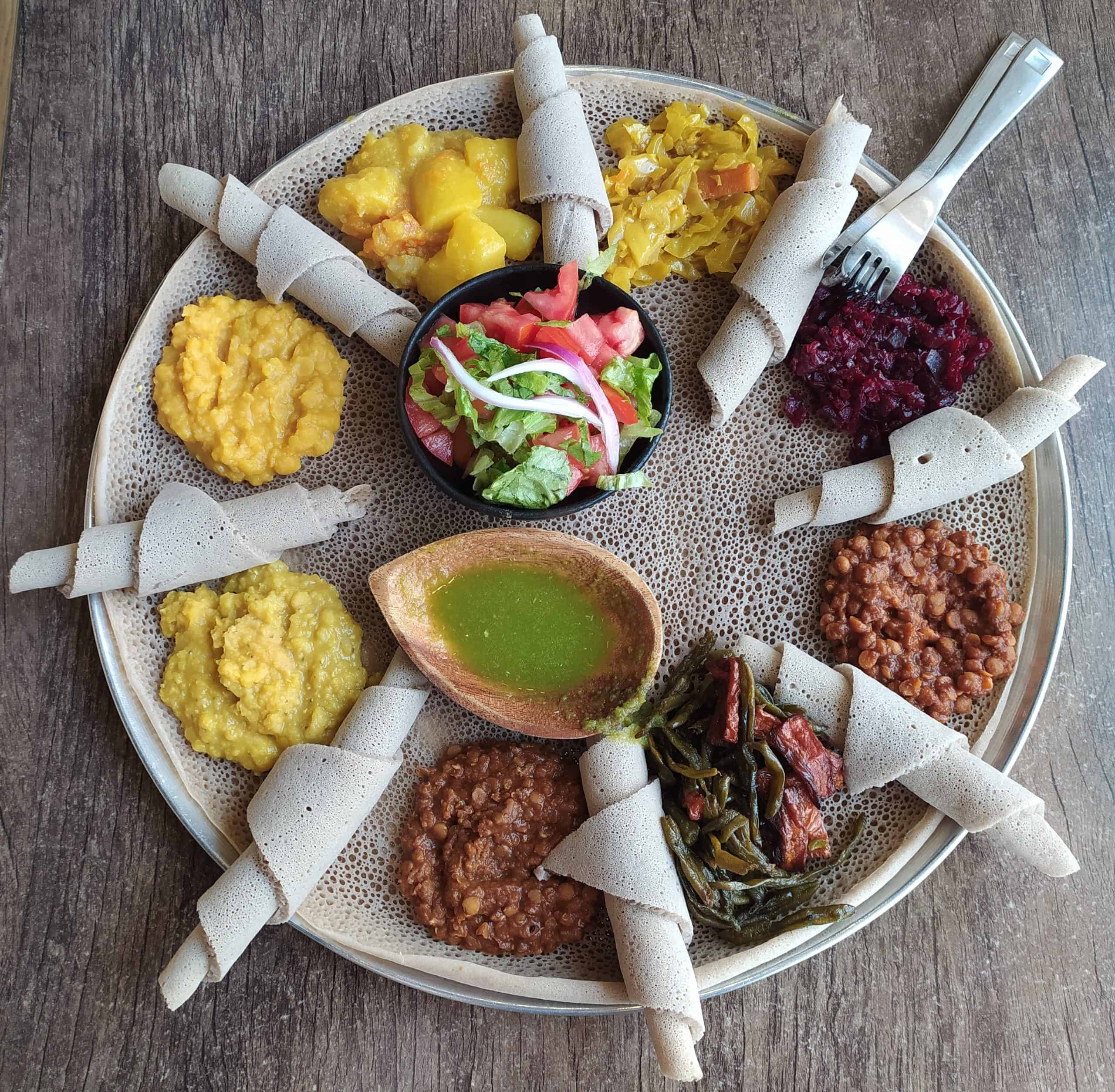
Two things are worth knowing before your first Ethiopian meal, and most food guides get the second one wrong.
Ethiopia is one of the easiest countries in the world to eat vegan in, because Orthodox fasting excludes animal products on most Wednesdays and Fridays and through longer fasting periods, so every kitchen already cooks a full vegan menu.
Injera is not reliably gluten-free. Teff, the grain it is traditionally made from, has no gluten. But injera is very commonly made with teff blended with wheat, barley or sorghum, sometimes up to half. If you have coeliac disease, assuming otherwise is a real risk, and you have to ask each time.
Fifteen dishes below, each with what it actually is, whether it is vegan, and how hot to expect it.
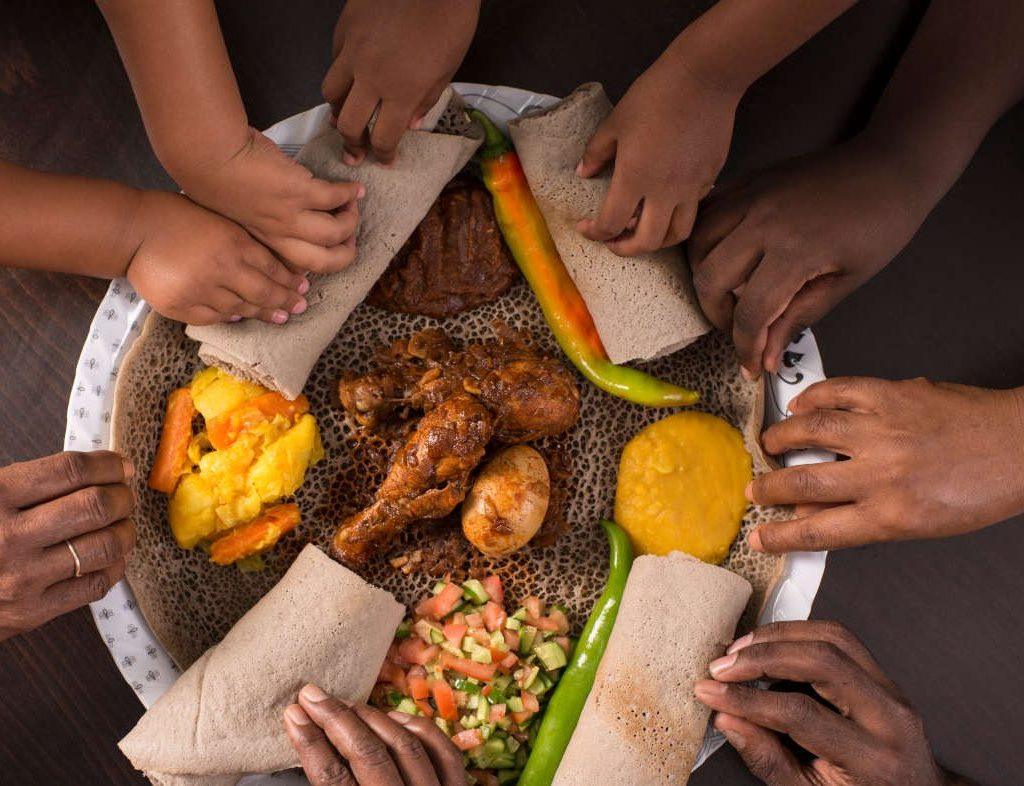
Food arrives on a single large piece of injera, with the dishes spooned onto it in mounds. There are no plates and no cutlery. You tear a piece of injera with your right hand, use it to pinch up the food, and eat the base at the end once it has soaked up everything.
It is shared. One platter, several people, everyone eating from the same surface. Being fed a mouthful by someone else, called gursha, is a gesture of friendship rather than something odd.
Learn one word: alicha. It means mild, cooked with turmeric and without the chilli blend. Any dish described as alicha will not be hot. Anything described as wat usually is.
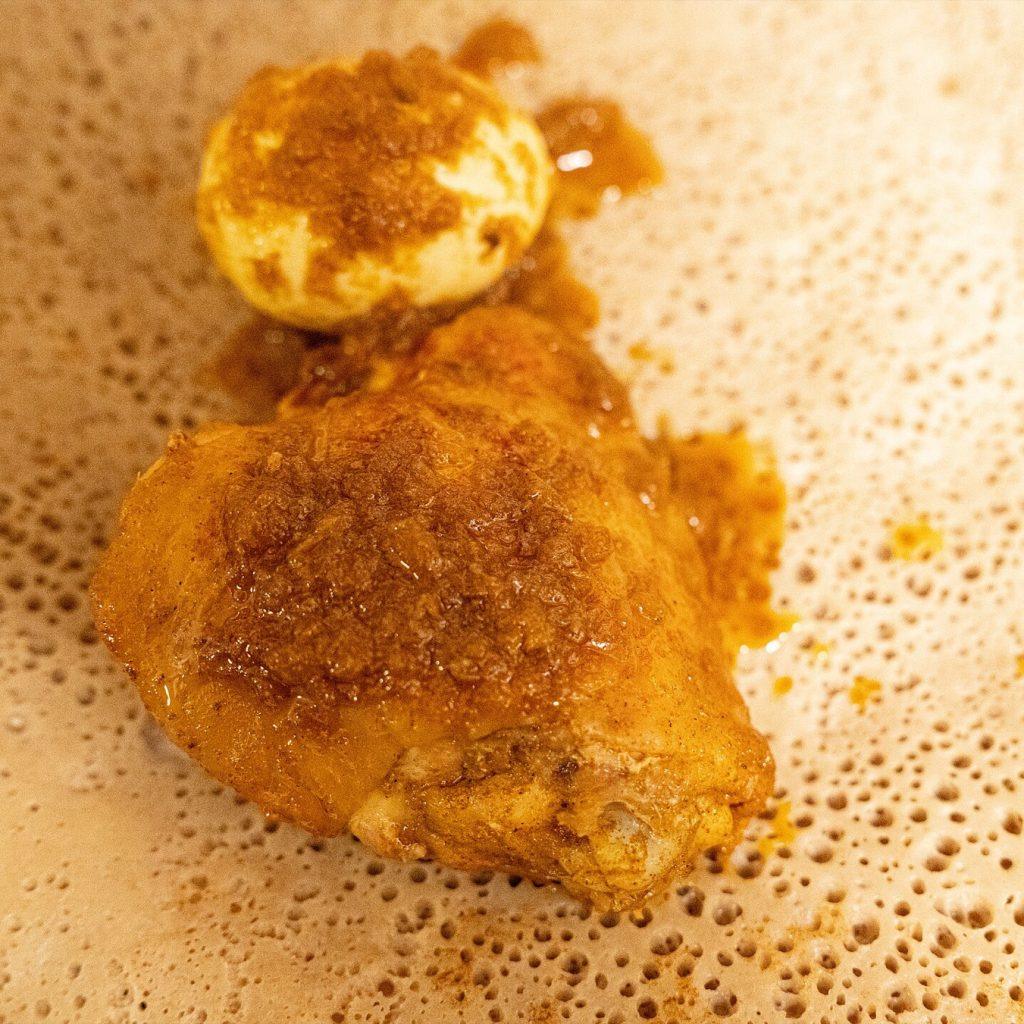
A slow-cooked chicken stew in berbere with a hard-boiled egg, and the national dish. It is rich, deep red, and served at every celebration. Contains chicken and egg. Hot.
Beef stew in the same berbere base, without the egg. Key means red, which tells you it is the chilli version rather than the mild one. Contains beef. Hot.
The mild counterpart to key wat, coloured yellow with turmeric and made without berbere. Order this if the chilli is too much. It is made with lamb, beef or vegetables. Usually contains meat. Mild.
A thick, smooth stew of ground chickpeas or broad beans, and the dish most travellers end up ordering repeatedly. It is the everyday staple rather than a special-occasion dish. Vegan on fasting days. On other days it may be made with niter kibbeh, which is spiced clarified butter. Ask. Mildly spiced.
Red split lentils cooked down with berbere until thick. One of the best things on any fasting platter. Vegan on fasting days, same butter caveat otherwise. Hot.
Yellow split peas cooked with turmeric and no chilli. The mild partner to misir wat, and the safe choice for anyone avoiding heat. Vegan on fasting days. Mild.
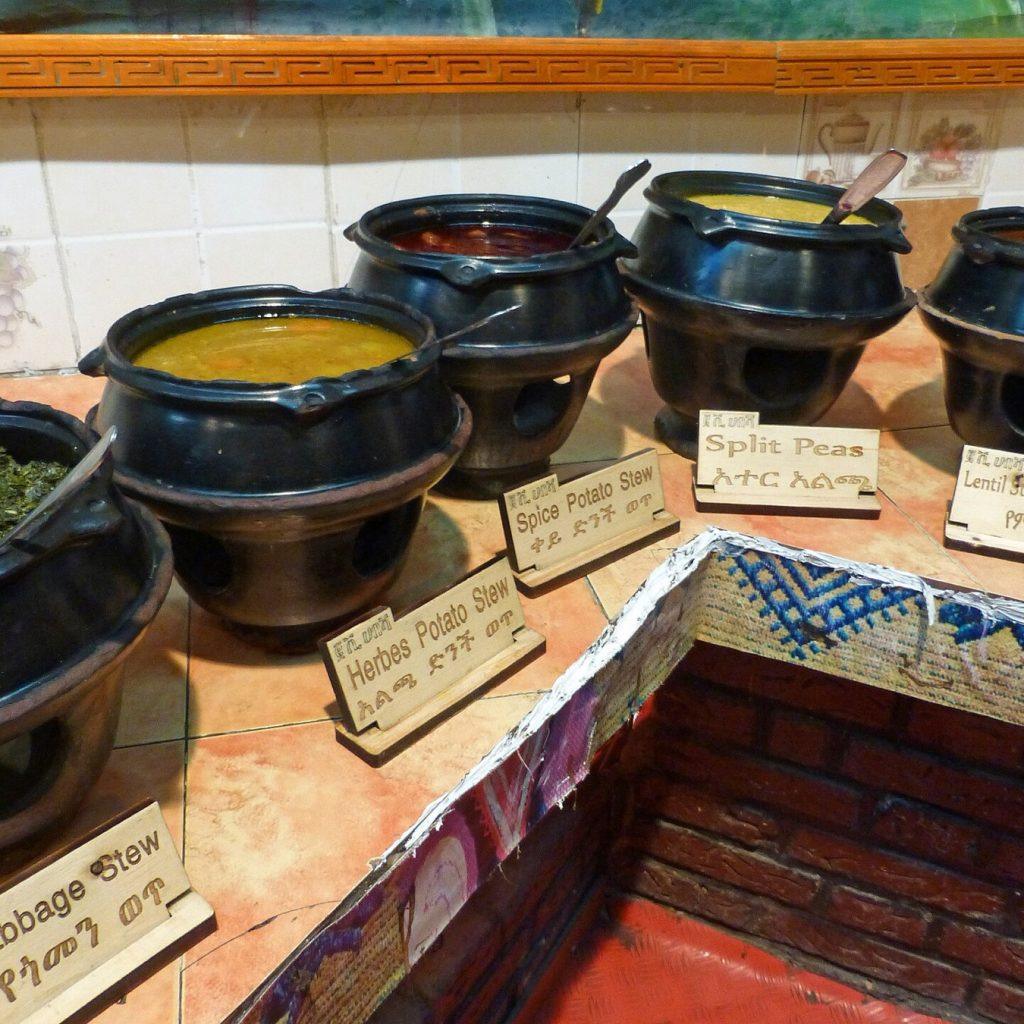
Collard greens, chopped and cooked down with garlic and ginger. Simple and slightly bitter, and it cuts through the richer stews. Vegan on fasting days. Mild.
Cabbage, carrot and potato stewed together with turmeric. Gentle, filling, and on almost every fasting platter. Vegan on fasting days. Mild.
The combination platter: a ring of small mounds of several vegetable dishes on one injera. This is what to order if you want to try everything at once, and it is the single best-value thing on any Ethiopian menu. Vegan when ordered on a fasting day. Mixed spice levels, so there is always something mild on it.
A fresh, mild, crumbly cheese, closer to cottage cheese than anything aged. It is served alongside hot dishes specifically to cool them down. Dairy, so not vegan and not served on fasting days. Not spicy at all.
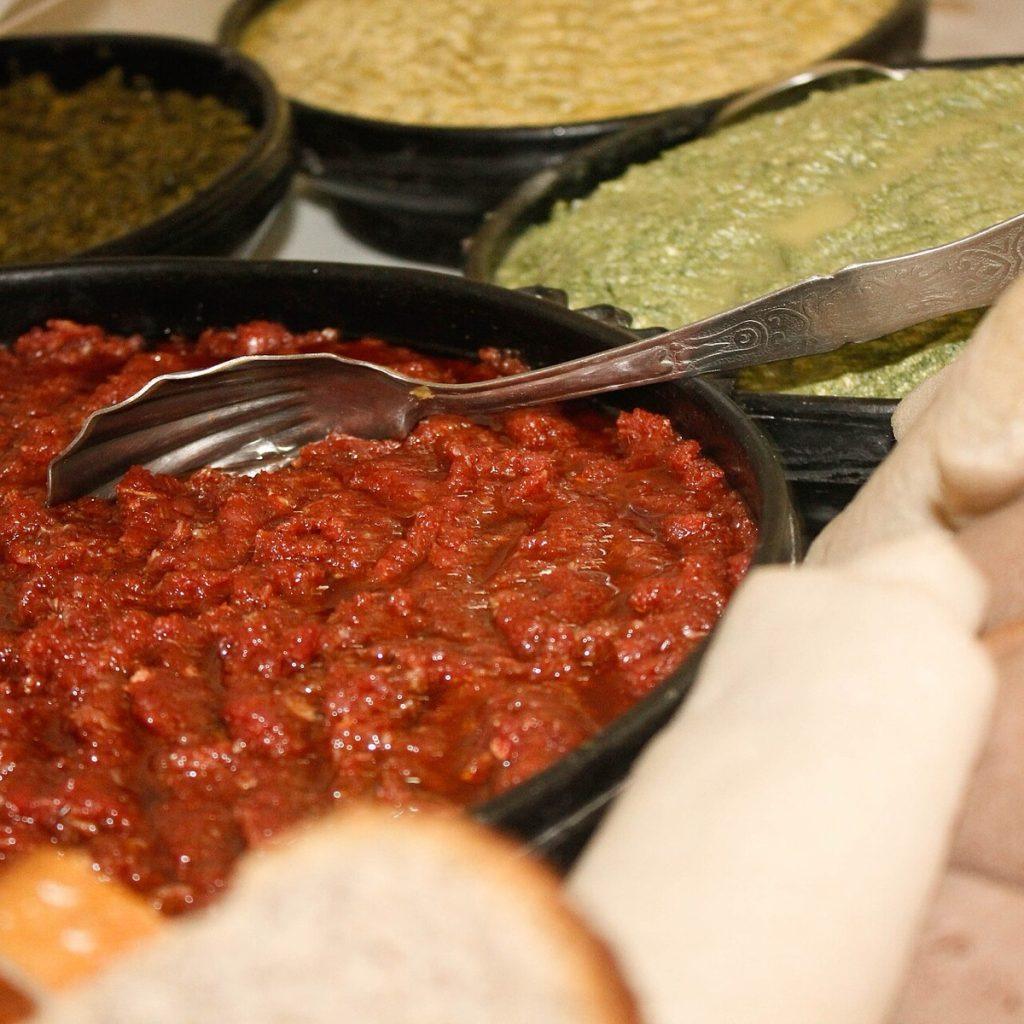
Meat sautéed with onion, garlic, rosemary and sometimes chilli, served sizzling. Ask for it lebleb if you want it barely cooked, or well done if you do not. Contains meat. Varies, ask.
Minced raw beef mixed with mitmita and niter kibbeh, and one of the country's most prized dishes. You can order it leb leb, lightly warmed through, or fully cooked. Raw beef unless you ask otherwise. Mitmita is hotter than berbere.
Cubed raw beef rather than minced, served with mitmita and butter. The same idea as kitfo in a different cut. Raw beef. Hot.
Finely chopped tripe, liver and lean beef, fried with onion, chilli and spices. It is a breakfast dish as much as anything, and it is not a gentle introduction. Offal, often served rare. Hot.
Shredded injera soaked in sauce and stirred through, usually eaten for breakfast. It exists because injera does not keep, so yesterday's becomes today's meal. Vegan in its fasting version, made with meat or butter otherwise. Usually hot.
Berbere is the red chilli blend behind most wat, built on chilli with garlic, ginger, fenugreek and a long list of others. Hot, but aromatic rather than brutal.
Mitmita is hotter, finer and more orange, and it is what comes with kitfo. Treat it with respect.
Niter kibbeh is not hot at all. It is clarified butter infused with spices, and it is the reason a "vegetarian" dish may not be vegan on a non-fasting day.
Tej is honey wine, served in a rounded flask called a berele. It ranges from light and sweet to strong and dry, and it is stronger than it tastes.
Tella is the home-brewed barley beer, cloudy and low in alcohol.
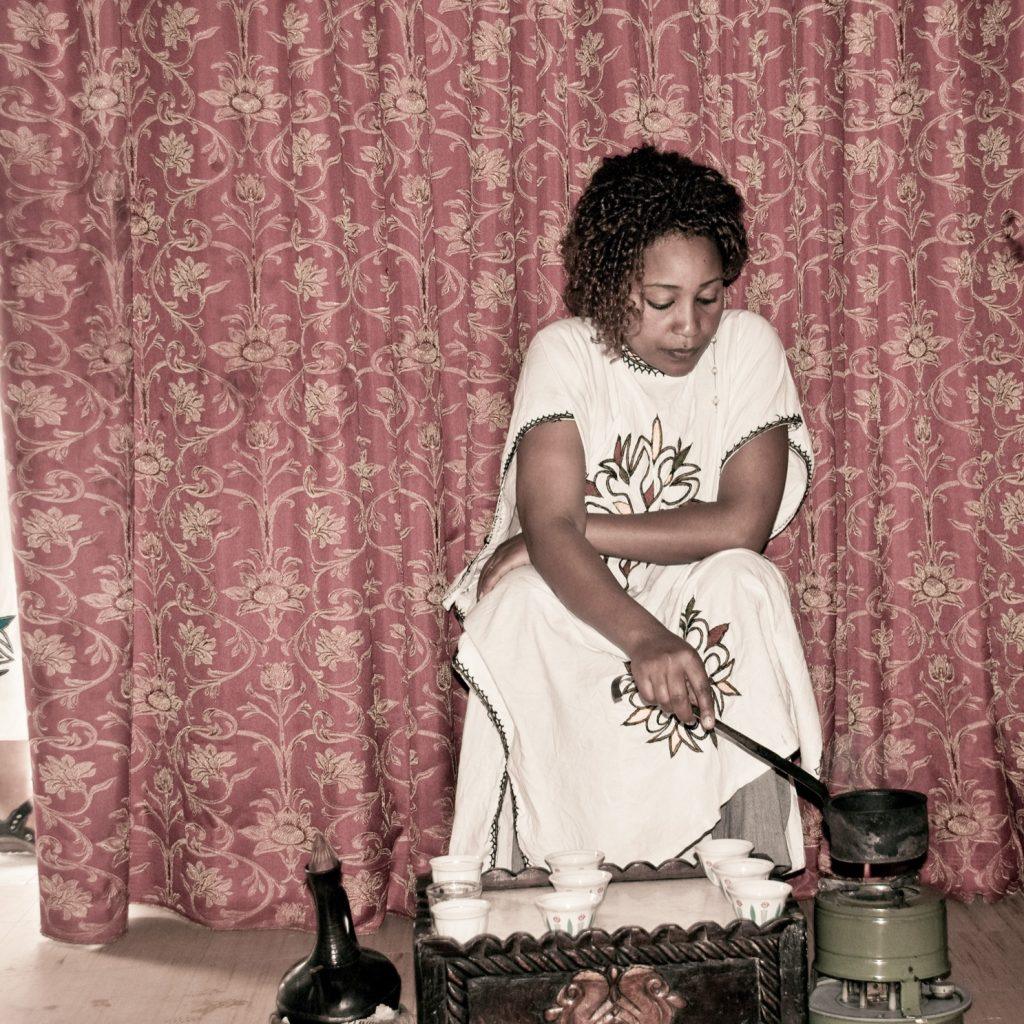
Coffee is the one you will meet daily. Ethiopia is where Coffea arabica originates, and the ceremony is served in three rounds called abol, tona and baraka. Accepting an invitation means staying for all three. Our cultural experiences guide covers the ceremony properly, and our coffee tours go to the forests in Jimma and Kaffa where the species comes from.
Vegan. Straightforward, with one catch. Fasting-day food contains no animal products at all, because the fast excludes butter as well as meat. On non-fasting days the same dishes are often cooked with niter kibbeh. Ask for ye-tsom food, meaning fasting food, and you get the vegan version whatever day it is.
Gluten-free. Difficult, and do not assume. Injera is frequently teff blended with wheat or barley. Ask directly whether the injera is one hundred per cent teff, and be prepared for the answer to be no.
Raw meat. Kitfo, gored gored and dulet are traditionally served raw or barely cooked. This is normal here and prized rather than careless, but it carries the risks raw beef carries anywhere. Ask for dishes cooked through if you would rather not, and nobody will mind.
Heat. Order anything described as alicha, plus gomen, kik alicha and ayib. That combination is a full meal with no chilli in it.
What is the national dish of Ethiopia?
Doro wat, a slow-cooked chicken stew in berbere spice served with a hard-boiled egg, eaten on injera. It appears at celebrations and holidays and is the dish most associated with the country.
What is injera made of?
Traditionally teff, a fine grain native to Ethiopia, fermented for several days to give it its sour taste and spongy texture. In practice injera is often made with teff blended with wheat, barley or sorghum, which means it is not reliably gluten-free.
Is Ethiopian food vegan-friendly?
Unusually so. Ethiopian Orthodox fasting excludes all animal products on most Wednesdays and Fridays and through longer fasting periods, so restaurants routinely cook a complete vegan menu. Ask for fasting food, called ye-tsom, and you will get the vegan version on any day.
What is shiro?
A thick, smooth stew of ground chickpeas or broad beans, mildly spiced, and the everyday staple of Ethiopian home cooking. It is vegan on fasting days, though it may be made with spiced clarified butter at other times.
Is Ethiopian food very spicy?
Some of it. Dishes built on berbere, the red chilli blend, are genuinely hot, and mitmita is hotter still. Anything described as alicha is made with turmeric instead of chilli and is mild, so learning that one word lets you order comfortably.
What is bayenetu?
A combination platter of several vegetable dishes served in small mounds on one large injera. It is the standard fasting-day meal, the easiest way to try many dishes at once, and generally the best value on the menu.
Food is one of the parts of Ethiopia that rewards asking rather than ordering the familiar thing. A guide who knows which places cook well makes a real difference to a trip, particularly outside Addis Ababa.
Tell us where you are going and what you eat, and we will factor it in. We reply within a maximum of two hours, and you will have a detailed itinerary and a quote within 24 hours. Our Ethiopia tours and the destination guides cover where each of these is at its best.
