---------------------------------
Address
Phone: +251 988 111 222
Need help or have a question?
Contact us at: info@driveethiopia.com
Addis Ababa, Ethiopia
---------------------------------
Address
Phone: +251 988 111 222
Need help or have a question?
Contact us at: info@driveethiopia.com
Addis Ababa, Ethiopia


The peoples of the south, from the Dorze highlands to the Omo River
This 10 day tour is the most complete way to meet the peoples of southern Ethiopia. You start in Arba Minch with the crocodiles of Lake Chamo and the beehive shaped houses of the Dorze, explore the stone terraces and walled villages of Konso, a UNESCO World Heritage Site, then travel deep into the Omo Valley to meet the Hamar, Dassanech, Karo and Mursi.
The tour flies from Addis Ababa to Arba Minch and back from Jinka to Addis Ababa, so you avoid the two day drive from the capital. Mursi families are now visited at their temporary settlement near Key Afer, on the road between Turmi and Jinka, rather than in Mago National Park, because of unrest there. There are no camping nights: you stay in lodges and hotels throughout. We plan the route around market days, and all village visits are made with local guides, paying fair fees directly to the communities.
Meet and greet at Bole International Airport and transfer to your hotel. If time allows, visit the National Museum to see Lucy and enjoy a traditional coffee ceremony. Overnight in Addis Ababa.
Morning flight from Addis Ababa to Arba Minch. In the afternoon take a boat on Lake Chamo to see giant Nile crocodiles, hippos and water birds. Evening view over Lakes Abaya and Chamo from the Bridge of God. Overnight in Arba Minch.
Drive up into the cool Guge mountains to visit the Dorze people, famous for their tall beehive shaped bamboo houses and fine cotton weaving. See how enset, the false banana, is made into bread, and visit the market at Chencha if it is a market day. Overnight in Arba Minch.
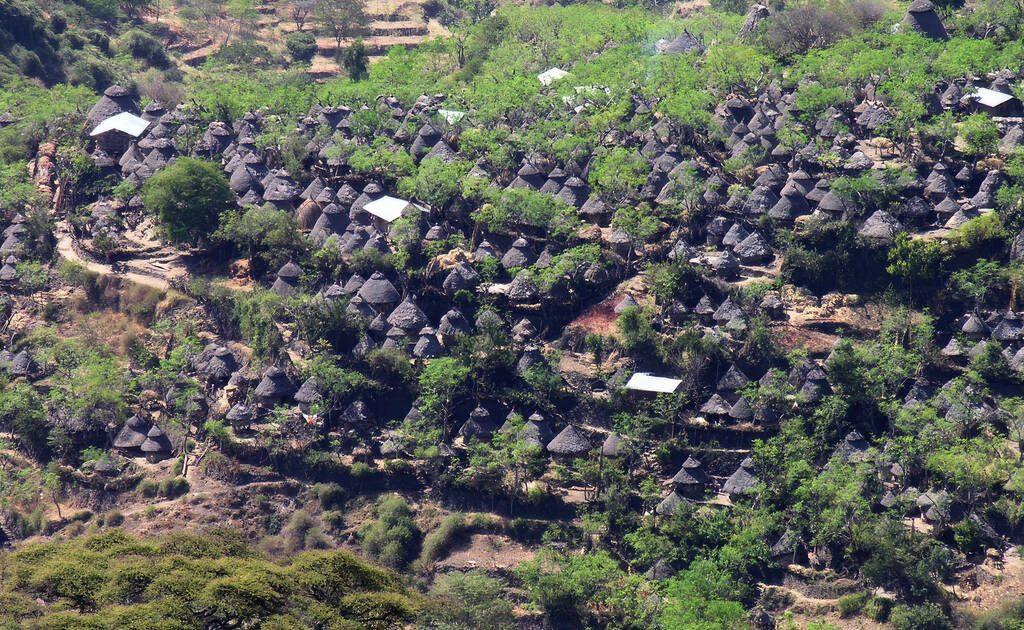
Drive south to Konso, about 2.5 hours. Walk through a traditional walled village with its stone terraces, meeting houses and generation poles, and see the carved wooden waga grave markers. Visit the eroded sandstone pinnacles known as New York. Overnight in Konso.
Drive through the lowlands to Turmi, passing Weyto, home of the Tsemay, and Dimeka, where there is a lively market on Tuesdays and Saturdays. Afternoon visit to a Hamar village. Overnight in Turmi.
Drive to Omorate and cross the Omo River by dugout canoe to visit a Dassanech village. Return to Turmi. If one is happening, you may be invited to a Hamar bull jumping ceremony, a rite of passage for young men. Overnight in Turmi.
Drive to Korcho, the Karo village on a high bank above the Omo River. The Karo are known for their body painting with white chalk and coloured clay. Return to Turmi, with a stop at the Turmi market if it is a Monday. Overnight in Turmi.
Drive towards Jinka and stop at the temporary Mursi settlement near Key Afer. Mursi women are known for their clay lip plates. If it is Thursday, visit the Key Afer market, where Ari, Benna, Tsemay and Mursi people come to trade. Continue to Jinka. Overnight in Jinka.
Visit the South Omo Research Centre and Museum for an introduction to the peoples of the valley, then walk through an Ari village to see pottery making, coffee growing and everyday village life. Overnight in Jinka.
Transfer to Jinka airport for your flight to Addis Ababa and your onward journey.
Price: on request. This tour runs as a private trip on any date you choose. The price depends on group size, hotel level and season, so we quote each trip individually. Tell us your dates and number of travellers and we reply within 2 hours, with a full itinerary and quote within 24 hours.
Tip on domestic flights: if you fly into Ethiopia on Ethiopian Airlines, you can usually get large discounts on domestic flights. Book them on the same booking reference or send us your ticket and we book them for you.
Get a free quote or message us on WhatsApp +251 988 111 222.
The Omo Valley can be visited all year. The driest months are December to February and June to August. Heavy rain in April, May and November can make some roads difficult.
At their temporary settlement near Key Afer, on the road between Turmi and Jinka. Because of unrest in Mago National Park, we no longer take guests into the park.
No. Every night is in a lodge or hotel.
In most villages people ask a small fee per photo. Your guide explains the custom and helps you agree fairly. Always ask first.
Ceremonies are family events and are not scheduled for tourists. Your guide asks around each day and takes you if one is happening.
Amharic, English, French, German, Italian, and Spanish. Please inform us of your preferred language when booking.
Note: The itinerary can be customized based on your preferences and time availability.
Did you find it interesting? For getting quotes and additional information, please use the below form.