---------------------------------
Address
Phone: +251 988 111 222
Need help or have a question?
Contact us at: info@driveethiopia.com
Addis Ababa, Ethiopia
---------------------------------
Address
Phone: +251 988 111 222
Need help or have a question?
Contact us at: info@driveethiopia.com
Addis Ababa, Ethiopia


Three, five and eight day Simien routes compared on altitude, walking hours and difficulty, plus the scout and permit rules at Debark.
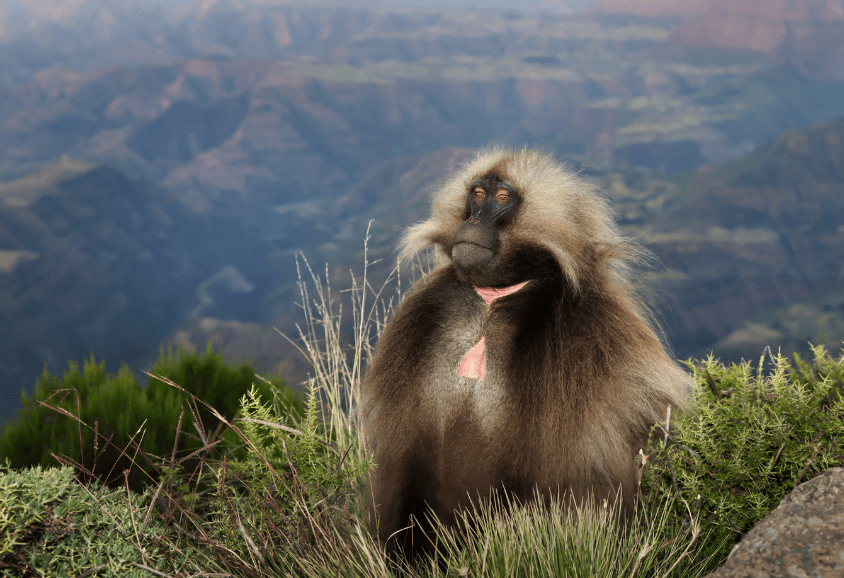
Most Simien treks run three, five or eight days from Debark. Three days gets you the escarpment and the geladas. Five adds the best viewpoints and a 4,200 metre pass. Eight is what Ras Dashen takes if you want to summit it safely. Every visitor must take an armed community scout, and multi-day trekkers must take a guide as well.
Nothing here is technical. There is no scrambling, no rope and no glacier. What makes the Simien hard is altitude, consecutive days of walking, and camping at 3,600 metres in genuine cold.
This page compares the three standard route lengths. For getting to Debark, where to stay and how the park fits a wider trip, see our Simien Mountains destination guide.
| 3 days | 5 days | 8 days | |
|---|---|---|---|
| Route | Debark to Sankaber to Geech to Chennek | As 3 days, plus Imet Gogo, Inatye and the Bwahit pass | As 5 days, plus the descent to Ambiko and the Ras Dashen ascent |
| Camps | Sankaber, Geech | Sankaber, Geech, Chennek | Sankaber, Geech, Chennek, Ambiko |
| Highest point | About 3,600m at Geech | About 4,200m at the Bwahit pass | About 4,550m on Ras Dashen |
| Walking | 4 to 6 hours a day | 5 to 7 hours a day | 6 to 9 hours, and one very long summit day |
| Difficulty | Moderate. Fit walkers manage it without training | Hard. The altitude starts to matter | Serious. Needs acclimatisation and a spare day |
| You get | The escarpment, gelada troops, Geech Abyss | The classic viewpoints and the Walia ibex crags at Chennek | Ethiopia's highest summit |
No prices here. We build itineraries per enquiry rather than selling fixed departures, and a Simien trek's cost depends on group size, how many mules and crew the route needs, and whether you fly to Gondar or drive. What the table gives you instead is the thing that actually differs between the options.
An armed community scout is compulsory for every visitor, including day visitors who never camp. This is not an upsell and it is not optional.
A guide is required on top of the scout for any multi-day trek. The scout and the guide are different roles and different people.
Both are arranged at Debark, the town at the park headquarters, along with your park permit. Mules and a muleteer are arranged there too if you are camping, and on anything beyond three days you will want them.
Book these through your operator or at the Debark headquarters. Not with people who approach you in the street offering to sort it.
The scout requirement is worth understanding rather than resenting. The Simien is an inhabited, farmed landscape with villages inside the park boundary, and the scout system is part of how the communities living there share in the park rather than only being restricted by it.
Debark to Sankaber to Geech, and out via Chennek. The standard short trek and the one most people do.
Sankaber sits at about 3,250 metres and Geech at about 3,600, so you gain height gently. The walking is four to six hours a day on paths rather than trails, mostly along or near the escarpment edge.
You get the thing people come for. The escarpment drops a thousand metres in places, the gelada troops are habituated enough to feed a few metres away, and Geech Abyss is on this section.
Who it suits. Anyone reasonably fit who walks regularly. You do not need training for this, you need decent boots and a warm sleeping bag.
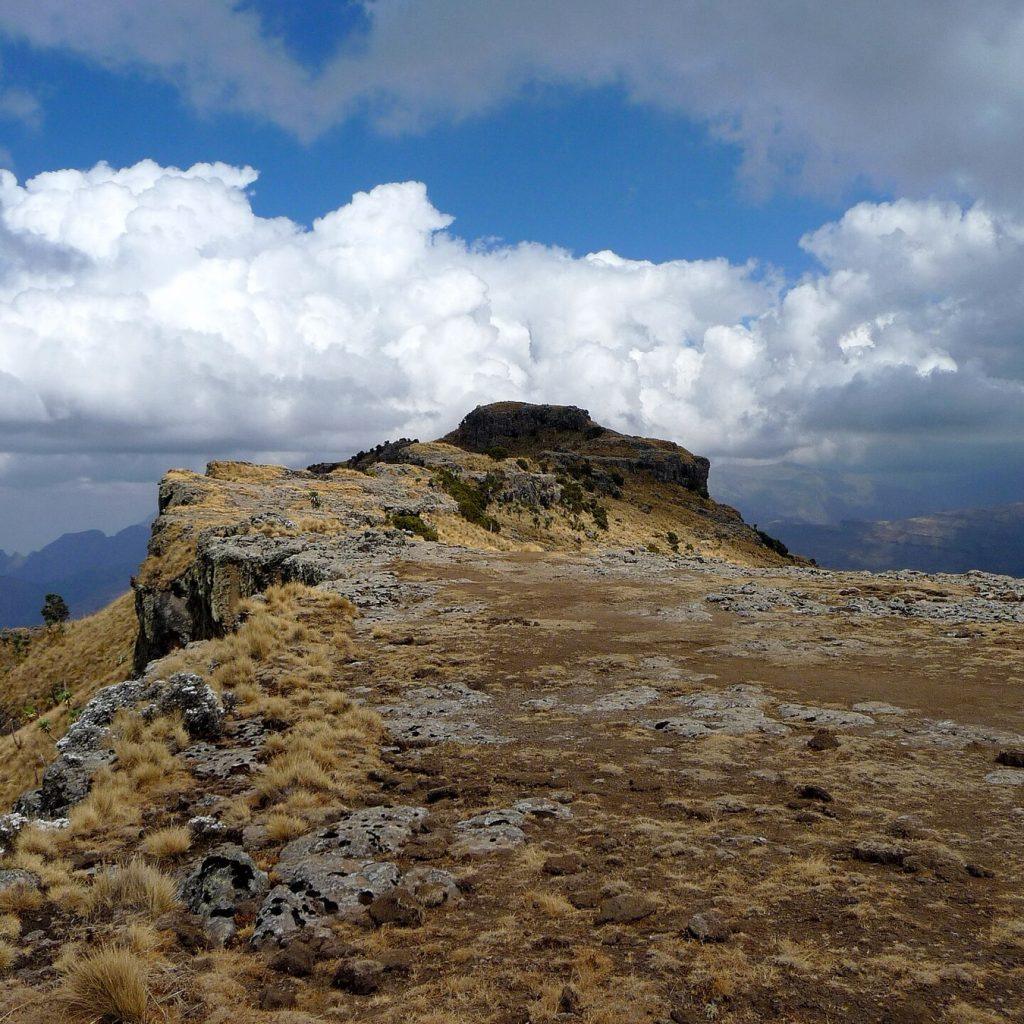
The same spine with the good viewpoints added. This is the one to pick if you have the days and you are not set on the summit.
The additions are Imet Gogo at about 3,926 metres, which is the most photographed viewpoint in the range and a genuine promontory with the drop on three sides, Inatye, and the Bwahit pass at about 4,200 metres.
Bwahit is where altitude stops being an abstraction. It is higher than anything in the Alps outside the big peaks, and people who were fine at Geech sometimes are not fine here.
Who it suits. Regular hikers who want the range rather than a sample of it, and anyone who wants a serious viewpoint day without committing to Ras Dashen.
Ras Dashen is about 4,550 metres and it is the highest point in Ethiopia. It is a walk rather than a climb, and it is still a serious undertaking.
The structure that catches people out is this: after Chennek at about 3,620 metres you descend into the Meshaha valley to Ambiko at about 3,200 metres, then climb from there to the summit and back. So the summit day starts low, gains well over a kilometre, and returns. It is long, and it is the reason eight days is the honest number rather than six.
Build in a spare acclimatisation day. Not as padding but because it is the single thing that decides whether you summit. Arriving at Ambiko under-acclimatised and pushing on is how the day goes wrong.
Who it suits. Experienced hill walkers who have been at altitude before, and who are prepared for the summit attempt not to work.
The Simien is a walking route, not a climb. The difficulty is in three things and none of them is technique.
Altitude. You sleep above 3,200 metres every night, and higher on the longer routes. Headaches and poor sleep are common. Anything worse means going down, and going down is always the answer.
Consecutive days. One long day is manageable for most people. Five in a row, on rough ground, at altitude, with a cold night in between each, is a different proposition.
Cold. It is close to the equator and people pack for that. Camps at 3,600 metres get near freezing at night and the wind on the escarpment is constant. Insufficient sleeping bags ruin more Simien treks than sore legs do.
Not a problem: exposure in the mountaineering sense, route-finding, or anything needing a rope.
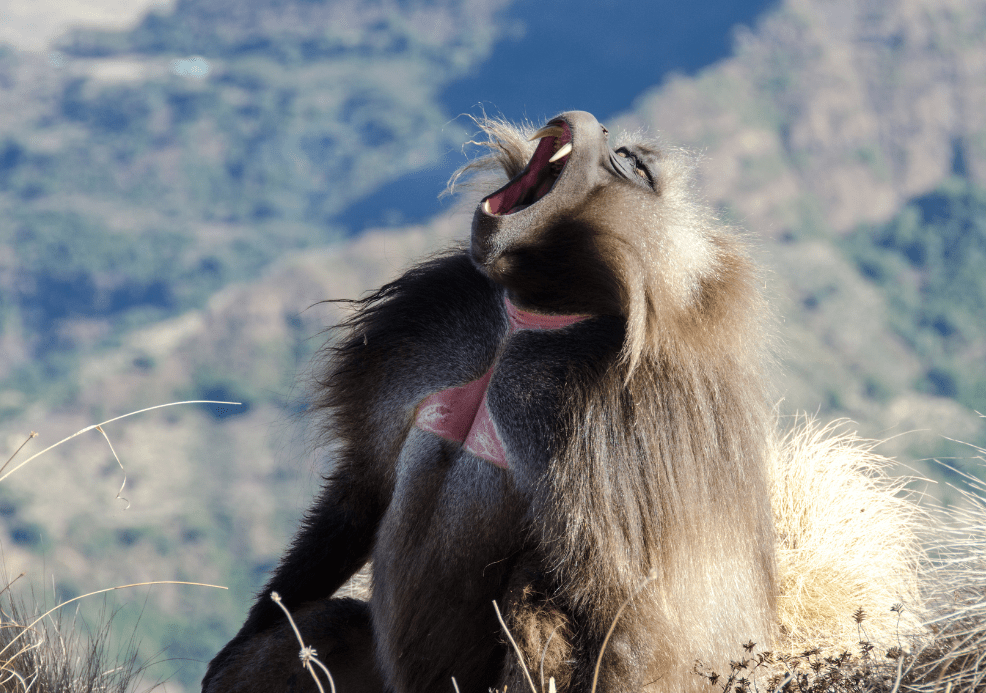
Gelada. The Simien holds the largest population of these, and they are the reason many people come. They are grazing primates found only in the Ethiopian highlands, they live in troops that can run to hundreds, and they are relaxed enough around walkers that you sit near them rather than watch through binoculars. You will see them on any route length.
Walia ibex. Endemic to the Simien and found nowhere else on earth. Most often on the crags around Chennek, which means the five and eight day routes give you the better chance.
Ethiopian wolf. The rarest canid in the world. Present but genuinely uncommon here, and more reliably seen on the Sanetti Plateau in the Bale Mountains. Treat a sighting as luck rather than an expectation.
Lammergeier. The bearded vulture works the escarpment updraughts and is a regular sight from the cliff edges.
The park was inscribed by UNESCO in 1978, in the same year as Lalibela, and the endemic wildlife is a large part of why.
October to March, once the kiremt rains have finished and the ground has dried out.
Trekking in the June to September rains is possible and the paths stay walkable, but cloud sits on the escarpment for much of it, which removes the reason most people come. Our best time to visit guide sets out both Ethiopian rainfall calendars and why they do not line up.
If you are deciding between the Simien and elsewhere rather than planning a trek you have already chosen, our comparison of Lalibela, the Simien and the Danakil covers who each suits.
Do you need a permit to trek in the Simien Mountains?
Yes. Park permits are issued at Debark, the town at the park headquarters, and an armed community scout is compulsory for every visitor including day visitors. A guide is required in addition to the scout for any multi-day trek, and mules with a muleteer are arranged at Debark for camping trips.
How many days do you need to trek the Simien Mountains?
Three days covers the escarpment, the gelada troops and Geech Abyss. Five adds Imet Gogo, Inatye and the Bwahit pass at about 4,200 metres. Eight is what a safe Ras Dashen ascent takes, including a spare acclimatisation day.
How difficult is trekking in the Simien Mountains?
Not technical at any point, with no scrambling or rope work. The difficulty is altitude, consecutive days of walking on rough ground, and cold nights camping at 3,600 metres. Fit walkers manage the three-day route without training. Ras Dashen needs prior altitude experience.
How high is Ras Dashen?
About 4,550 metres, the highest point in Ethiopia. Published figures vary slightly between sources. It is reached on foot rather than climbed, but the summit day involves descending to Ambiko at about 3,200 metres first, then gaining well over a kilometre to the top and returning.
Can you see Walia ibex in the Simien Mountains?
Yes, and nowhere else on earth, because the species is endemic to the range. They are most often seen on the crags around Chennek, so the five and eight day routes offer the better chance than a short trek.
Do you have to camp on a Simien trek?
On a multi-day trek, essentially yes. There are designated campsites at Sankaber, Geech and Chennek with simple facilities, and camping is the norm. Bring a sleeping bag rated properly for cold, because nights near 3,600 metres approach freezing.
What is the best time of year to trek the Simien Mountains?
October to March, after the kiremt rains have ended and the ground has dried. Trekking between June and September is possible but cloud commonly sits on the escarpment, which removes the views most people come for.
Is a guide compulsory in the Simien Mountains?
An armed community scout is compulsory for everyone, and a guide is required on top of that for multi-day treks. They are two separate roles. Both are arranged at Debark along with the permit.
The right route depends on how many days you have, how much altitude you have handled before, and whether the summit matters to you or the views do.
Tell us your dates and your walking experience and we will tell you honestly which of the three fits, including when the answer is a shorter one than you had in mind. We reply within a maximum of two hours, and you will have a detailed itinerary and a quote within 24 hours. Our nature tours page covers the Simien and Bale together.
