---------------------------------
Address
Phone: +251 988 111 222
Need help or have a question?
Contact us at: info@driveethiopia.com
Bole, Addis Ababa, Ethiopia
---------------------------------
Address
Phone: +251 988 111 222
Need help or have a question?
Contact us at: info@driveethiopia.com
Bole, Addis Ababa, Ethiopia


Genna, Timkat, Enkutatash, Meskel and Fasika with dates, locations and why the eve matters more than the day at two of them.
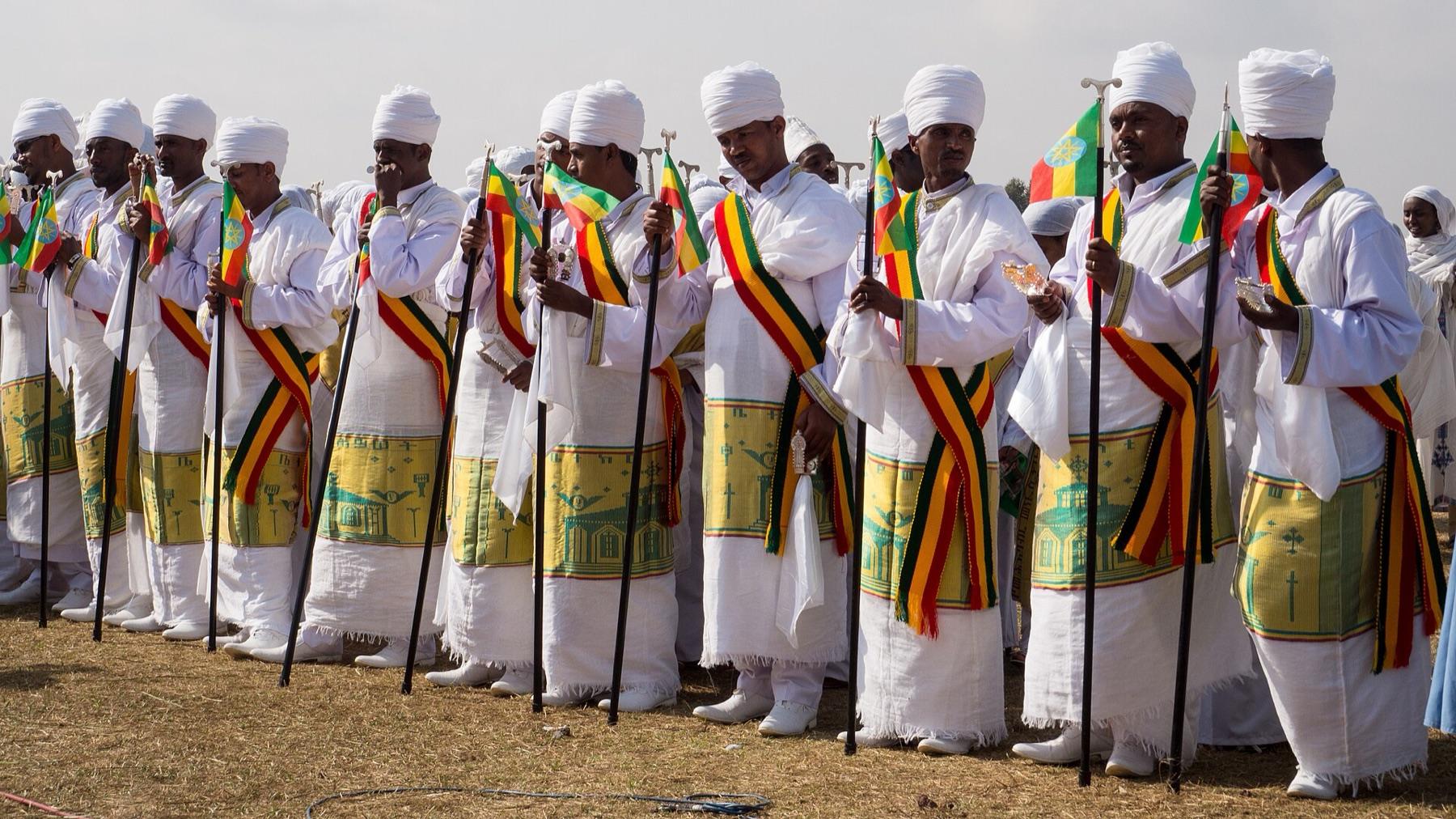
This Ethiopian festival calendar covers the four festivals worth planning a trip around: Genna on 7 January, Timkat on 19 January, Enkutatash on 11 September and Meskel on 27 September. Fasika, the Orthodox Easter, moves by weeks and falls on 2 May in 2027. Timkat in Gondar and Genna in Lalibela are the two that fill their towns completely, and accommodation for both goes months ahead.
This Ethiopian festival calendar page is the dates and the logistics. If you want what the festivals are actually like to attend, our cultural experiences guide covers the atmosphere rather than the calendar.
Ethiopia runs its own calendar. Thirteen months, twelve of thirty days and a short thirteenth of five or six. It sits seven to eight years behind the Gregorian calendar, so an Ethiopian year number will not match the one you flew in on.
Two consequences for planning:
Fixed-date festivals still move. Genna, Timkat, Enkutatash and Meskel fall on the same Ethiopian dates every year, but because the Ethiopian leap year does not line up with the Gregorian one, the Gregorian date shifts by a day in some years. Timkat is 19 January in most years and 20 January in others.
Fasika moves by weeks. Ethiopian Orthodox Easter follows the Julian Paschal calculation, so it drifts against Western Easter and against the Gregorian calendar generally.
Confirm the exact date for your own year rather than assuming the one you read. That applies to this page as much as any other.
| Festival | Date | Next | Where | What it marks |
|---|---|---|---|---|
| Genna | 7 January | 7 Jan 2027 | Lalibela | Ethiopian Christmas |
| Timkat | 19 January | 19 Jan 2027 | Gondar, also Lalibela and Addis Ababa | Epiphany, the baptism of Christ |
| Adwa Victory Day | 2 March | 2 Mar 2027 | Addis Ababa | The 1896 victory over Italian invasion |
| Fasika | Moves | 2 May 2027 | Nationwide | Orthodox Easter, the biggest feast of the year |
| Enkutatash | 11 September | 11 Sep 2026 | Nationwide, Addis Ababa | Ethiopian New Year |
| Meskel | 27 September | 27 Sep 2026 | Addis Ababa, Meskel Square | The finding of the True Cross |
| Irreecha | Early October | See note below | Bishoftu, then Addis Ababa | Oromo thanksgiving |
A note on Irreecha. It falls in early October and sources disagree on the exact 2026 date, with both 3 and 4 October in circulation. We are not going to publish one as fact. Confirm it before booking around it, and ask us and we will check rather than guess.
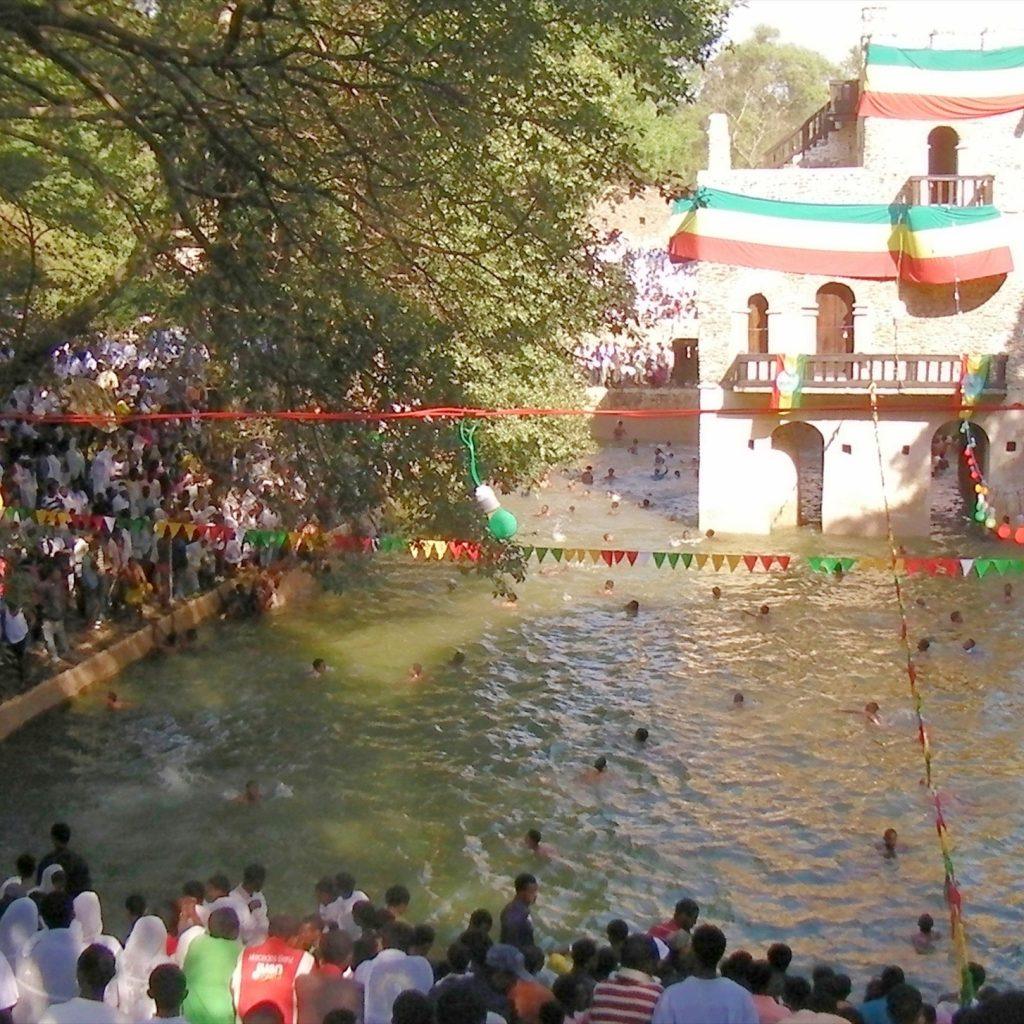
Timkat at Gondar, 19 January. The tabot, the consecrated tablet at the heart of every Ethiopian Orthodox church, is carried out in procession and taken to water. At Gondar the water is Fasilides’ Bath, a stone pool filled once a year for exactly this, and the celebration ends with people entering it. It is the single most photographed religious event in Ethiopia.
Genna at Lalibela, 7 January. Christmas among the eleven rock-hewn churches, with pilgrims arriving in white from across the country. The churches are the setting rather than the backdrop, and the town holds a fraction of the people who want to be there.
Book both a long way out. Accommodation in Gondar for Timkat and in Lalibela for Genna is the tightest of the Ethiopian year. This is the one part of Ethiopian travel where late booking genuinely costs you the trip.
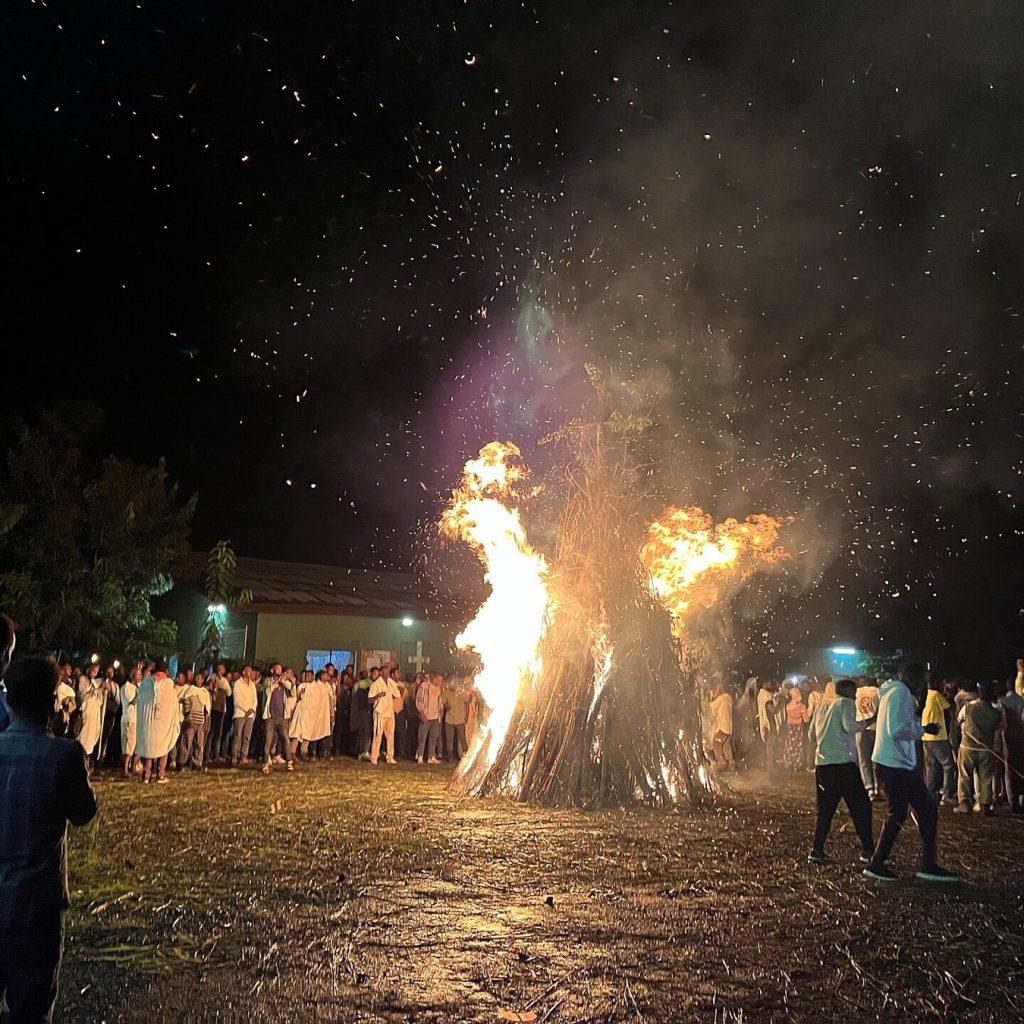
This is the thing most calendars miss and it changes how you plan.
For Timkat, the eve of 18 January is when the tabot leaves the church and processes to the water, often at dusk, accompanied by chanting and candles. Many people find it the more affecting half of the festival, and an itinerary built only around the 19th misses it.
For Meskel, the eve is the bonfire. The demera, a tall conical pyre, is lit at nightfall on 26 September in Meskel Square and in squares across the country, and the day that follows is the aftermath.
If a tour sells you “Timkat” or “Meskel” on a single date, ask which evening you are there for.
Genna, 7 January. Be in Lalibela. Two nights minimum, and arrive before the 6th because the town gets busy and the roads in do too. Pairs naturally with the northern historic route, and January is dry across the whole country.
Timkat, 19 January. Gondar is the headline. Lalibela and Addis Ababa also celebrate it substantially, and if Gondar is full those are real alternatives rather than consolation. Be in place on the 18th.
Fasika, moving. Nationwide rather than concentrated in one town, and preceded by a 55-day fast, which means the food on the day is a genuine event in itself. Our food guide covers what the fast does to the table.
Enkutatash, 11 September. New Year, at the very end of the kiremt rains when the highlands are green and the Meskel daisies are out. Widely celebrated rather than concentrated.
Meskel, 27 September. Addis Ababa, Meskel Square, with the demera on the eve. This is the easiest of the four to attend, because you do not have to leave the capital to see the main event.
Irreecha, early October. The Oromo thanksgiving, at Lake Hora in Bishoftu and subsequently in Addis Ababa. It is one of the largest gatherings in the country and it is culturally distinct from the Orthodox festivals above.
They fix your dates. Everything else about an Ethiopian festival calendar trip is flexible. A festival is not, so it becomes the fixed point you build the rest around.
They fill the accommodation. In Gondar and Lalibela specifically, and months ahead.
They are worth it. These are not performances staged for visitors. They are the country’s own calendar, attended overwhelmingly by Ethiopians, and you are a guest at them rather than an audience.
They also make the country busier and pricier in those weeks, on the Ethiopian festival calendar, which is worth knowing if what you actually want is quiet. If a festival is not the point of your trip, our best time to visit guide sets out the months that work for other reasons.
Dress conservatively. Shoulders and knees covered. Many Ethiopians wear white for major festivals and you will stand out less in muted clothing than in bright.
Ask before photographing people, and be particularly careful around clergy and around anyone praying.
Do not get between a procession and where it is going. The tabot is the centre of the event and it has right of way over everything.
Expect crowds and expect to stand. These are large public gatherings without seating plans.
When is Timkat in Ethiopia?
19 January in most years, and 20 January in some, because the Ethiopian leap year does not align with the Gregorian one. Gondar is the largest celebration, centred on Fasilides’ Bath. The eve, 18 January, is when the tabot processes to the water and many people find it the better half.
When is Ethiopian Christmas?
Genna falls on 7 January. Lalibela is where most visitors want to be for it, among the eleven rock-hewn churches, and the town fills completely, so book well ahead and arrive before the 6th.
When is Ethiopian New Year?
Enkutatash, on 11 September in most years and 12 September in others. It falls as the kiremt rains end, when the highlands are green and the Meskel daisies are flowering, and it is celebrated nationwide rather than in one place.
When is Meskel and where is the best place to see it?
27 September, and Addis Ababa. The demera bonfire is lit on the eve, 26 September, in Meskel Square and in squares across the country. It is the most accessible of the major festivals because the main event is in the capital.
Why do Ethiopian festival dates change?
The Ethiopian festival calendar shifts every year because Ethiopia uses its own calendar of thirteen months, running seven to eight years behind the Gregorian one. Fixed Ethiopian dates shift by a day in some Gregorian years because the leap years do not align. Fasika, the Orthodox Easter, follows the Julian Paschal calculation and moves by weeks.
When is Fasika, Ethiopian Easter?
It moves. In 2027 it falls on 2 May. It follows the Julian Paschal calculation rather than the Western one, so it drifts against both the Gregorian calendar and Western Easter, and it is preceded by a fast of 55 days.
Do I need to book accommodation early for Ethiopian festivals?
For Timkat in Gondar and Genna in Lalibela, yes, months ahead. Those two are the tightest dates in the Ethiopian festival calendar and late booking is the one thing that reliably costs people the trip.
What is Irreecha?
The Oromo thanksgiving festival, held in early October at Lake Hora in Bishoftu and afterwards in Addis Ababa. It is one of the largest gatherings in the country and is culturally distinct from the Orthodox festivals. Sources disagree on the exact 2026 date, so confirm it rather than relying on a published figure.
A festival trip built around this Ethiopian festival calendar is planned backwards from one fixed evening, and everything else has to fit around it.
Tell us which festival and which year and we will confirm the date, tell you where to be on the eve as well as the day, and say honestly whether the accommodation is still there. We reply within a maximum of two hours, and you will have a detailed itinerary and a quote within 24 hours.
