---------------------------------
Address
Phone: +251 988 111 222
Need help or have a question?
Contact us at: info@driveethiopia.com
Addis Ababa, Ethiopia
---------------------------------
Address
Phone: +251 988 111 222
Need help or have a question?
Contact us at: info@driveethiopia.com
Addis Ababa, Ethiopia


Four Ethiopian traditions are on UNESCO's heritage list. The coffee ceremony step by step, Timkat and Meskel dates, and how to behave at both.
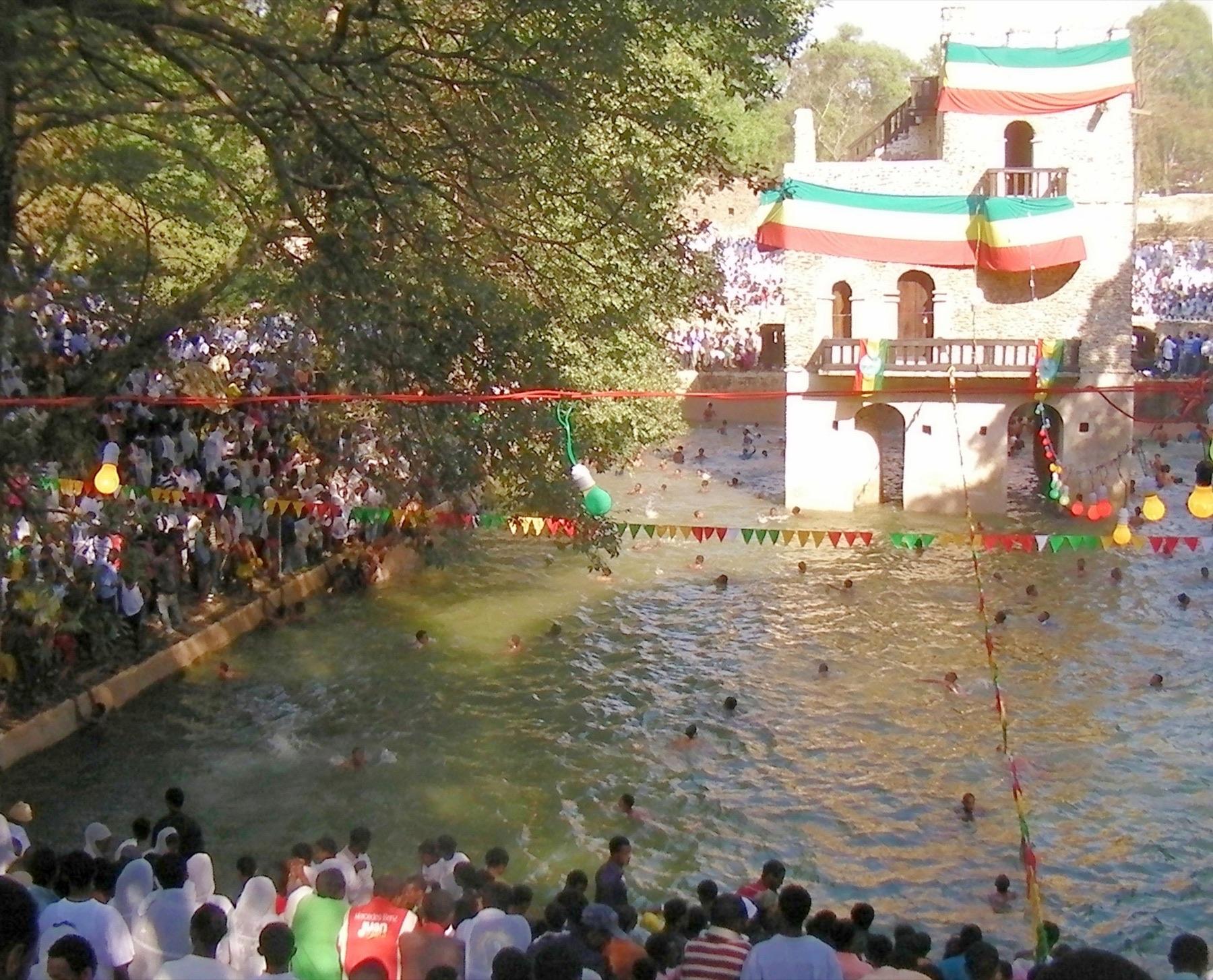
Four Ethiopian cultural practices are inscribed on UNESCO's Representative List of the Intangible Cultural Heritage of Humanity. Meskel went on in 2013, the Sidama new year festival Fichee-Chambalaalla in 2015, the Oromo Gada system in 2016, and Timket, the Ethiopian Epiphany, in 2019.
That is a useful filter for a first visit, because it separates the practices that are recognised traditions from the ones a tour brochure has assembled for you.
Two of them are close. Enkutatash, the Ethiopian new year, falls on 11 September 2026. Meskel follows on 27 September 2026. Timkat is 19 January 2027.
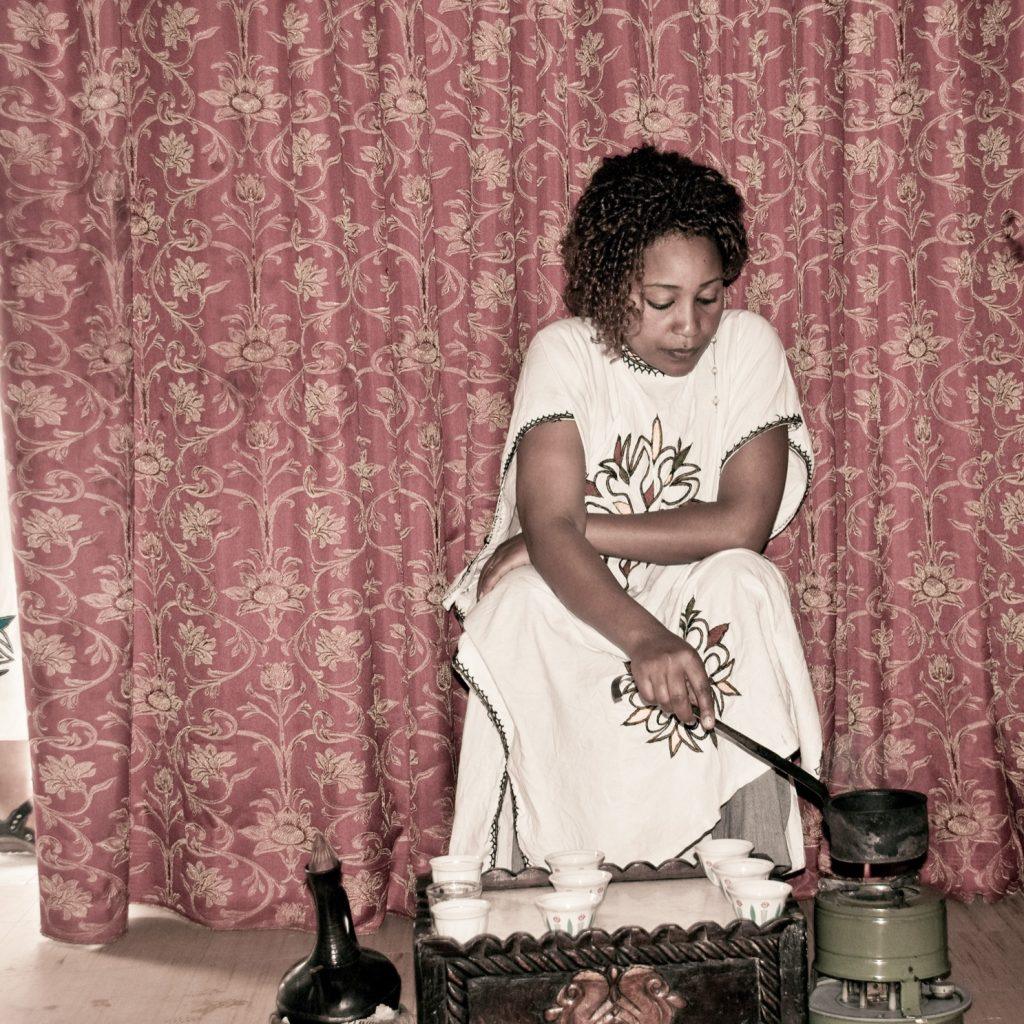
The ceremony is not a performance and it is not fast. Green beans are washed and roasted in a pan over coals in front of you, the roasted beans are carried round so everyone can take in the smoke, then they are ground and brewed in a clay pot called a jebena.
It is served in three rounds, and the rounds have names. The first is abol, the second tona, the third baraka, which means blessing. Leaving after the first cup is the equivalent of standing up halfway through dinner. If you are invited and you have somewhere to be, say so at the start rather than at the end.
Grass is often scattered on the floor, incense is usually burning, and popcorn or roasted barley tends to appear alongside. In much of the country this happens daily rather than for visitors, which is the reason to accept an invitation to a home over a hotel demonstration.
Ethiopia is where Coffea arabica originates, and Jimma and Kaffa are the forested southwest where that story starts. Our coffee tours go into the growing side.
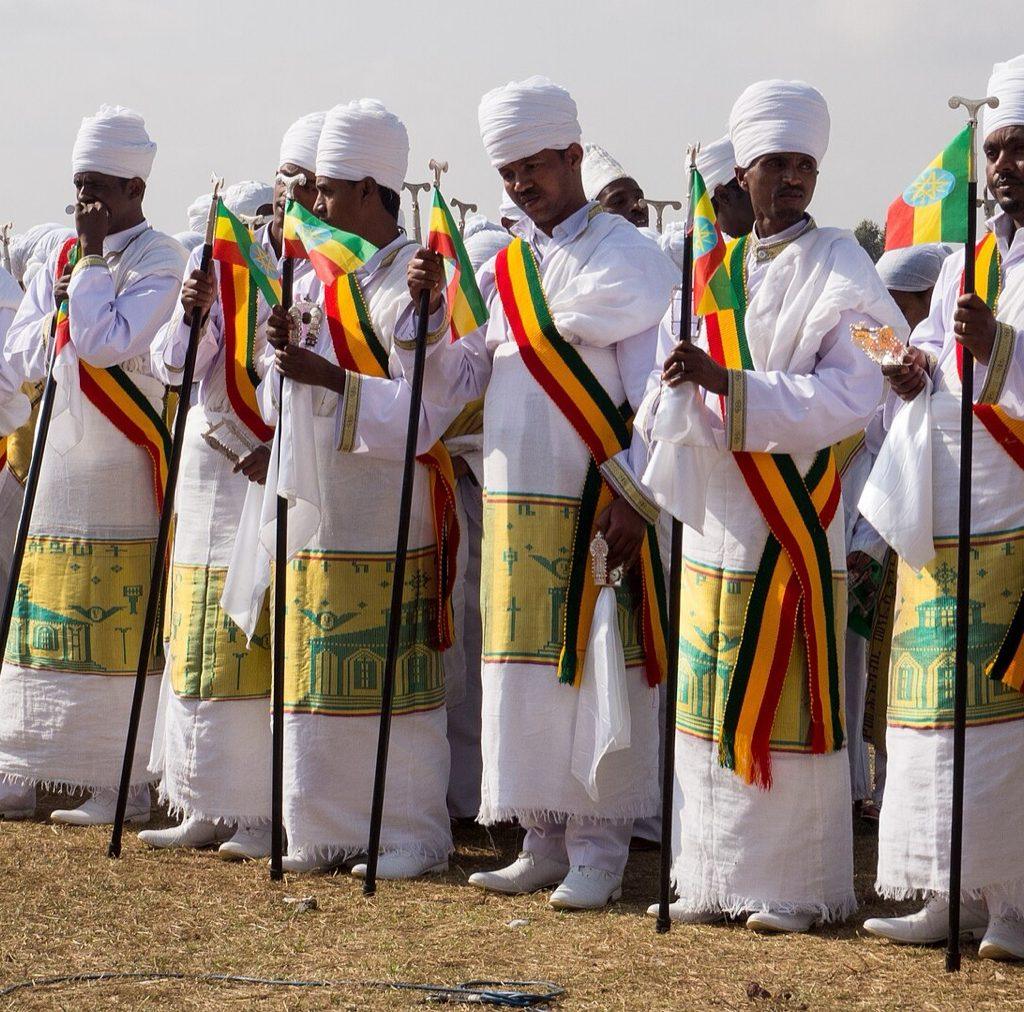
Timkat is the Ethiopian Orthodox celebration of the baptism of Christ, and it is the largest religious gathering a visitor is likely to see in Ethiopia. UNESCO inscribed it in 2019.
The part that matters is that it begins the afternoon before. Each church's tabot, a consecrated replica of the Ark of the Covenant, is carried out wrapped in cloth and processed to a body of water, accompanied by priests, drums and singing. It stays overnight. At dawn the water is blessed and the crowd is sprinkled or immersed, and the tabot is carried back.
So a visitor who arrives on the morning of the 19th has missed half of it. Come for the eve.
The date moves. Timkat falls on 19 January in most years and 20 January in others, because it is fixed to the Ethiopian calendar rather than the Gregorian one. Confirm the date for your specific year rather than assuming.
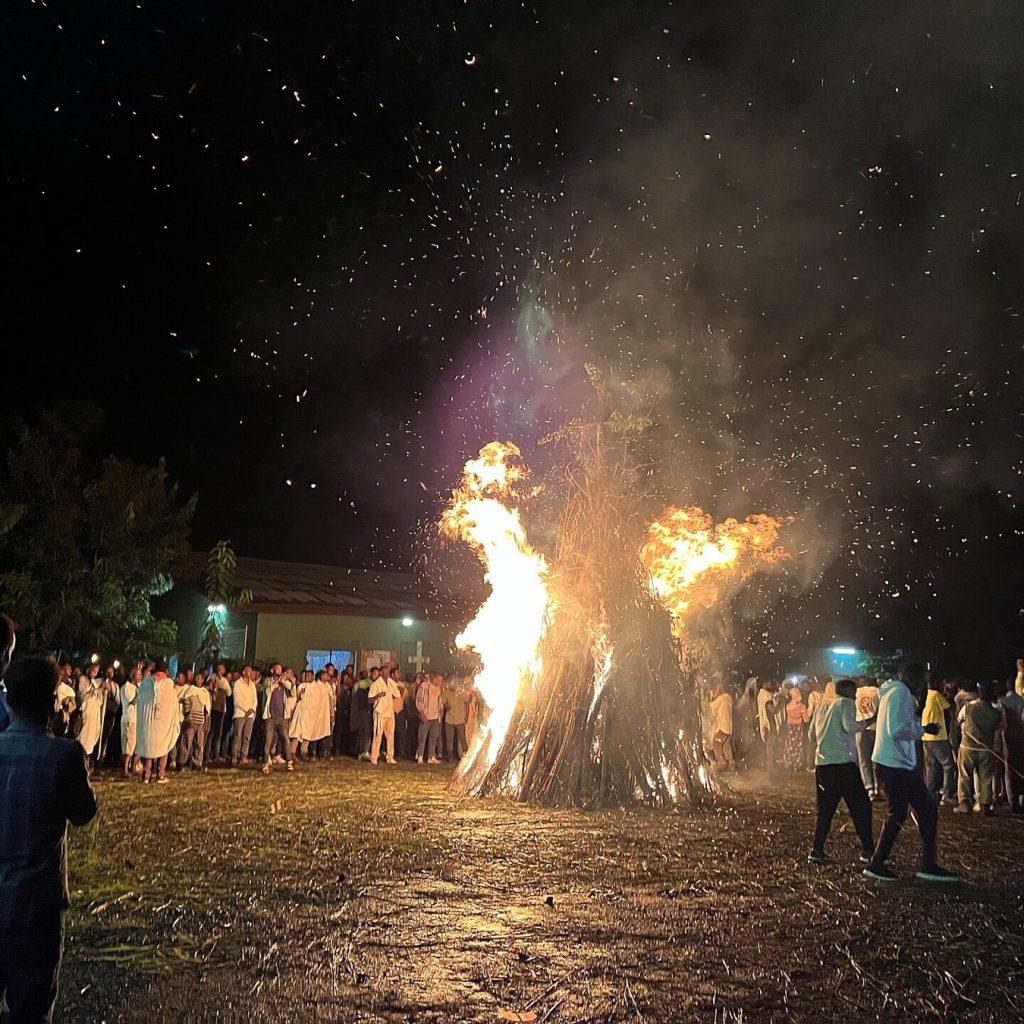
Meskel marks the finding of the True Cross, and it was Ethiopia's first inscription on the UNESCO list, in 2013.
It is built around a bonfire. A tall conical pyre called a demera is stacked and decorated with yellow Meskel daisies, which flower at the end of the rains, then lit at dusk with processions and singing around it. The direction the pyre falls is read as a sign for the year ahead.
The largest is in Meskel Square in Addis Ababa, which is named for it. Smaller demera are lit in neighbourhoods and villages across the country, and those are frequently the better experience.
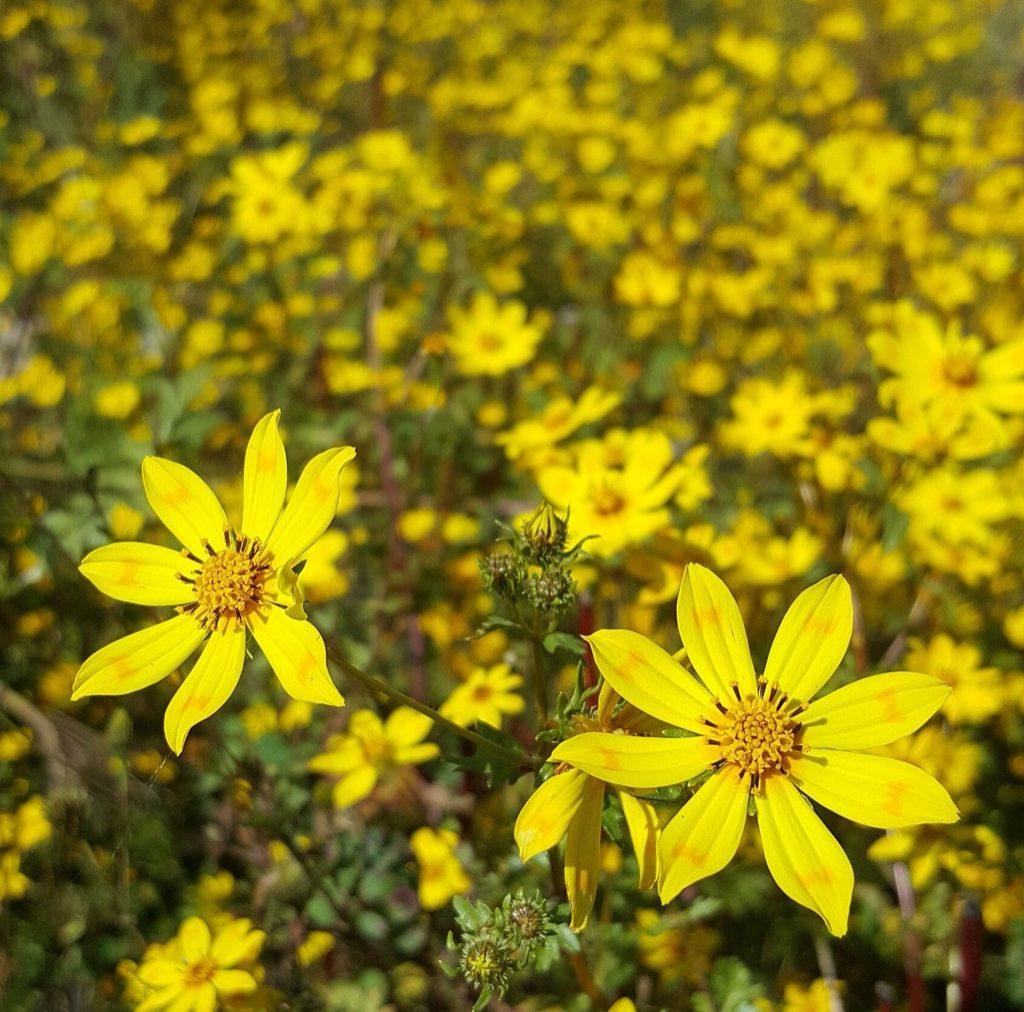
The Ethiopian new year lands in September rather than January, at the end of the long rains when the highlands are green and the Meskel daisies are out.
Ethiopia keeps its own calendar, which runs seven to eight years behind the Gregorian one and has thirteen months. Twelve months of thirty days, then a short thirteenth. If a local document or a shopfront gives you a year that looks wrong by seven, it is not wrong.
Gada is the Oromo system of governance, inscribed by UNESCO in 2016, and it is a different thing from a festival. It organises social and political life in eight-year grades through which men pass, with leaders elected for a single non-renewable term.
It is not a performance staged for visitors, and it is not viewable on demand. What a traveller can realistically see is a ceremony or assembly if the timing coincides, which needs arranging locally and in advance. Treat anyone offering a guaranteed Gada experience on any date with suspicion.
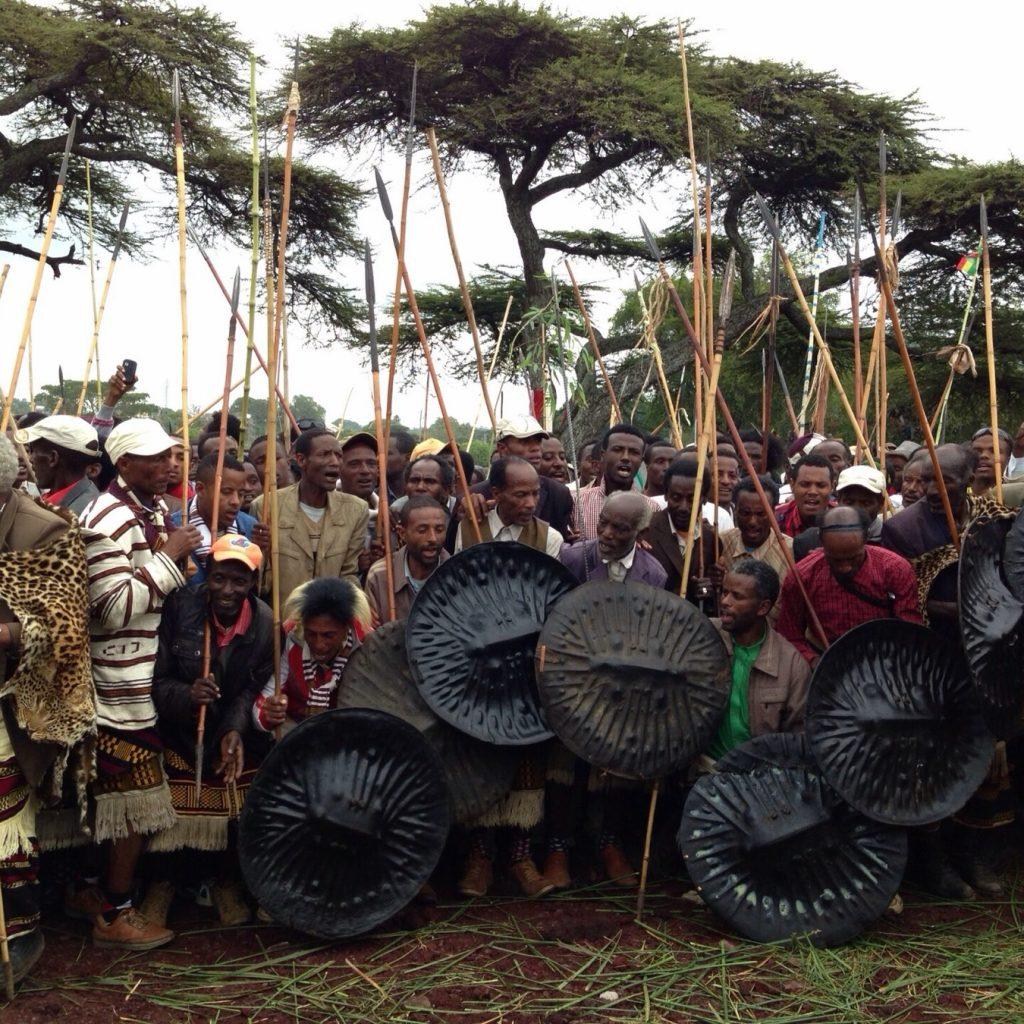
Fichee-Chambalaalla is the Sidama new year, inscribed in 2015. Its date is set by astronomers reading the position of the moon, which is why it does not sit on a fixed Gregorian day, and it involves the preparation and sharing of buurisame, a dish of false banana, milk and butter.
The Sidama region is south of the Rift Valley lakes, near Hawassa, which makes it reachable on a southern route rather than a special trip.
Cover your shoulders and knees, and take your shoes off before entering a church. These are working places of worship. Some monasteries admit men only, including Debre Damo, which is reached by climbing a leather rope up a cliff. Ask before you build a day around one.
You are in a congregation, not an audience. Stand at the edge rather than in the middle of a procession, do not put a lens in a priest's face, and follow what the people around you are doing. White clothing is traditional for Timkat and you will be a minority in colour, which is fine.
Ask first, every time. In the Omo Valley this is formalised and paid, commonly per photograph or per person, and the terms should be agreed through your guide beforehand. Elsewhere the ordinary courtesy applies.
Accept the invitation if you can stay for three cups. Take the cup with your right hand. Praising the coffee is normal and expected.
Orthodox fasting excludes animal products on many days including most Wednesdays and Fridays, which is why vegan food is easy here. The reverse also holds: on a fasting day a small kitchen may not serve meat at all. There is more on this in our first-time visitor guide.
What are the most important cultural festivals in Ethiopia?
Timkat, Meskel, Enkutatash and Fichee-Chambalaalla. Three of these are on UNESCO's Intangible Cultural Heritage list, along with the Oromo Gada system: Meskel was inscribed in 2013, Fichee-Chambalaalla in 2015, Gada in 2016 and Timket in 2019.
When is Timkat in Ethiopia?
Timkat falls on 19 January 2027. It is celebrated on 19 January in most years and 20 January in others, because the date is fixed to the Ethiopian calendar rather than the Gregorian one. The processions begin on the afternoon of the eve, so arriving on the morning itself means missing half the festival.
When is Meskel celebrated?
Meskel falls on 27 September 2026. It centres on the lighting of a large conical bonfire called a demera at dusk, decorated with the yellow Meskel daisies that flower at the end of the rains. The largest is in Meskel Square in Addis Ababa.
What happens at an Ethiopian coffee ceremony?
Green beans are roasted over coals in front of the guests, ground, then brewed in a clay pot called a jebena and served in three rounds named abol, tona and baraka. It takes time and leaving after the first cup is considered rude. Incense and popcorn usually accompany it.
Is the Ethiopian coffee ceremony a UNESCO heritage listing?
No. Ethiopia's four inscriptions on the Representative List of the Intangible Cultural Heritage of Humanity are Meskel, Fichee-Chambalaalla, the Gada system and Timket. The coffee ceremony is not among them, despite being widely described as such.
When is Ethiopian New Year?
Enkutatash falls on 11 September 2026. The Ethiopian calendar runs seven to eight years behind the Gregorian calendar and has thirteen months, so the new year lands in September at the end of the long rains.
Festivals are the one part of an Ethiopian itinerary that cannot be moved, so they are the thing to build the rest of the trip around rather than fit in.
Tell us which festival you want to be there for and we will build the route around it. We reply within a maximum of two hours, and you will have a detailed itinerary and a quote within 24 hours. Our Ethiopia tours and the destination guides are the place to start if you would rather browse first.
