---------------------------------
Address
Phone: +251 988 111 222
Need help or have a question?
Contact us at: info@driveethiopia.com
Addis Ababa, Ethiopia
---------------------------------
Address
Phone: +251 988 111 222
Need help or have a question?
Contact us at: info@driveethiopia.com
Addis Ababa, Ethiopia


Meskel is the Amharic word for cross. What the festival commemorates, why there is a fire, and the piece of the True Cross Ethiopia believes it holds.
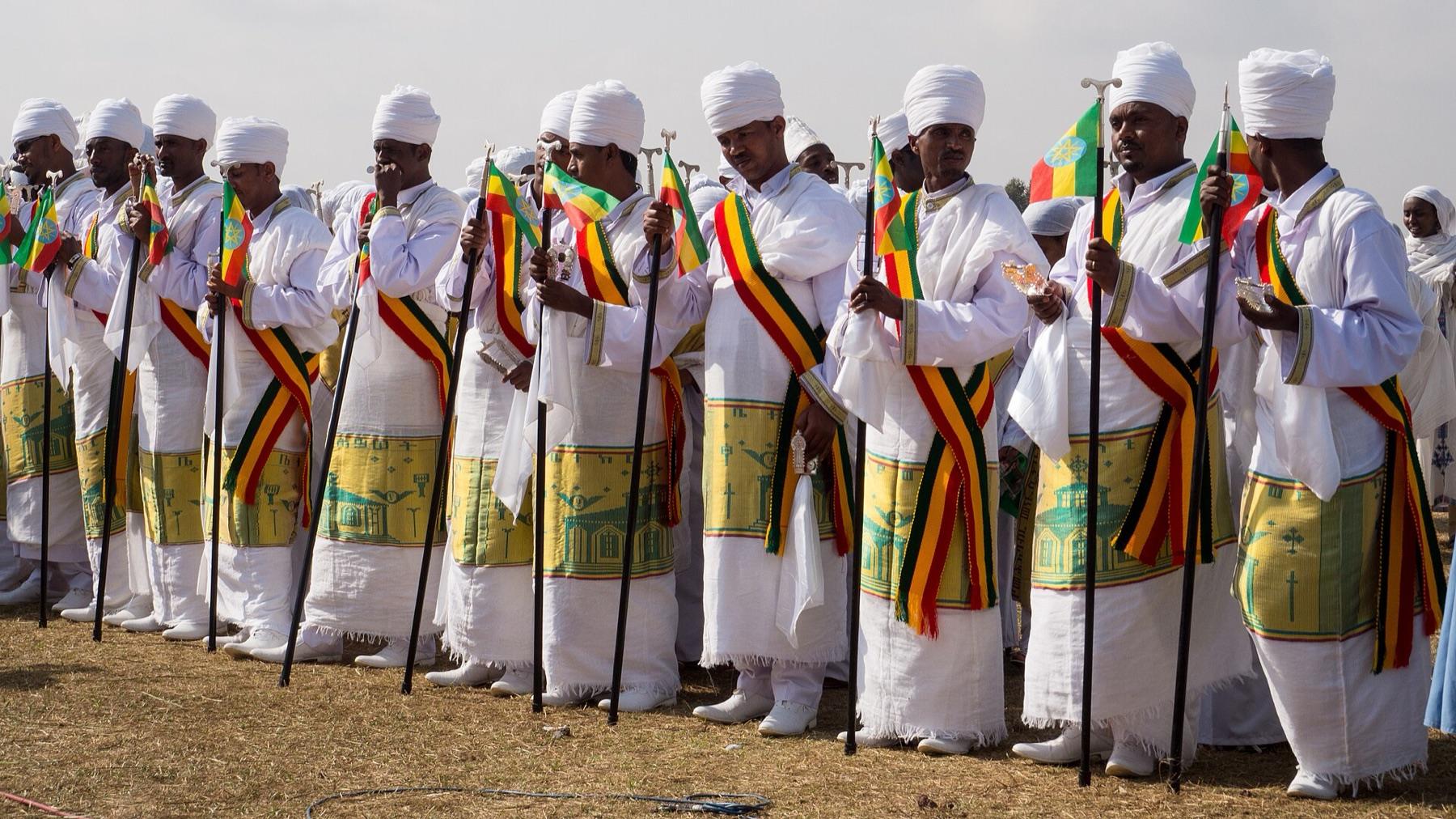
Meskel is simply the word for cross. It is መስቀል in Ge'ez, and it is what Amharic speakers call the cross itself, which tells you most of what the festival is about before anyone explains it. The feast commemorates the finding of the True Cross, and it is kept by the Ethiopian Orthodox Tewahedo Church and the Eritrean Orthodox Tewahedo Church on 27 September.
What follows is the meaning of Meskel rather than the logistics of attending it: what the word carries, why the festival is built around a fire, and the piece of the True Cross that Ethiopian tradition places on a mountain in Wollo. If you want the dates, the demera and where to stand on the night, that is in our guide to the Meskel festival in Addis Ababa.
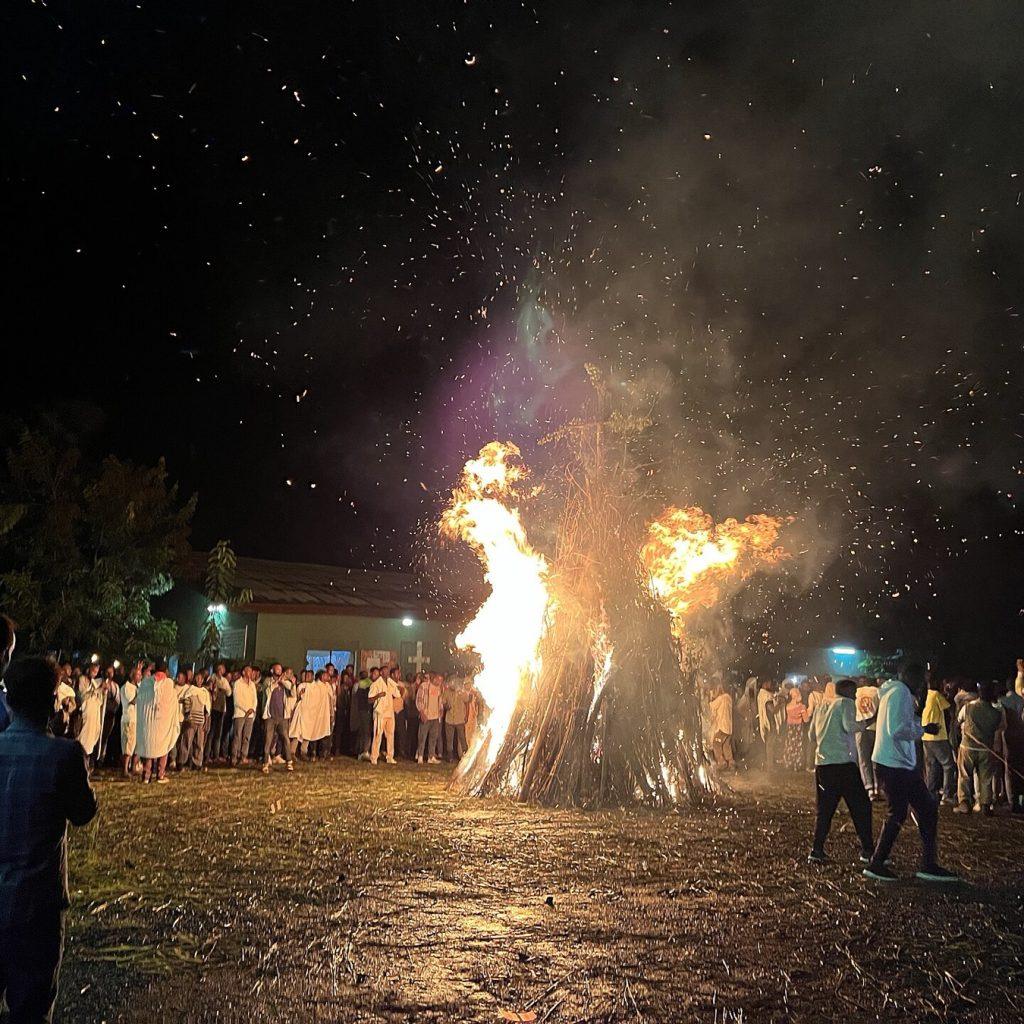
The bonfire is not decoration bolted onto a saint's day. It is a re-enactment, and once you know the story the whole evening reads differently.
Empress Helena of Constantinople, in the fourth century, is said to have been told in a dream to light a fire. The smoke would show her where the True Cross was buried. She lit it, the smoke rose and fell, and the ground beneath was dug.
So every demera repeats that fire. The smoke going up and the direction it falls are the point of the ritual, not a side effect of burning wood. When the crowd watches which way the smoke leans, they are watching the part of the story that did the finding.
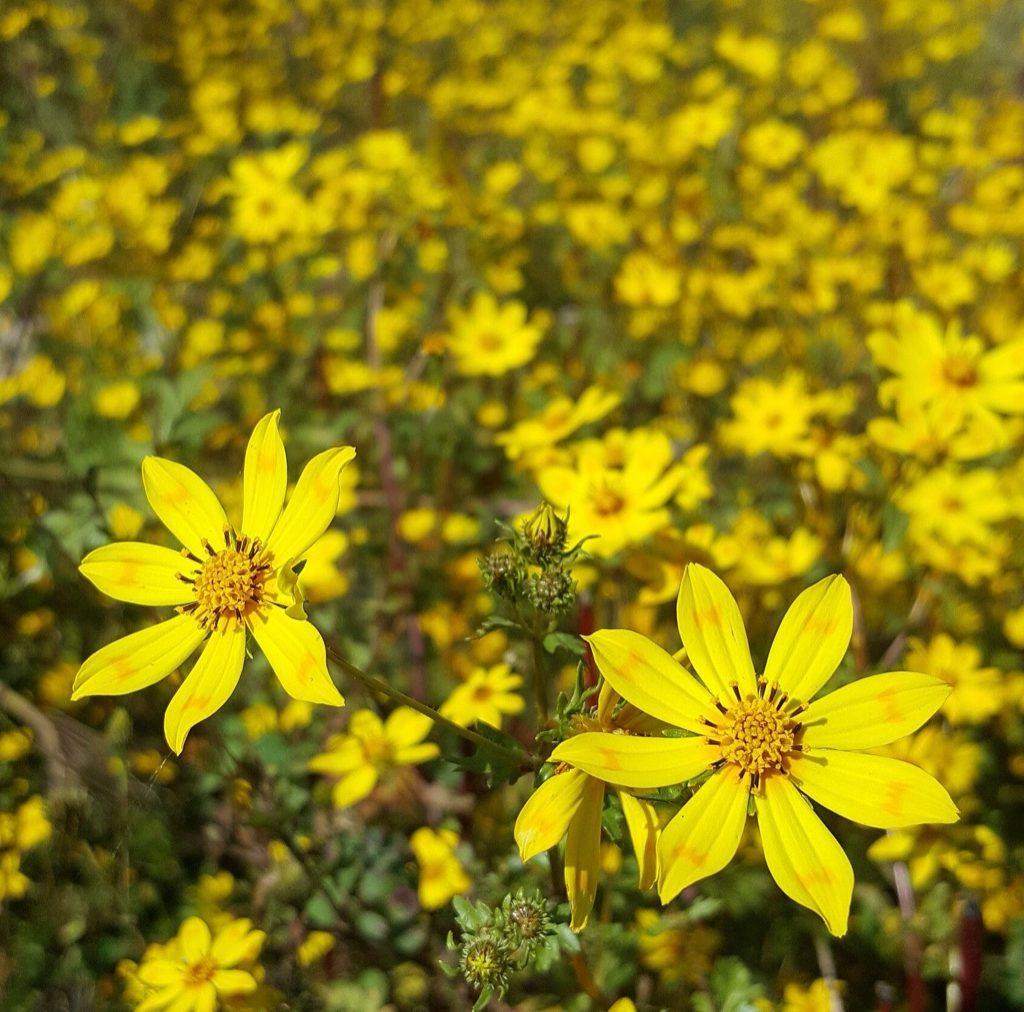
The daisies matter for the same reason. The pyre is dressed with them before it burns, and the yellow flower that covers the highlands at the end of the rains is named for the festival rather than the other way round.
This one puzzles people who know the Western church calendar.
The tradition holds that the discovery happened in March. The observance sits in September for two practical reasons: March falls inside Lent, which is the wrong season for a feast, and the church in Jerusalem built over the site was dedicated in September. The Ethiopian date is 17 Meskerem, which lands on 27 September in most years and 28 September in leap years.
That is also why the date can move by a day. Ethiopia keeps its own calendar of thirteen months, running seven to eight years behind the Gregorian one, and the two sets of leap years do not line up.
Here is where Meskel stops being a story about Jerusalem and becomes a story about Ethiopia.
It is believed that a piece of the True Cross was brought to Ethiopia from Egypt, and that it is kept at Amba Gishen, a monastery on a mountain in the Ambassel woreda of South Wollo, in the Amhara Region. It sits at 3,019 metres and is 483 kilometres north of Addis Ababa. Four churches stand there: Gishen Maryam, Saint Gabriel, Saint Michael, and Egziabher Ab, God the Holy Father.
How it got there is genuinely contested, and worth saying so. One tradition holds that Helena distributed pieces of the cross through a number of churches and that Gishen Mariam was one of them. Some Ethiopian Orthodox manuscripts instead credit Emperor Zara Yaqob with bringing it. You will find both told with equal confidence, and an honest account of Meskel says that rather than picking the more convenient version.
Gishen keeps its own day for it. The Ethiopian Orthodox Church celebrates Meskel on 27 September, and celebrates the lodging of the pieces of the True Cross at Gishen Debre Kerbe on 1 October, five days later. A World Health Organization report in 2010 put the site at 350,000 to 500,000 pilgrims and visitors a year, which is the most recent figure we could find and is now old enough to treat as an order of magnitude rather than a current count.
For most visitors Gishen is not a practical addition to a Meskel trip. It is a long way from Addis Ababa, and the festival crowd is in the capital. It matters because it explains why the feast carries the weight it does here: this is not only a commemoration of something found far away.
The ritual does not end when the fire does.
Charcoal from the remains is collected, and people use it to mark their foreheads with the shape of a cross. If you are in Addis Ababa on the 27th and you notice the mark on people in the street, that is where it came from and what it is.
That small gesture is the clearest statement of what the festival is for. The bonfire finds the cross, and the ash puts it on you.
It is worth being accurate about this, because Meskel is often described in superlatives it does not need.
Fasika, Ethiopian Orthodox Easter, is the biggest feast of the Ethiopian year. It is preceded by a fast of fifty-five days and it is nationwide. Genna at Lalibela and Timkat at Gondar draw the heaviest visitor crowds, in January.
Meskel's claim is different and more interesting. UNESCO added it to the Representative List of the Intangible Cultural Heritage of Humanity in 2013, describing a festival kept nationwide "regardless of age, gender, language or ethnicity" and functioning as an occasion for reconciliation and social cohesion. It is the one that most visibly crosses the lines that usually divide, and it is the easiest of the four to attend, because it happens in the capital.
Our Ethiopian festival calendar sets out all of them with dates, and our guide to cultural experiences covers the coffee ceremony and the other practices on the UNESCO list.
Tewahedo is not a decorative addition to the name. The Ethiopian Orthodox Tewahedo Church is one of the oriental orthodox churches, and it is among the oldest organised Christian bodies anywhere. Its buildings are not museums: the rock-hewn churches at Lalibela are in daily use, priests live and work in them, and the services you would see at Meskel are the same services kept through the year.
That is the thing most visitors underestimate. Meskel is not a pageant staged for an audience. It is a working feast day of a living church that happens to be extraordinary to watch.
What does Meskel mean? Meskel is the word for cross. It is መስቀል in Ge'ez and it is what Amharic speakers call the cross. The festival commemorates the finding of the True Cross and is kept on 27 September.
Why is there a bonfire at Meskel? Because the finding of the cross began with one. Empress Helena is said to have been told in a dream to light a fire whose smoke would reveal where the True Cross was buried. The demera repeats that fire every year, which is why the smoke and the direction it falls matter to the crowd.
Is a piece of the True Cross really in Ethiopia? It is believed that a piece was brought from Egypt and is kept at Amba Gishen in South Wollo. How it arrived is contested: one tradition credits Empress Helena distributing pieces through several churches, while some Ethiopian Orthodox manuscripts credit Emperor Zara Yaqob. Both accounts are told confidently and neither is settled.
Which church celebrates Meskel? The Ethiopian Orthodox Tewahedo Church and the Eritrean Orthodox Tewahedo Church. Both are oriental orthodox churches, and Meskel is one of their major feasts.
Why is Meskel in September if the cross was found in March? Tradition places the discovery in March, but March falls inside Lent, and the church built over the site in Jerusalem was dedicated in September. The Ethiopian date is 17 Meskerem, which is 27 September in most years.
What is the charcoal mark on people's foreheads? Charcoal collected from the burnt-out demera, used to mark the shape of a cross. It is done after the fire, on the feast day.
Is Meskel Ethiopia's most important religious festival? Fasika, Ethiopian Orthodox Easter, is the biggest feast of the Ethiopian year, and Genna and Timkat draw the largest visitor crowds. Meskel's distinction is different: UNESCO inscribed it in 2013 as a festival kept across the whole country regardless of age, gender, language or ethnicity, and it is the most accessible of the major feasts because it happens in Addis Ababa.
Understanding what the fire is for changes what you are looking at on the night. It is the difference between watching a bonfire and watching a re-enactment that a country has kept for centuries.
Our Meskel Festival Tour puts you in Meskel Square for the demera on the eve and gives you the feast day in the capital, then heads north while the highlands are still green.
Tell us your dates and we will build the week around it. You will have a reply within two hours and a detailed itinerary with a quote within 24 hours.
