---------------------------------
Address
Phone: +251 988 111 222
Need help or have a question?
Contact us at: info@driveethiopia.com
Addis Ababa, Ethiopia
---------------------------------
Address
Phone: +251 988 111 222
Need help or have a question?
Contact us at: info@driveethiopia.com
Addis Ababa, Ethiopia


Irreecha 2026 is Sunday 4 October at Lake Hora in Bishoftu, a day after Hora Finfinne in Addis Ababa. What it celebrates, getting there, and how to be a guest.
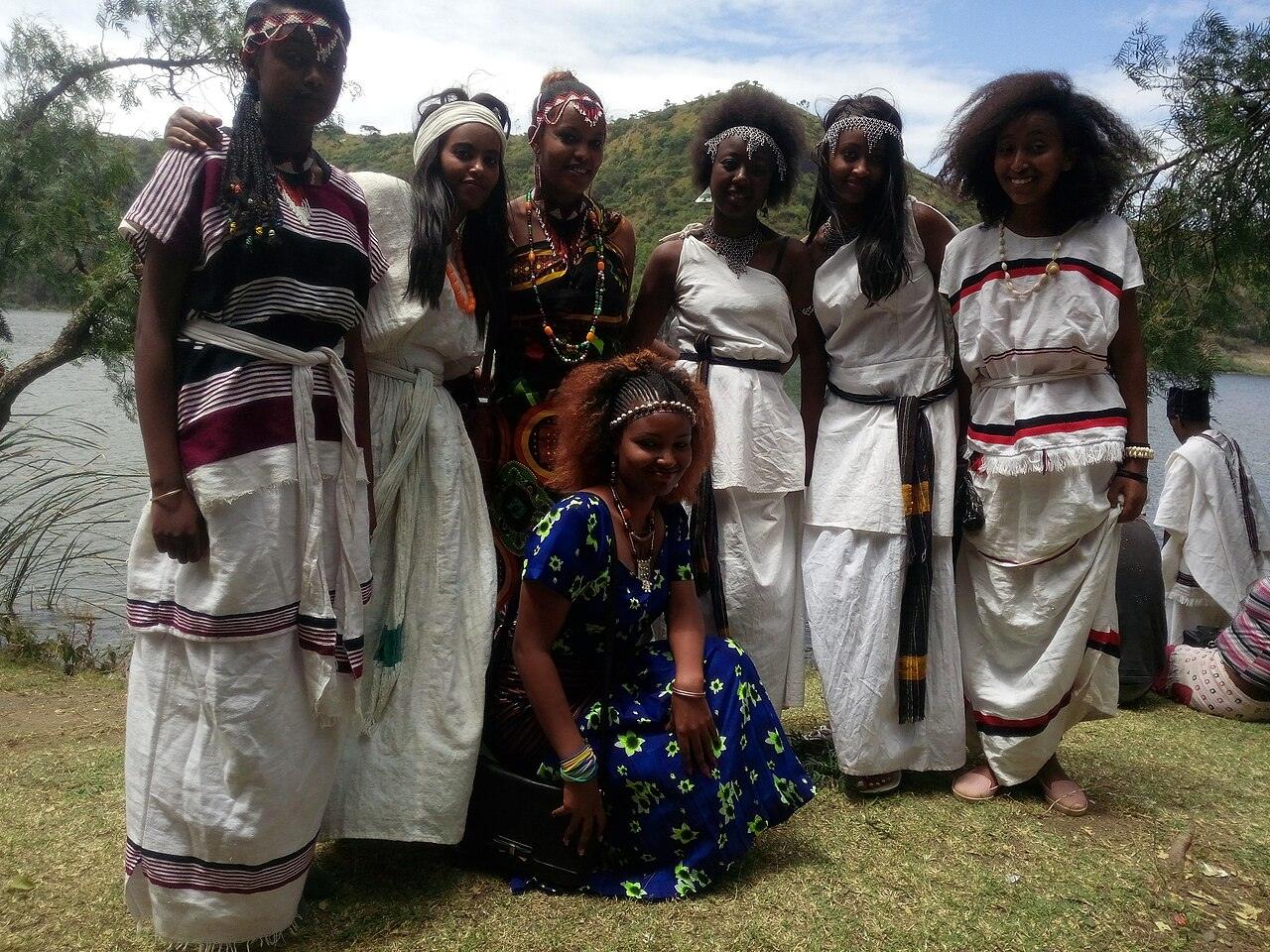
Irreecha is the Oromo thanksgiving festival, held each year when the long rainy season ends. People gather at sacred water to thank Waaqa, God, for bringing them through the rains. In 2026 the union of Oromo Abbaa Gadaa leaders has set it for Meskerem 23 and 24 in the Ethiopian calendar. That puts Irreecha at Hora Finfinne in Addis Ababa on Saturday 3 October, and the main gathering at Lake Hora Arsedi in Bishoftu on Sunday 4 October.
The Bishoftu day is the one most people mean when they say Irreecha. Hundreds of thousands of people come to the lakeshore, many of them in Oromo dress, carrying fresh green grass and flowers to the water.
This guide covers what the festival means, what happens at the lake, how to get there from Addis Ababa, and how to behave and take photographs as a guest.
Irreecha marks the end of Ganna, the rainy season that runs roughly from June to September, and the start of Birraa, the bright season that follows. In Oromo tradition the rains are a hard time of floods, cut-off roads, hunger and illness. Birraa brings the harvest in.
So the festival is thanks for having come through, and a blessing on the year ahead. The Abbaa Gadaa leaders who announced this year's dates described it as a festival of gratitude, unity, love and reconciliation.
Don't confuse this Ganna with Genna, the Ethiopian Orthodox Christmas in January. They are different words from different languages. Our guide to Ethiopian Christmas covers that one.
| Ethiopian date | Gregorian date | Where | |
|---|---|---|---|
| Hora Finfinne | 23 Meskerem 2019 | Saturday 3 October 2026 | Addis Ababa |
| Hora Arsedi | 24 Meskerem 2019 | Sunday 4 October 2026 | Lake Hora, Bishoftu |
The dates come from the announcement by the union of Oromo Abbaa Gadaa leaders in September 2026. Ethiopia runs its own calendar, which is why the Gregorian dates move from year to year. For the other festivals of the year, see our Ethiopian festival calendar.
| Name | What it is |
|---|---|
| Irreecha (also spelt Irreechaa, Irrecha) | The thanksgiving festival itself |
| Hora Arsedi (Hora Harsadi) | Lake Hora, a crater lake in Bishoftu and the main Irreecha site |
| Hora Finfinne | The Irreecha site in Addis Ababa, where Finfinne is the Oromo name for the city. Held there since 2019 |
| Waaqa | God, to whom the thanks are given |
| Abbaa Gadaa | An elected leader in the Gadaa system. The union of Abbaa Gadaa leaders sets the Irreecha dates |
| Gadaa | The Oromo system of self-government, with leaders elected for eight-year terms. UNESCO inscribed it in 2016 |
| Odaa | The sycamore fig tree under which Gadaa meetings and ceremonies are held. UNESCO calls it the Gadaa symbol |
| Ganna and Birraa | The rainy season and the bright season after it. Irreecha sits on the line between them |
| Irreecha Tulluu | A separate Irreecha held on hilltops at another time of year. This guide covers the lakeside one |
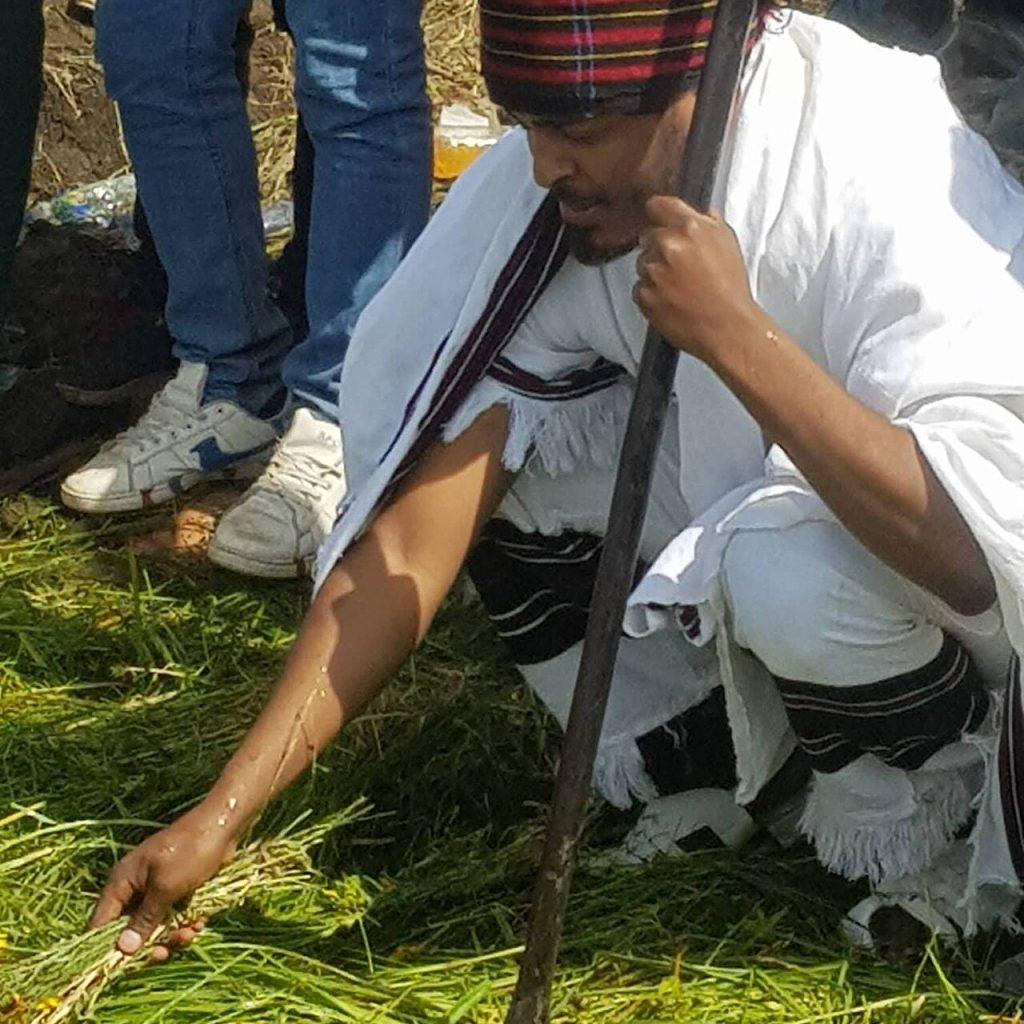
People walk down to the lake carrying bundles of freshly cut green grass and yellow flowers. At the water's edge they dip the grass in the lake, sprinkle themselves and the people around them, and leave the grass and flowers in the water. The shallows fill with it.
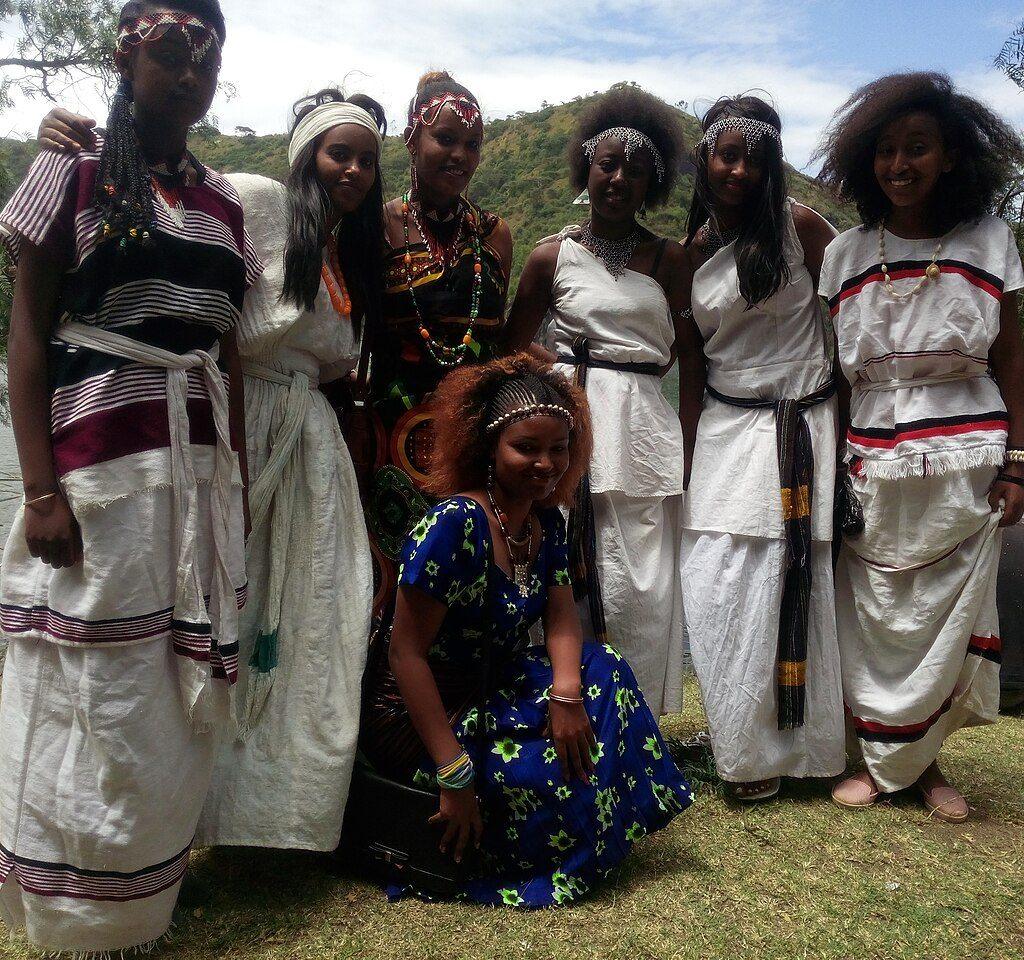
Around that act, the day is about meeting. Families come together, and people travel in from across Ethiopia and from the Oromo diaspora abroad. Many people wear Oromo dress: white cotton with coloured stripes and borders, beaded headbands and necklaces. Plenty of others come in everyday clothes.
It is a religious occasion and a social one at the same time.
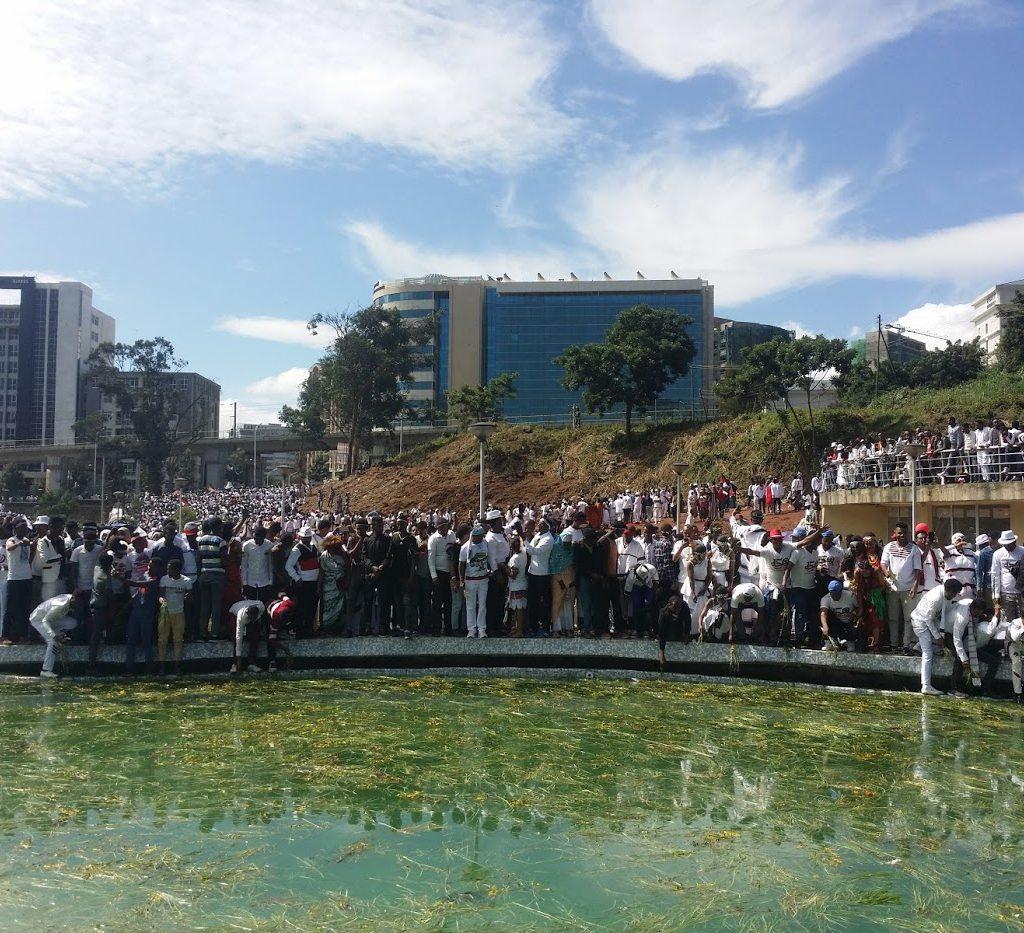
Since 2019, Irreecha has also been held in Addis Ababa, at Hora Finfinne, the day before Bishoftu. In 2026 that is Saturday 3 October.
If you are based in the capital and only have one day, Hora Finfinne is the easier option, with the same grass and water rite and no road trip. If you can give it two days, see Addis Ababa on the Saturday and go to Bishoftu on the Sunday for the larger lakeside gathering. Our Addis Ababa guide helps with the rest of your time in the city.
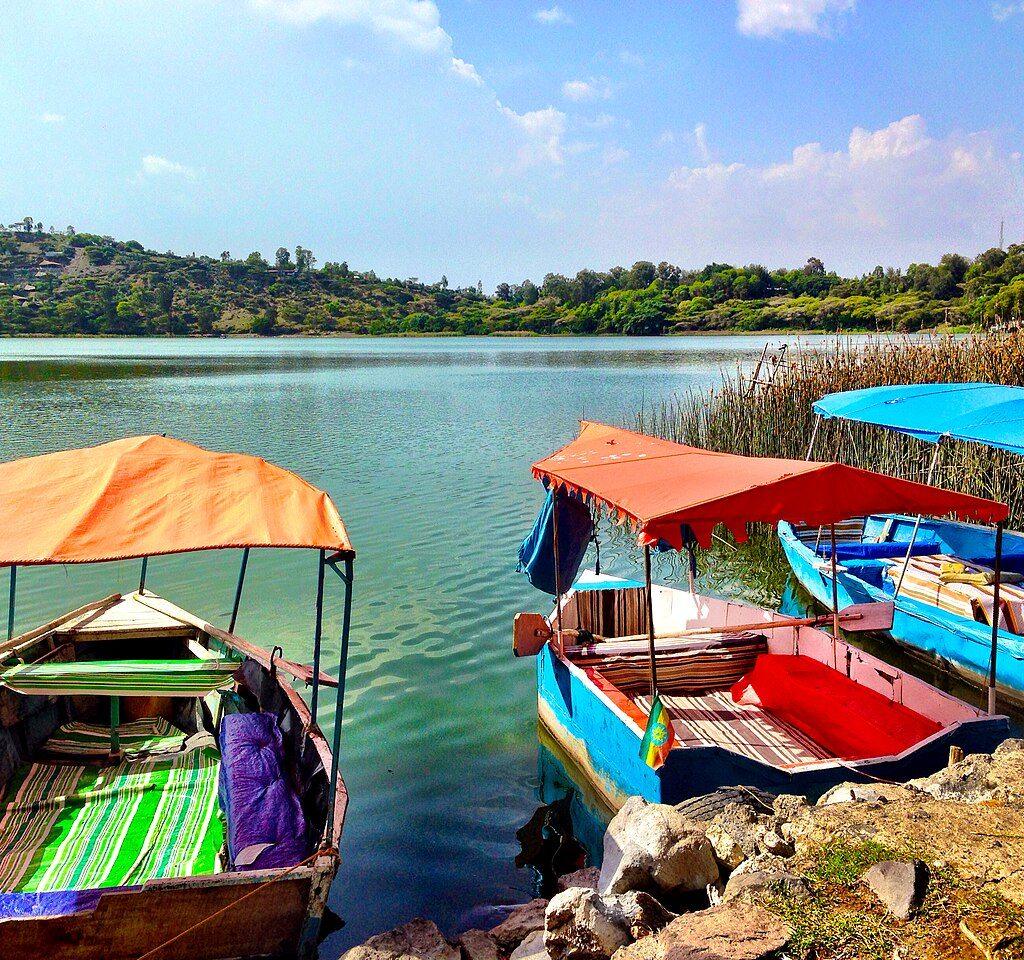
Bishoftu is about 48 kilometres southeast of Addis Ababa. The Addis Ababa to Adama Expressway runs past the town, and Lake Hora sits about 2 kilometres from it.
On 4 October the road out of Addis Ababa fills early. Expect heavy traffic heading southeast from early morning and very slow going near the lake. Leave early, agree a pick-up point with your driver before you walk in, and expect the drive back to be slow.
A car with a driver is the simplest way to do it as a day trip, because you don't have to find parking near the lake. We run car hire with a driver from Addis Ababa. Bishoftu has four other crater lakes besides Hora, and our Rift Valley lakes guide covers the lakes further south if you want to go on.
The Abbaa Gadaa leaders' announcement called on people to receive every guest with Oromo hospitality, and visitors are welcome. It is still a religious gathering, and a few things make the day go well.
The rule is the same as anywhere people are praying.
The crowd at Lake Hora is enormous, and the ground around the lake is uneven and steep in places.
That matters because of what happened here. On 2 October 2016, during Irreecha, security forces fired tear gas at protesters and the crowd panicked. At least 52 people died, many after falling into ditches around the lake, and other counts are much higher. It is worth knowing where you are standing, keeping to open ground, and not getting pinned against the water or a slope.
On travel advice, as of 25 September 2026 the UK Foreign, Commonwealth and Development Office advises against all but essential travel to East Shewa zone, where Bishoftu is. It excepts the Addis Ababa to Adama Expressway and 10 kilometres either side of it between Addis Ababa and Bishoftu. By our measurement on OpenStreetMap, Lake Hora is about 2 kilometres from the expressway, inside that excepted corridor. Addis Ababa is not covered by that advice.
Advice changes, so check your own government's advice for Ethiopia close to the day, and check that your travel insurance covers where you are going.
| Detail | |
|---|---|
| Hora Finfinne, Addis Ababa | Saturday 3 October 2026 |
| Hora Arsedi, Bishoftu | Sunday 4 October 2026 |
| Distance from Addis Ababa | About 48 km southeast, by expressway |
| When to arrive | Early. The roads and the lakeshore fill from dawn |
| What to wear | Modest, comfortable clothes and good shoes for uneven ground. A hat, because the day is spent outdoors |
| Weather | Early October is the start of the dry season in the highlands, with bright days after the rains |
| Bring | Water, a small amount of cash, a charged phone, and a pick-up point agreed with your driver |
| Cost | Irreecha is a public gathering. We know of no entry fee |
Irreecha is the Oromo thanksgiving festival. It marks the end of the rainy season, called Ganna, and the start of Birraa, the bright season. People gather at sacred lakes and rivers to thank Waaqa, God, dipping fresh grass and flowers in the water.
Irreecha 2026 is on Saturday 3 October at Hora Finfinne in Addis Ababa, and on Sunday 4 October at Lake Hora Arsedi in Bishoftu. The union of Oromo Abbaa Gadaa leaders set the dates as 23 and 24 Meskerem in the Ethiopian calendar.
The main gathering is at Lake Hora, also called Hora Arsedi or Hora Harsadi, in Bishoftu, about 48 kilometres southeast of Addis Ababa. Since 2019 it has also been held the day before at Hora Finfinne in Addis Ababa.
Yes. Irreecha is a public gathering, and the Abbaa Gadaa leaders ask communities to welcome guests. Dress modestly and ask before taking close portraits.
The Odaa is a sycamore fig. Gadaa meetings and ceremonies are held beneath it, and UNESCO describes it as the symbol of the Gadaa system, the Oromo system of self-government.
An Abbaa Gadaa is an elected leader in the Gadaa system, serving a term of eight years. The union of Abbaa Gadaa leaders announces the Irreecha dates each year.
Irreecha is this weekend, so there is no time to lose if you want to be there.
Tell us which day you want, Hora Finfinne on the Saturday or Bishoftu on the Sunday, and we will arrange a car and driver and an early start. You will have a reply within two hours and a detailed itinerary with a quote within 24 hours.
Hire a car with a driver, see our cultural tours, or browse everything we run.
