---------------------------------
Address
Phone: +251 988 111 222
Need help or have a question?
Contact us at: info@driveethiopia.com
Addis Ababa, Ethiopia
---------------------------------
Address
Phone: +251 988 111 222
Need help or have a question?
Contact us at: info@driveethiopia.com
Addis Ababa, Ethiopia


Ethiopian Christmas, Genna or Ganna, is 7 January. Why the date differs, the all-night vigil in Addis Ababa and Lalibela, and Timkat 12 days later.
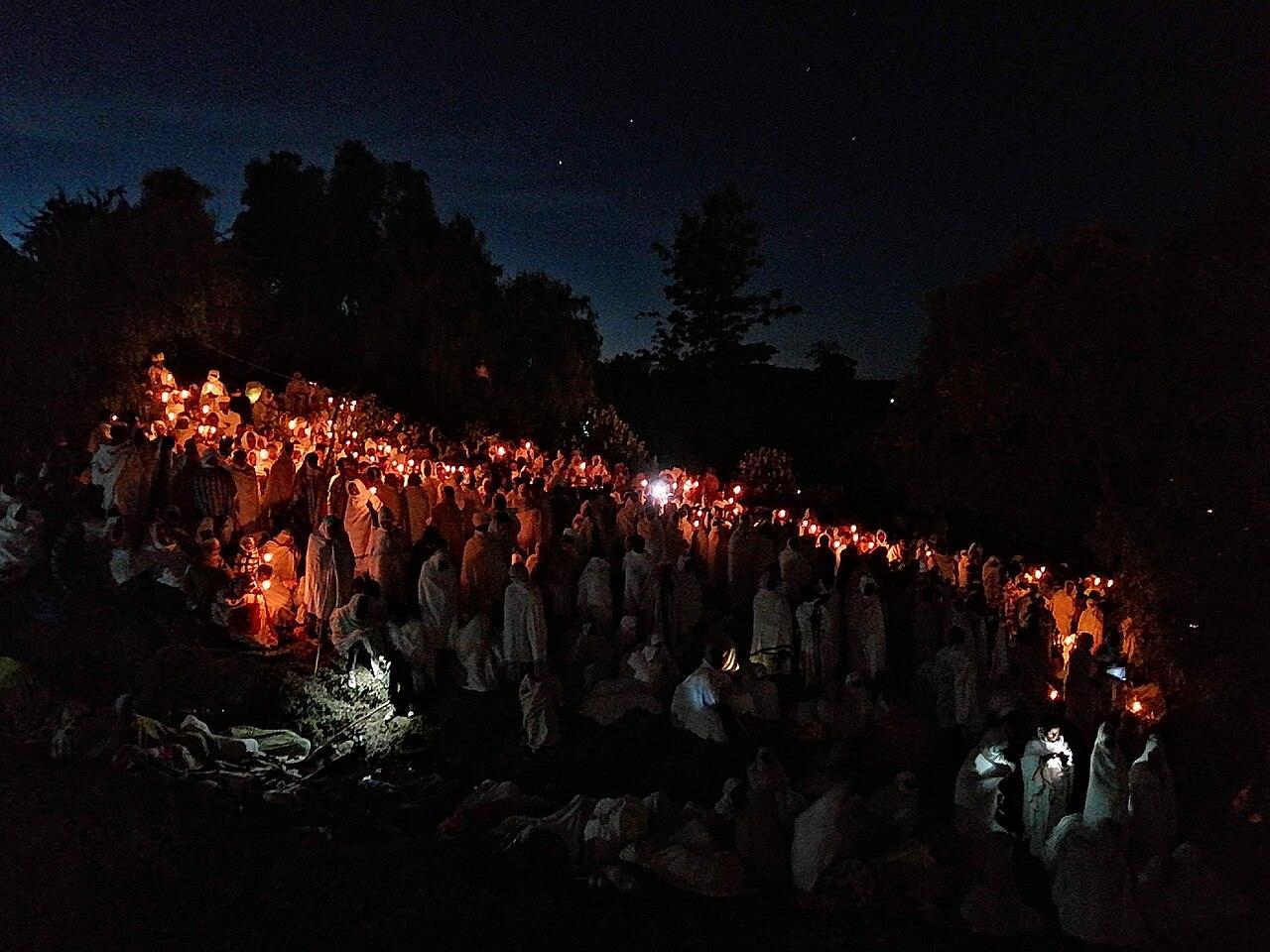
Ethiopian Christmas, called Genna (often spelt Ganna, and also known as Lidet), falls on 7 January, not 25 December. In 2027 that is a Thursday. The part worth travelling for starts the evening before: an all-night church service on 6 January that runs from around six in the evening until about three in the morning, with worshippers dressed in white.
Twelve days later comes Timkat, the Ethiopian Epiphany, on 19 January. Together they are the reason many visitors time their trip for January.
This guide covers why the date is different and what the day looks like in Addis Ababa and Lalibela. It also covers the current travel advice for northern Ethiopia, which you need to read before booking anything there.
The Ethiopian Orthodox Tewahedo Church keeps Christmas on 29 Tahsas in the Ethiopian calendar, and 29 Tahsas lands on 7 January in the Gregorian calendar.
The same 13-day gap shows up across the Orthodox world. Churches that still follow the older Julian calendar keep Christmas on its 25 December, and the Julian 25 December currently falls on the Gregorian 7 January. The Russian, Serbian and Eritrean Orthodox churches celebrate on the same day as Ethiopia.
Ethiopia also keeps its own calendar, with thirteen months, running seven to eight years behind the Gregorian one. In January 2027 it is still the year 2019 in Ethiopia. The date isn't only an Orthodox matter either: Ethiopian Catholics and Protestants mark Genna on the same day.
| Western Christmas | Ethiopian Christmas (Genna) | |
|---|---|---|
| Date | 25 December | 7 January (29 Tahsas) |
| Calendar | Gregorian | Ethiopian, aligned with the Julian 25 December |
| Before it | Advent, rarely a real fast | 43 days of fasting, no meat, dairy or eggs |
| The big moment | Christmas morning | The overnight vigil on 6 January |
| What people wear | Anything | White, often a netela shawl |
| The centre of it | Gifts and a family meal | Church first, then a family meal |
| The meal | Varies by country | Doro wat with injera, the first meat after the fast |
| Outdoor tradition | Rare | Yegenna chewata, a hockey-like game, mostly in the countryside |
The date is the obvious difference. The bigger one is what the day is for. Genna is mainly a religious occasion, spent in church and then at home with family, and presents play a small part.
Many Ethiopian Orthodox Christians keep a 43-day fast before Christmas called Tsome Nebiyat, the Fast of the Prophets. It starts on 25 November and runs to Christmas Eve. Those fasting avoid meat, dairy, eggs and alcohol.
That matters to you as a visitor in two ways. If you are in Ethiopia in December, fasting food, meaning the vegan dishes built on lentils and chickpeas, is everywhere and at its best. And it explains the Christmas meal. When the fast breaks, the dish on most tables is doro wat, a slow-cooked spiced chicken stew served on injera. Our Ethiopian food guide covers both.
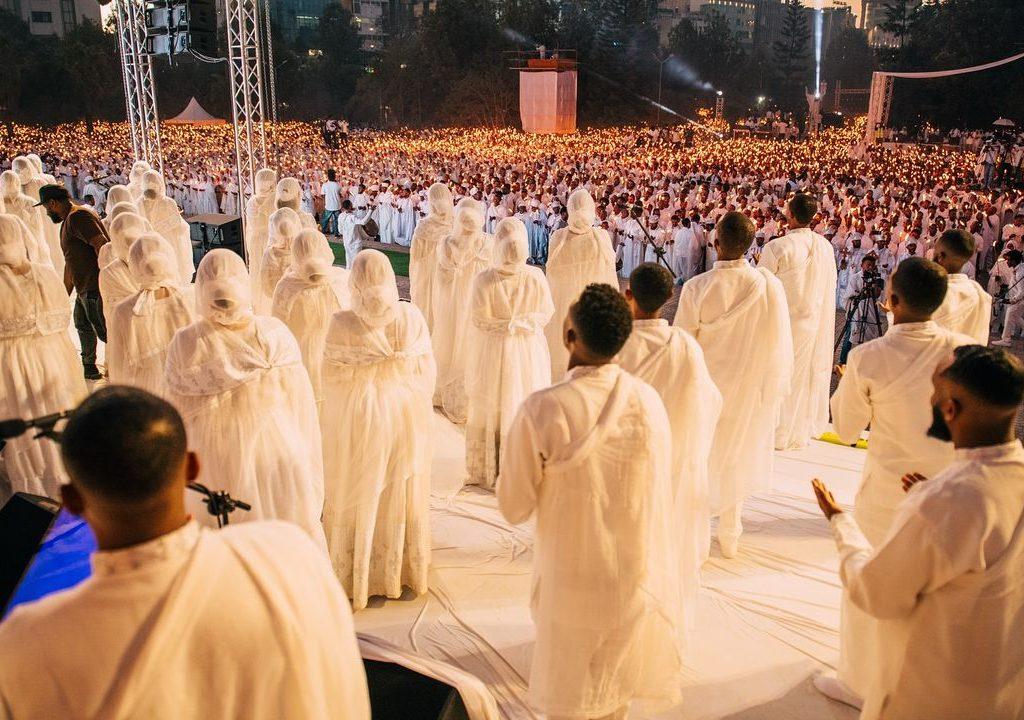
The Genna service is a vigil. People arrive at church in the evening of 6 January, and the service usually starts around 6pm and finishes around 3am. Worshippers stand in lines around the church and move in a long, slow procession around it.
Most people wear white, usually the netela, a thin white cotton shawl with a coloured border. Candles are lit, and from a distance a churchyard at night on Genna eve looks like a field of small flames.
If you want to see Genna, plan your evening around the night of the 6th. By late morning on the 7th the churches have emptied and the day belongs to families at home.
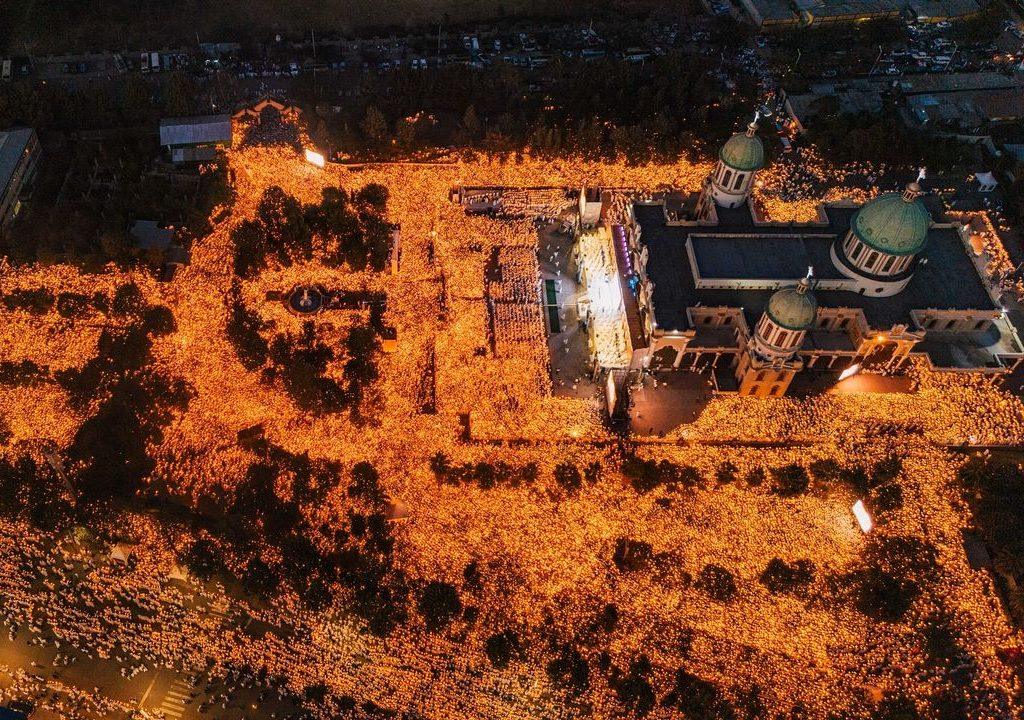
You don't have to leave the capital to see Genna. Every Orthodox parish in Addis Ababa holds the vigil, so wherever you stay there is a church within reach.
In recent years the city has also held a large open-air Christmas Eve hymn vigil, Ye'Aelafat Zemare, roughly "the hymn of myriads". Thousands gather in white with candles to sing Orthodox hymns through the evening. The third one was held on 6 January 2026 in Meskel Square. The event is only a few years old, so check nearer the date whether it is running in 2027 and where.
Addis Ababa is also where most visitors land, which makes it the simplest place to see Genna if your time in Ethiopia is short. Our Addis Ababa city guide and stopover guide help with the rest of your time there.
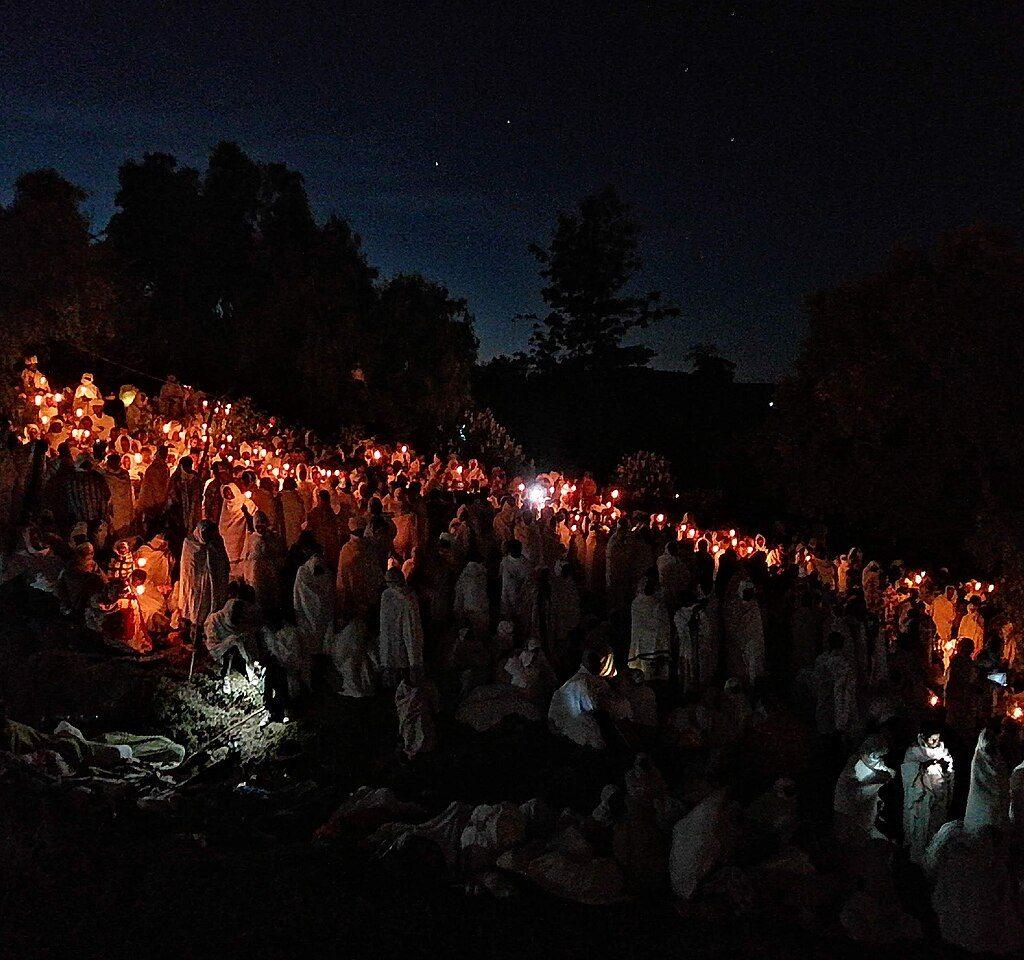
Lalibela is where Genna draws pilgrims from across the country. Its eleven rock-hewn churches are among the holiest sites in Ethiopian Orthodoxy, and Genna has a particular meaning there because it is also celebrated as the birthday of King Lalibela, who is credited with building them.
Pilgrims in white fill the trenches and courtyards around the churches, and the chanting and prayer go on all night. These are working churches with resident clergy, and on Genna night you are a guest at a service. Shoes come off at every church, and ask before you photograph anyone at prayer. Our Lalibela guide covers the churches in detail.
Lalibela is in the Amhara region, and the travel advice for Amhara currently rules it out for many visitors. Read the section on the Amhara advisory below before you plan a Genna trip there.
On Christmas Day, mainly in rural areas, boys and young men play yegenna chewata, usually shortened to genna. It is a field game close to hockey, played with a curved wooden stick and a wooden ball. Tradition holds that shepherds were playing it on the night Jesus was born.
You are more likely to see it in villages than in central Addis Ababa, so treat it as a bonus if you pass a game on the road.
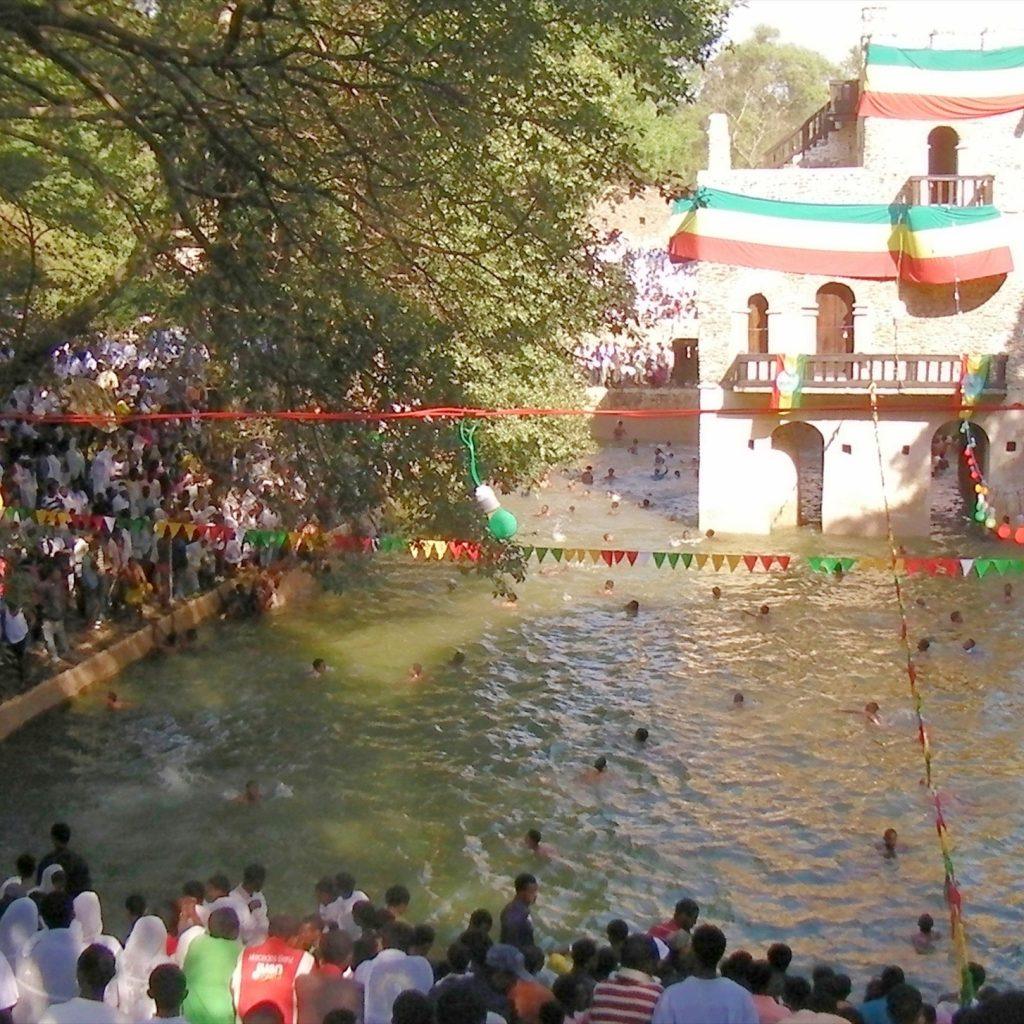
Timkat, the Ethiopian Epiphany, marks the baptism of Jesus in the Jordan. UNESCO added it to its Representative List of the Intangible Cultural Heritage of Humanity in 2019.
In 2027 Timkat falls on Tuesday 19 January, and the eve, Ketera, is Monday 18 January. The eve is the half most visitors miss. On Ketera afternoon each parish carries its tabot, a model of the Ark of the Covenant wrapped in rich cloth and borne on a priest's head, in procession to a pool or stream. It stays there overnight. Near dawn on the 19th the water is blessed and sprinkled over the crowd, and some people go into the water to renew their baptismal vows. Then each tabot is carried back to its church in a second procession, the more colourful of the two.
In Addis Ababa, the main Timkat ground is Jan Meda, a large open field in the city.
In Gondar, the ceremony centres on Fasilides Bath. The stone pool is filled for the ceremony, and it is the image most people have in mind when they think of Timkat. Gondar is in the Amhara region, so read the advisory section below first.
Timkat moves by a day in some years. It is 19 January in 2027 and 20 January in 2028. See our Ethiopian festival calendar for the full set of dates.
The two places most associated with these festivals, Lalibela for Genna and Gondar for Timkat, are both in the Amhara region.
As of 25 September 2026, the UK Foreign, Commonwealth and Development Office advises against all travel to the Amhara region. It makes no exception for Lalibela, Gondar or Bahir Dar. Addis Ababa isn't covered by that advice.
Advice like this is regional and it changes. Check your own government's current advice for Ethiopia close to your travel date. Then check that your travel insurance covers where you are going. We will tell you what we know about conditions when you enquire, but we won't argue you past your government's advice.
If you want to see Genna and Timkat in January 2027 while staying outside the areas under that advice, Addis Ababa hosts both: the Genna vigils on the night of 6 January and Timkat at Jan Meda on 18 and 19 January.
| Detail | |
|---|---|
| Genna eve vigil | Wednesday 6 January 2027, roughly 6pm to 3am |
| Genna (Christmas Day) | Thursday 7 January 2027 |
| Ketera (Timkat eve) | Monday 18 January 2027 |
| Timkat | Tuesday 19 January 2027 |
| Gap between them | Twelve days |
| Weather | Dry season in the highlands. Clear days, cold nights at altitude |
| What to wear to a service | Modest clothing, shoulders and knees covered, a warm layer for the night. You aren't expected to wear white |
| Fasting | Tsome Nebiyat runs 25 November to 6 January. Fasting food is widely available |
| Bookings | January is peak season around both festivals. Book rooms and domestic flights early |
Genna is a public holiday, so some shops and offices close on the 7th. The vigil is long and much of it is outdoors in cold highland air, so bring a warm layer. During the service, stand where your guide suggests and keep your voice low. For more on packing for highland nights, see what to pack for Ethiopia.
Ethiopian Christmas, Genna, is on 7 January. In 2027 that is a Thursday. The main celebration is the overnight vigil on the evening of 6 January.
The Ethiopian Orthodox Church keeps Christmas on 29 Tahsas in the Ethiopian calendar, which falls on 7 January. It lines up with the Julian calendar's 25 December, which is why the Russian, Serbian and Eritrean Orthodox churches celebrate on the same day.
Both. They are two English spellings of the same Amharic word. Genna is more common, Ganna appears often, and some sources call it Lidet or Leddet.
Gifts are not the centre of it. Genna is mainly a religious and family holiday, spent at church overnight and then at home over a shared meal, usually doro wat with injera after the long fast.
Yes, if you have about two weeks. They are twelve days apart, 7 and 19 January in 2027. Addis Ababa hosts both, which keeps the whole trip outside the areas under the UK's current Amhara advice.
Yes. Services are open and visitors attend every year. Dress modestly and bring a warm layer, because much of the night is spent outdoors.
Genna and Timkat have fixed dates, and January is the busiest month of the year for rooms and domestic flights. That makes the festival month the one where booking late can cost you the festival itself.
Tell us your dates and which festival you want to be there for. We will plan the trip around the right nights, the 6th and the 18th. You will have a reply within two hours and a detailed itinerary with a quote within 24 hours.
See the Ethiopian Christmas & Epiphany Tour, or browse everything we run.
