---------------------------------
Address
Phone: +251 988 111 222
Need help or have a question?
Contact us at: info@driveethiopia.com
Addis Ababa, Ethiopia
---------------------------------
Address
Phone: +251 988 111 222
Need help or have a question?
Contact us at: info@driveethiopia.com
Addis Ababa, Ethiopia


Rock-hewn churches, the Ethiopian wolf, an active lava lake and the best vegan food in Africa. Twenty-five things to do, grouped by the kind of day.
Ethiopia holds eleven UNESCO World Heritage sites, four traditions on UNESCO's Intangible Cultural Heritage list, mammals and birds that exist nowhere else, and the lowest point in Africa. Very little of it overlaps with what people expect from an African trip.
Twenty-five things below, grouped by what kind of day they are. Each starts with a one-line answer, so you can skim the category you care about and skip the rest.
Accept the invitation only if you can stay for three cups. Green beans are roasted over coals in front of you, ground, then brewed in a clay jebena and served in three rounds called abol, tona and baraka. Leaving after the first is the equivalent of standing up halfway through dinner.
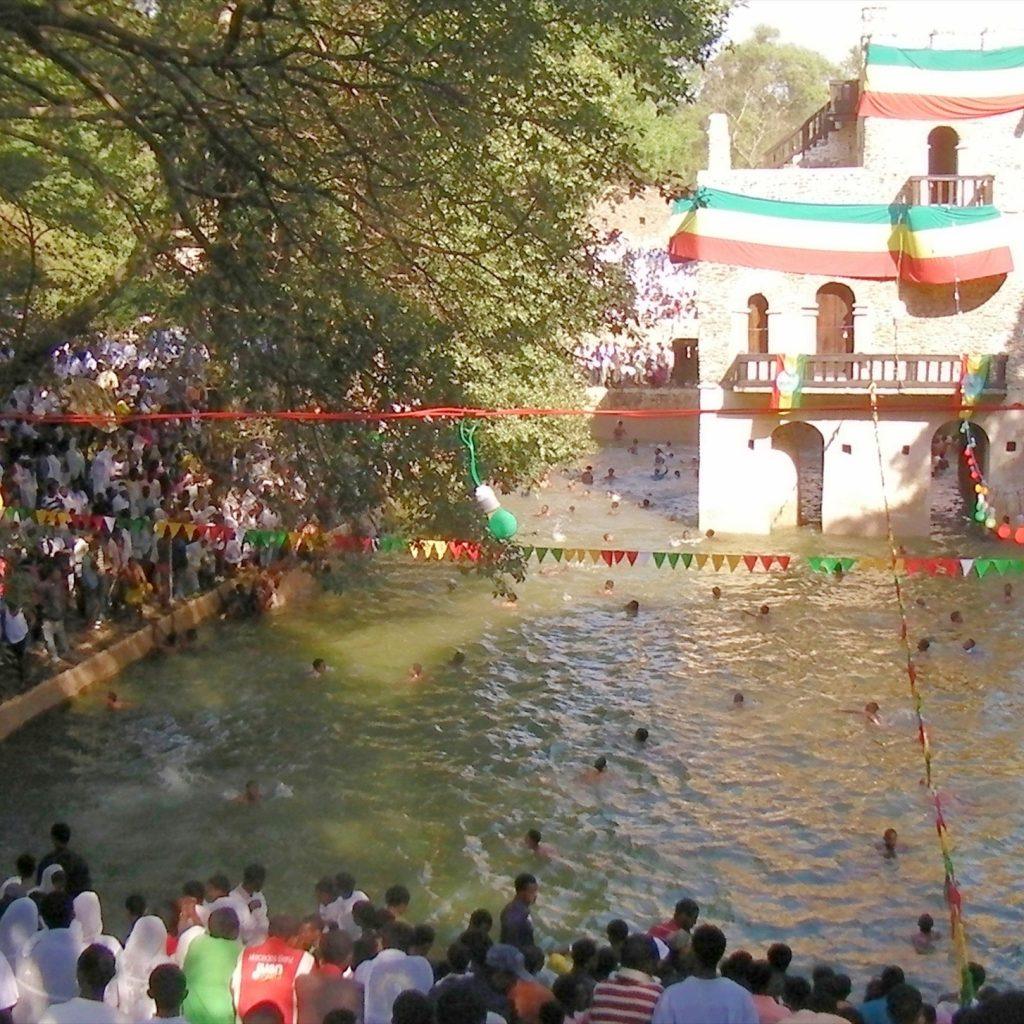
Timkat starts the afternoon before, and most visitors miss half of it. Each church's tabot is carried out and processed to water, where it stays overnight before the dawn blessing. Timkat falls on 19 January 2027. UNESCO inscribed it in 2019.
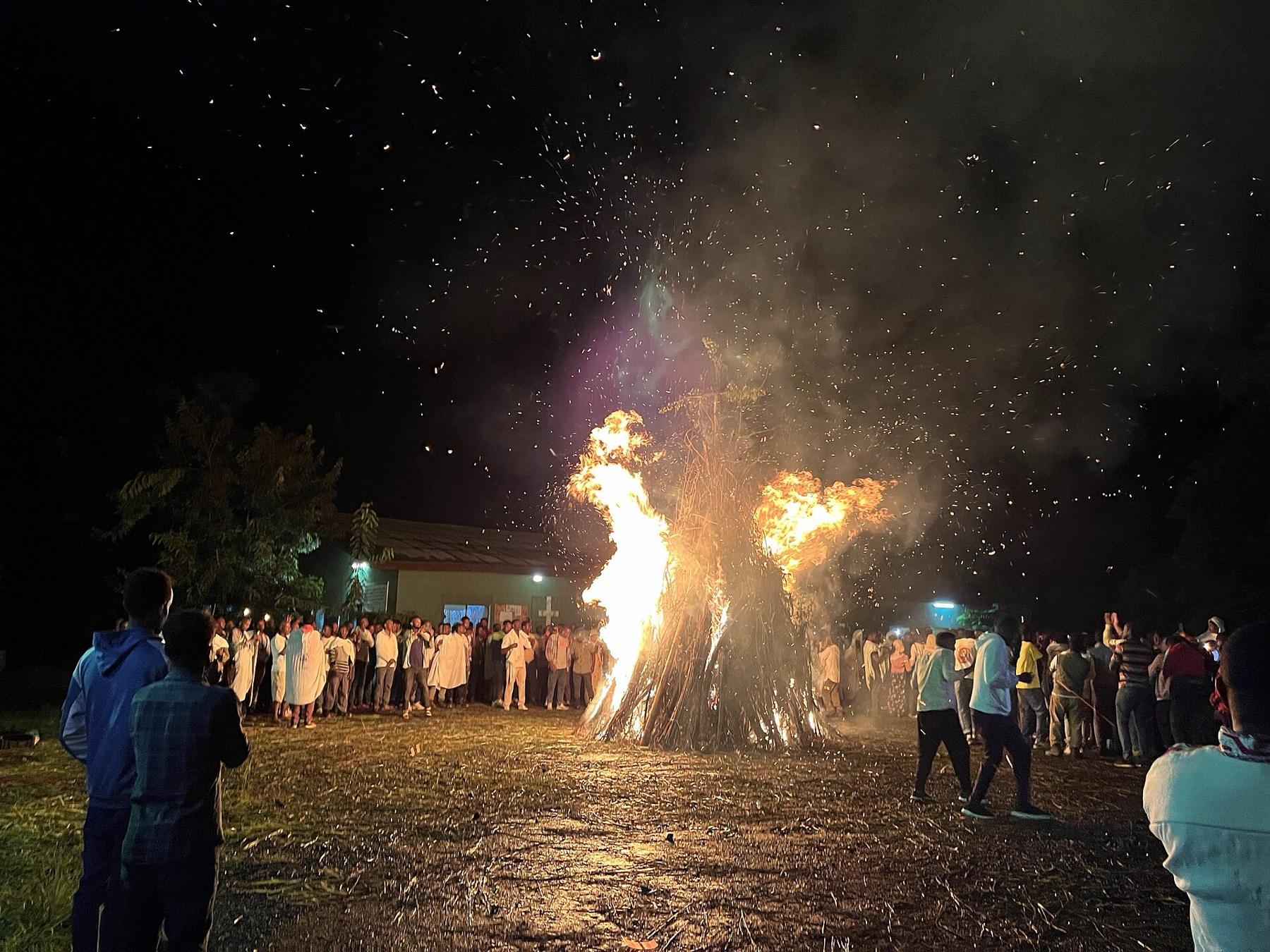
Meskel falls on 27 September 2026, and the small bonfires beat the big one. Meskel Square in Addis Ababa holds the largest demera, but the neighbourhood and village fires are where you are standing among people rather than behind a barrier.
Ask for bayenetu and you get the best vegan food in Africa by accident. Orthodox fasting excludes animal products on most Wednesdays and Fridays and through longer periods, so every kitchen cooks for it. It is ordinary food here, not a special request.
Enkutatash falls on 11 September 2026, because the Ethiopian calendar runs seven to eight years behind and has thirteen months. It lands as the long rains end and the yellow Meskel daisies come out. Our cultural experiences guide covers all of these properly.
Visits are arranged and paid, and photography is charged separately, so agree the terms with your guide before you arrive. The arrangement draws real criticism and it is better to understand it going in than to discover it standing in a village. See the Omo Valley guide, or how our Omo Valley tour runs it.
Eleven churches carved down into solid rock, linked by trenches and tunnels, and still in daily use. They are Ethiopia's most photographed sight for good reason. See the Lalibela guide.
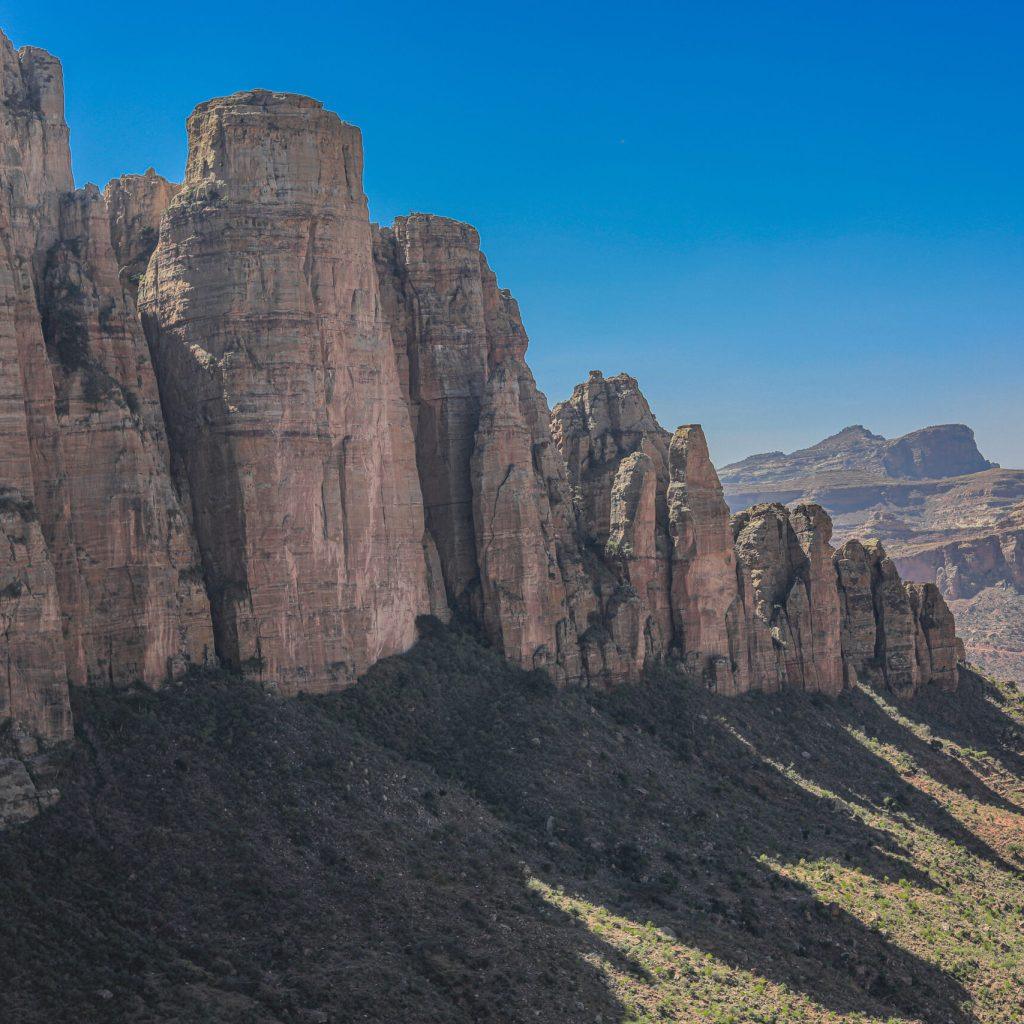
A church cut into a sandstone tower, reached by exposed rock scrambling, sometimes barefoot. It stops people who dislike heights, and it has a fraction of Lalibela's visitors. The Gheralta guide has the detail.
A sixth-century monastery with no path, reached by a leather rope up a cliff, and it admits men only. Women in a group wait at the base. Plan around it rather than discovering it on the day. See Debre Damo.
Fasil Ghebbi is a walled compound of seventeenth-century royal castles, and it looks nothing like the rest of Africa. It is also where the largest Timkat celebration happens, at Fasilides Bath. See Gondar.
Carved granite obelisks, some still standing and one enormous one fallen, from a kingdom that traded with Rome. See Axum.
Thirty-six monuments including thirty-two carved stelae, UNESCO-inscribed in 1980, and nobody has fully deciphered the symbols. It takes half an hour and sits on the road south from Addis Ababa.
A walled city of narrow lanes, said to hold dozens of mosques inside the walls, and a completely different Ethiopia from the highlands. See Harar Jugol.
Dry-stone terracing and walled towns worked continuously for twenty-one generations, more than four hundred years. UNESCO-inscribed in 2011, and most Omo itineraries drive straight through it. See Konso.
Island monasteries on a lake that feeds the Blue Nile, some of which admit men only. Ask which before you plan the day. See Bahir Dar and Lake Tana.
The 3.2-million-year-old Australopithecus afarensis skeleton is in Addis Ababa, and the museum is an easy half-day. Worth doing on arrival day, before you drive anywhere.
Bale holds the most important population of the world's rarest canid, which UNESCO cited when it inscribed the park in 2023. The plateau road crosses above 4,000 metres. See Bale Mountains.
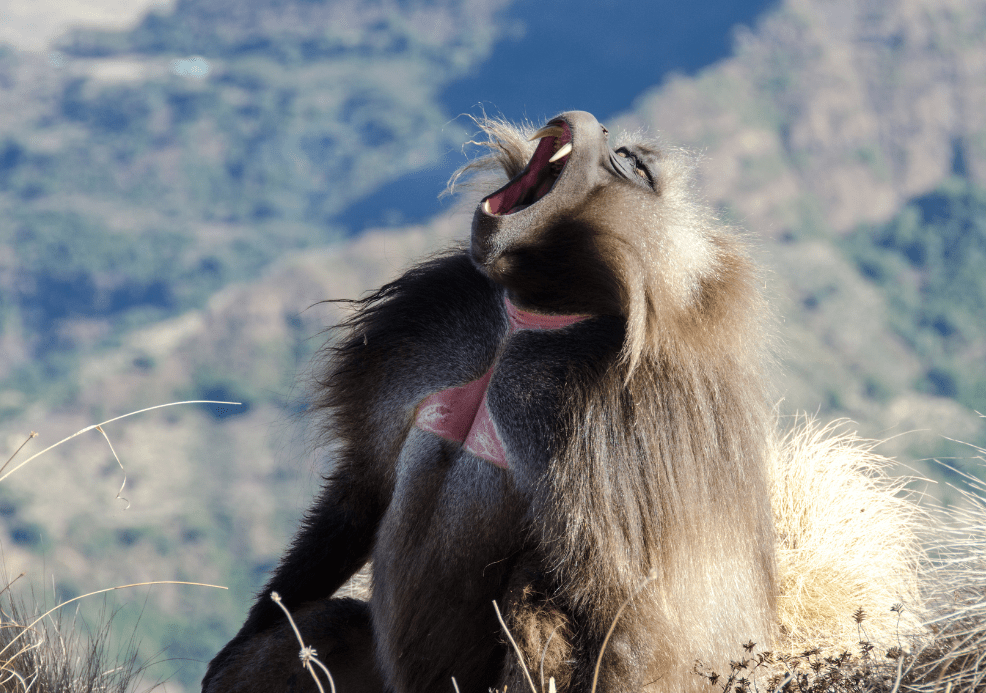
Gelada graze in large groups on the escarpment and largely ignore people, which makes them the easiest big mammal encounter in the country. See the Simien Mountains.
The acacia country around Yabello and Mega is the only place on earth this bird occurs. So is the white-tailed swallow. Our Ethiopia birding guide covers the endemic circuit.
Hippos and some of the largest Nile crocodiles in Ethiopia, from a boat, in a morning. See Arba Minch.
Lake Ziway is the easiest waterbird stop in the country, with pelicans and storks feeding metres from the jetty. Abijatta-Shalla adds flamingos. See the Rift Valley lakes.
The nearest place to Addis Ababa with genuine dry-country species, on the road east. See Awash National Park.
The Danakil is the lowest point in Africa and one of the hottest inhabited places on earth, and the walk to the crater is usually done at night because of the heat. November to February only. See the Danakil Depression guide, or our Danakil tour.
Multi-day trekking along one of the most dramatic escarpments in Africa, at altitude, with gelada as company. October to March, once the kiremt rains have finished.
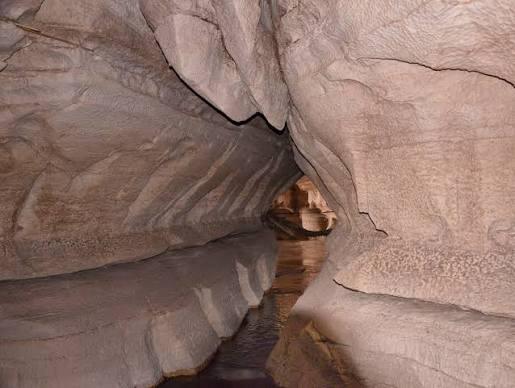
A cave system cut by the Web river running straight through the rock, sacred in both local Islamic practice and older Oromo tradition. It is on Ethiopia's UNESCO Tentative List. Going inside means wading. See Sof Omar.
Three things that are not a day out but will shape the trip. Drink the coffee everywhere, because Ethiopia is where Coffea arabica originates and Jimma and Kaffa are the forests it comes from, which our coffee tours go into. Eat with your right hand from a shared platter, which is the norm rather than a novelty. And try tej, the honey wine, once.
Not twenty-five. The realistic answer is that Ethiopian itineraries run either north or south, and doing both properly takes longer than most people have.
A week covers one half of the country. The southern loop takes in the Rift Valley lakes, the Omo Valley and Konso, which is roughly entries 6, 14, 20 and 21, and our 7-day southern itinerary is exactly that. Ten days lets the same route slow down and add Bale. Two weeks opens up the endemic birding circuit or a proper northern historic run.
On timing, January and February are the only two months that fall outside every rainy season in both the highlands and the south, which our best time to visit guide works through month by month.
What is Ethiopia best known for?
Rock-hewn churches, the origin of coffee, and endemic wildlife. Ethiopia has eleven UNESCO World Heritage sites, including the eleven rock-hewn churches of Lalibela, and it is the only place on earth where the Ethiopian wolf, the gelada and Stresemann's bush-crow occur.
What is the number one thing to do in Ethiopia?
Lalibela. The eleven churches carved down into solid rock are the country's single most striking sight, they remain in daily religious use rather than being ruins, and two days is enough to see them properly.
What can you do in Ethiopia that you cannot do anywhere else?
Stand on an active lava lake at Erta Ale in the Danakil Depression, the lowest point in Africa. Sit among gelada, which live only in the Ethiopian highlands. See the Ethiopian wolf on the Sanetti Plateau. And climb a rope to Debre Damo, a sixth-century monastery with no path to it.
How many days do you need in Ethiopia?
Seven days covers one half of the country properly, either the historic north or the southern circuit. Ten days lets the southern route add the Bale Mountains without rushing. Two weeks opens up the endemic birding circuit. Covering north and south in a week means most of your time is spent in transit.
What is there to do in Ethiopia for food lovers?
Eat a fasting platter, called bayenetu, which is the vegan spread every Ethiopian kitchen cooks for Orthodox fasting days. Sit through a full three-round coffee ceremony. And visit Jimma and Kaffa in the southwest, the forests where Coffea arabica originates.
Is Ethiopia good for wildlife?
For endemics rather than for a classic safari. The Bale Mountains hold the most important population of the Ethiopian wolf, the Simien Mountains hold gelada and Walia ibex, and the country has a set of birds found nowhere else. It is not a Big Five destination and does not try to be.
Pick four or five of these rather than twenty-five, and let the route follow from them. Which half of the country you end up in is usually decided by the two or three things you most want to see.
Tell us which of these matter most to you and we will build the route around them. We reply within a maximum of two hours, and you will have a detailed itinerary and a quote within 24 hours. Our Ethiopia tours and the destination guides are the place to start browsing.
