---------------------------------
Address
Phone: +251 988 111 222
Need help or have a question?
Contact us at: info@driveethiopia.com
Addis Ababa, Ethiopia
---------------------------------
Address
Phone: +251 988 111 222
Need help or have a question?
Contact us at: info@driveethiopia.com
Addis Ababa, Ethiopia


The seven-day Ethiopia itinerary everyone publishes runs north. This is the southern route, driven rather than flown, day by day from Addis Ababa.

Search for a seven-day Ethiopia itinerary and you will get the same trip back every time. Addis Ababa, then Bahir Dar for Lake Tana, then Gondar or the Simien Mountains, then Lalibela, usually flown. Every operator on the first page of Google sells a version of it.
This is the other seven days. It runs south from Addis instead of north, it takes in two UNESCO World Heritage sites, the Omo Valley and the Rift Valley lakes, and you drive the whole thing rather than flying between stops.
It is also the seven-day trip Drive Ethiopia actually operates, so the days below are a real itinerary rather than a route drawn on a map.
Addis Ababa, Tiya, Arba Minch, Lake Chamo, Konso, Jinka, Mago, Turmi, then back north through the Rift Valley lakes.
Six nights, seven days, starting and finishing in Addis Ababa. It is a driving trip. There are no internal flights in it, so nothing in the week hangs on a domestic connection.
Arrive and see the city. The National Museum holds the Lucy fossil, and Holy Trinity Cathedral, the Entoto hills and the Mercato fill an afternoon.
Most international arrivals land early, which makes the first day usable rather than lost. Use it, because from Day 2 you are driving. More on what fits into a short stay is on our Addis Ababa guide.
The long drive south. It breaks at Tiya, a field of 36 monuments including 32 carved stelae, inscribed by UNESCO in 1980. Nobody has fully deciphered the symbols on them.
You finish the day at Arba Minch, above the two lakes.
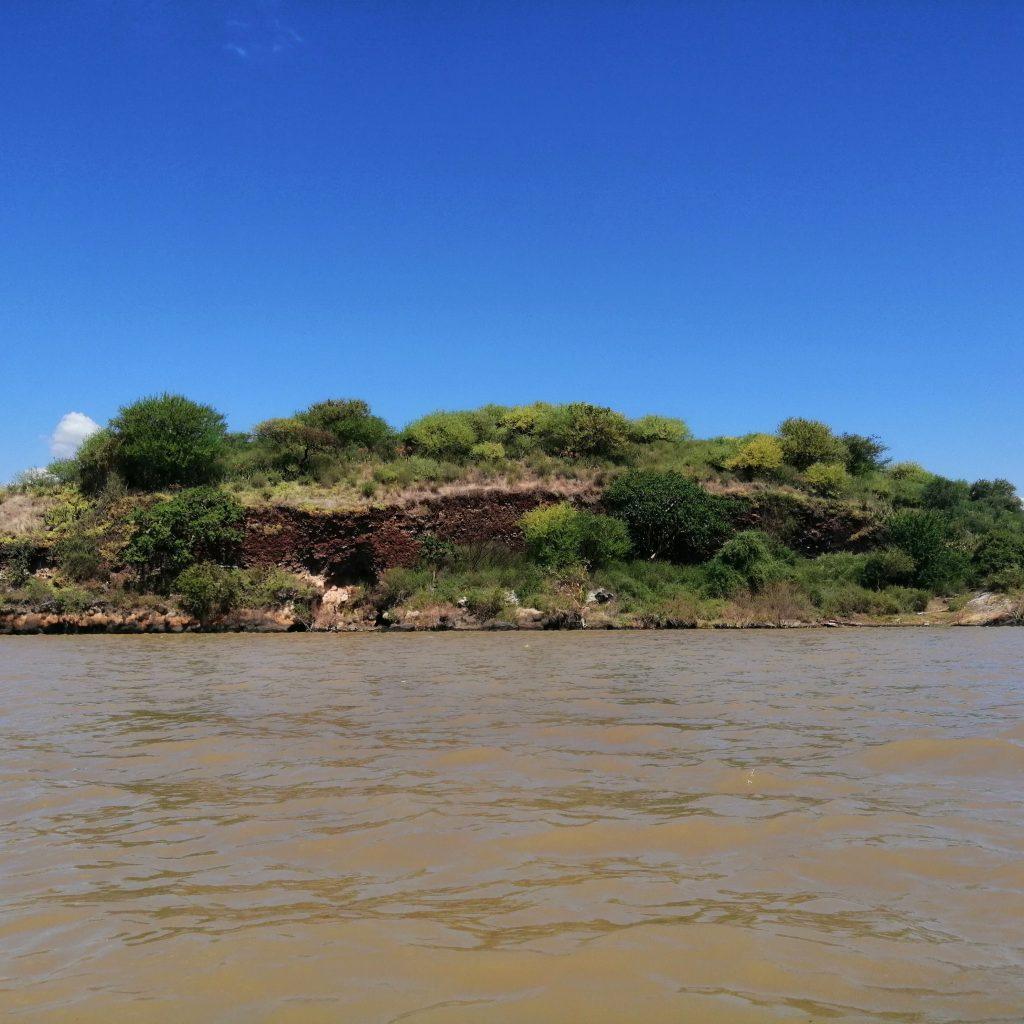
A boat trip on Lake Chamo in the morning, for hippos and some of the largest Nile crocodiles in the country. Then south to Konso.
The Konso Cultural Landscape went onto the UNESCO list in 2011. It is dry-stone terracing and walled towns worked continuously for twenty-one generations, more than four hundred years, on ground that gives very little away. It is a working farming system that people live in now, not a ruin.
Overnight at Jinka.
Into Mago National Park to visit Mursi communities, then the drive down to Turmi.
This is the day that needs the most thought before you commit to it, and there is a section on it below.
A half day down towards the Omo river to visit the Dassanech, then the afternoon with Hamar communities.
The Hamar bull-jumping ceremony is a rite of passage, held when a family holds one. It is not scheduled and it cannot be booked. If your trip coincides with one you may be able to attend. If a company guarantees you will see one, ask how.
The route back north times itself around whichever market is running. Dimeka and Key Afer run on different days of the week, so the stop depends on when you travel.
Market days are the part of this trip most people remember, and they are ordinary commerce rather than a display. People are there to trade.
The last day runs back up past Lake Langano, Lake Ziway and Lake Koka into Addis.
On Drive Ethiopia's dedicated Rift Valley itinerary, Addis to Lake Ziway is about three hours, Ziway to Langano about an hour and a half, and Langano to the Abijatta-Shalla park gate about an hour. That gives you a sense of the spacing on this final leg, though on Day 7 you are driving it in the other direction with a flight to catch. Our Rift Valley lakes guide covers what is worth stopping for.
Days 4 to 6 are the reason most people choose this route, and they deserve a plain description rather than a brochure one.
Visits to Mursi, Hamar and Dassanech communities are arranged and paid. You pay to enter, and photography is normally paid separately, commonly per photograph or per person. Agree the terms with your guide before you arrive somewhere, not while standing in a village with a camera in your hand.
This arrangement draws real criticism, and the criticism is not unreasonable. A visit built around photographing people turns a community into a subject. Some travellers come away uncomfortable. It is better to know that going in.
What changes the day is time. An hour spent buying at a market, or sitting somewhere without a lens up, is a different experience from a twenty-minute stop for pictures. The Mursi are known internationally for lip plates, and being known for one thing is not the same as being that thing. The Omo Valley guide goes further into how visits work.
| Road time | High. Six of seven days involve a drive, some of them long, and the southern surfaces vary |
| Vehicle | 4×4. The Mago and Turmi legs are not saloon-car ground |
| Flights | None internal. The whole loop is driven, so there is no connection to miss |
| Altitude | Not an issue on this route. Addis is high, the south is not |
| Heat | Real in the lower Omo. It is a different climate from the highlands |
| Facilities | Basic from Jinka south. Manage expectations on hot water and power |
| Best months | January and February are dry in both the highlands and the pastoral south |
On timing, the southern half of this route runs on a different rainfall calendar from the highlands. FEWS NET's Ethiopia seasonal calendar puts the gu or genna rains in the pastoral south in March to May and the deyr or hageya rains in October to December, while the highland belg rains fall March to May and kiremt June to September. January and February are the two months outside all of them.
Seven days is enough for the south or the north, and not both. Anyone selling you both in a week is selling you airports.
With three days, do the Rift Valley lakes and go no further. With nine or ten, the same southern route stops rushing and you can add the Bale Mountains. With fourteen, the endemic birding circuit through Bale, Yabello and Negele opens up, which we cover in the Ethiopia birding guide.
Is seven days enough for Ethiopia?
For one region, yes. This southern route fits comfortably into seven days because it is a single loop out of Addis with no internal flights. Trying to cover both the historic north and the south in a week means most of your time is spent in transit.
How much of the week is spent driving?
Most of it. Six of the seven days involve a drive, and the legs between Arba Minch, Jinka and Turmi are long. If that is not the holiday you want, the three-day Rift Valley lakes trip covers far less ground.
Do I need a 4×4 for this route?
Yes. The road south from Addis is largely surfaced, but the legs around Mago National Park and Turmi are not, and a saloon car is the wrong vehicle from Jinka onwards.
When is the best time to do this itinerary?
January or February. Those are the only two months that sit outside every rainy season at both ends of the route on FEWS NET's seasonal calendar. The southern deyr rains run October to December, which is when the unsurfaced sections are worst.
Will I see a Hamar bull-jumping ceremony?
Only if one is happening. It is a family rite of passage, not a scheduled performance, and no operator can promise it in advance. Ask any company that does exactly how they arrange it.
Are internal flights needed?
No. The whole loop is driven from Addis and back, which is one reason it fits into seven days without a rushed connection in the middle of it.
Tell us your dates and whether you would rather have the Omo days or the lakes. We reply within a maximum of two hours, and you will have a detailed itinerary and a quote within 24 hours.
The route above is our Omo Valley tour, which runs seven days and six nights. If you would rather drive it yourself or want a vehicle and driver on your own schedule, we also do car rental across Ethiopia.
