---------------------------------
Address
Phone: +251 988 111 222
Need help or have a question?
Contact us at: info@driveethiopia.com
Addis Ababa, Ethiopia
---------------------------------
Address
Phone: +251 988 111 222
Need help or have a question?
Contact us at: info@driveethiopia.com
Addis Ababa, Ethiopia


Where to see the Lucy fossil in Ethiopia: the cast in Addis Ababa, where the original has been, Melka Kunture, and the FCDO advice on Hadar, October 2026.
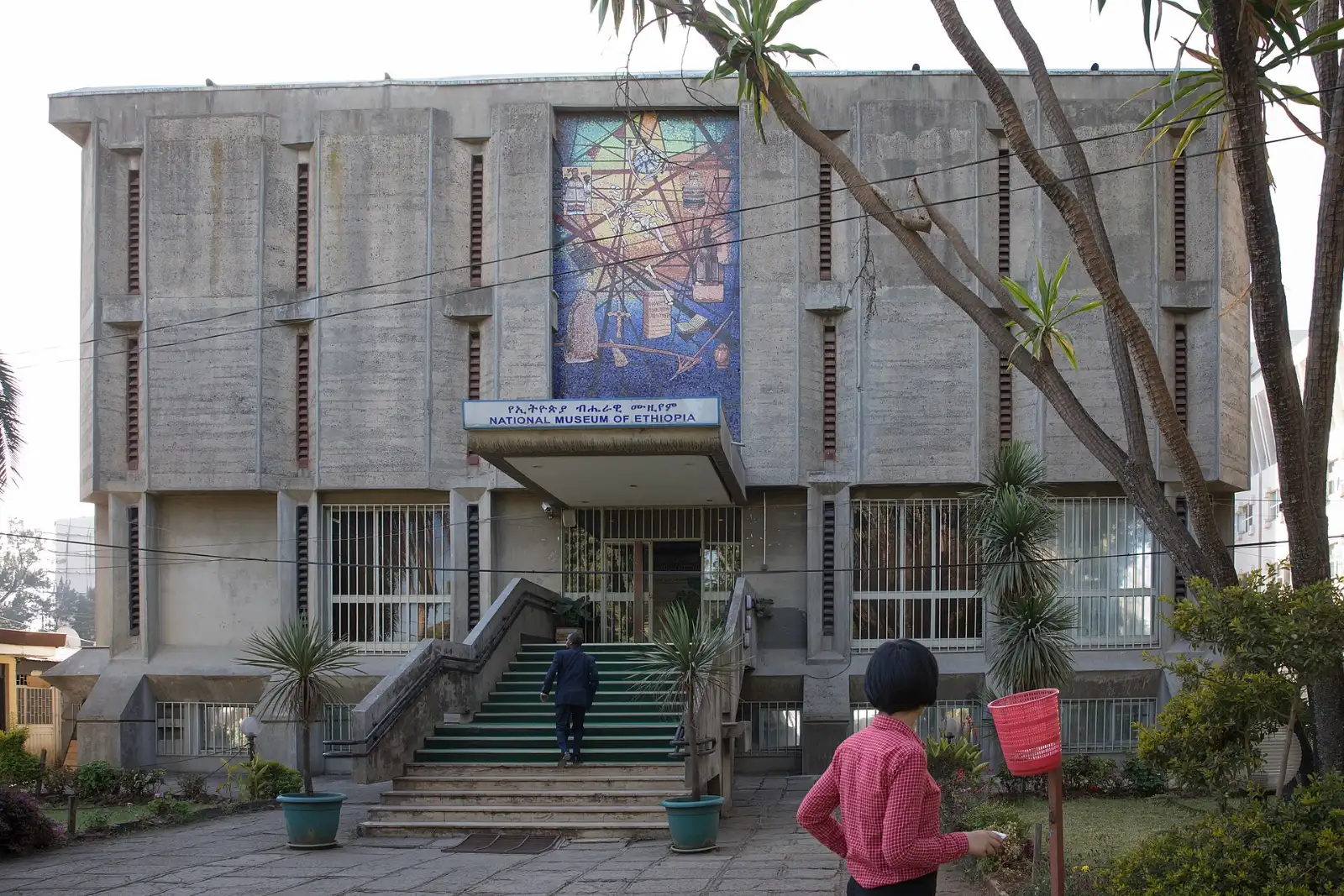
In Ethiopia, you see Lucy at the National Museum of Ethiopia in Addis Ababa. What is on public display there is a cast. The original skeleton, about 3.2 million years old, is normally kept in a secure vault in the same museum, and it rarely comes out. Since August 2025 it has been away twice: to Prague, then to the new Natural History Museum Abu Dhabi, where its director wrote in June 2026 that it would return to Addis Ababa in July 2026.
So the honest answer is that you will meet Lucy in Addis Ababa, but almost certainly as a replica. That is still worth an hour. The cast shows the real fragments in their true proportions, and the rest of the gallery puts her in a record of human ancestry that runs back more than four million years.
This guide follows that record from the museum outwards: to Melka Kunture, an easy day trip south of the capital, and to Hadar and Dikika in the Afar region, where Lucy and Selam were found and where travel advice is now the deciding factor.
Lucy is the nickname of AL 288-1, a set of several hundred pieces of fossil bone that together make up about 40% of the skeleton of one female Australopithecus afarensis. Donald Johanson and the graduate student Tom Gray found the first pieces at Hadar, in the Awash Valley of Afar, on 24 November 1974. The team named her after the Beatles song "Lucy in the Sky with Diamonds", which was playing in camp that evening. In Ethiopia she is also Dinkinesh, Amharic for "you are marvellous".
She matters because she walked upright on a small, ape-sized body, long before the brain grew large. For decades she was the best evidence for that order of events. Older finds have since joined her, several of them from the same stretch of Ethiopia.
The National Museum shows a replica and keeps the real bones in a vault. The Associated Press reported exactly that when Lucy left for Prague in August 2025, The reason is simple: the skeleton is fragile, and every move risks damage.
The original has only travelled a handful of times:
| Period | Where the original went |
|---|---|
| 2007 to 2013 | A six-year exhibition tour of the United States |
| August 2025, about two months | The Czech National Museum in Prague, her first showing in Europe |
| From November 2025 | The Natural History Museum Abu Dhabi, as part of its opening programme |
The Abu Dhabi stay was first set to end on 23 March 2026. In June 2026 the museum's director, writing with a UCL colleague, said Lucy would return to Addis Ababa in July 2026. We have not found a report of her arrival back in Ethiopia as of 30 October 2026.
None of this changes your visit much. Even when she is home, the original sits in the vault and the cast is what visitors see. If seeing the real bones matters to you, it is worth asking the museum directly before you travel, because the original has been shown in Addis Ababa on special occasions, as it was after the United States tour ended in 2013.
The museum sits near Addis Ababa University. Allow about an hour. On our city tours it is paired with Holy Trinity Cathedral, where Emperor Haile Selassie is buried. Our National Museum of Ethiopia page has more on the museum itself.
Opening hours and the foreign visitor fee change, and we could not find a current official listing to quote. Check with your hotel or guide before you go.
Go to the fossil gallery first. It is the reason most people come, and the table below gives you the names to look for. Our Addis Ababa city tour includes the museum, and the half-day city tour fits it into a free morning or afternoon.
If you are only in transit, our guide to a short Addis Ababa stopover shows how the museum fits into a few hours on the ground.
Lucy is the famous one, not the oldest or the most complete. These are the finds and sites worth knowing before you go.
| Find or site | Where | Age | Why it matters |
|---|---|---|---|
| Lucy (AL 288-1) | Hadar, Afar | About 3.2 million years | About 40% of one Australopithecus afarensis skeleton |
| Selam (DIK-1/1) | Dikika, Afar | About 3.3 million years | A three-year-old afarensis girl, around 100,000 years older than Lucy |
| Ardi (ARA-VP-6/500) | Aramis, Afar | About 4.4 million years | Ardipithecus ramidus, published in Science in October 2009 |
| Omo I and Omo II | Omo Kibish, south-west Ethiopia | Omo I at least about 233,000 years | Among the earliest known Homo sapiens |
| Melka Kunture and Balchit | Upper Awash, south of Addis Ababa | Back to about 1.7 million years | Stone tool sites and an obsidian source, UNESCO listed in 2024 |
Selam is the skull and much of the skeleton of a child of Lucy's species, first found at Dikika in 2000 and recovered over the following years. Dikika lies just across the Awash River from Hadar. She is often called Lucy's baby, although she is the older of the two by about 100,000 years.
Ardi is a partial skeleton of Ardipithecus ramidus from Aramis, also in the Afar. The first piece, part of a hand bone, turned up in 1994. A team led by Tim White published the full analysis as a set of 11 papers in Science on 1 October 2009. At about 4.4 million years, she pushed the record of upright-walking ancestors well beyond Lucy.
Richard Leakey's team recovered the Omo I and Omo II fossils at Omo Kibish, in Omo National Park, between 1967 and 1974. A 2022 study gave Omo I a minimum age of about 233,000 years, which keeps it among the oldest Homo sapiens fossils known. The Lower Valley of the Omo has been a UNESCO World Heritage Site since 1980. Most visitors to the region come for its communities rather than its fossil beds, and our Omo Valley guide covers that trip.
If the museum leaves you wanting to stand somewhere real, Melka Kunture is the answer. It lies on the Awash River about 53 kilometres by road south of Addis Ababa, on surfaced roads, so it works as a day trip.
It is a sequence of Stone Age sites going back about 1.7 million years, with stone tools and fragments of early human skulls. Balchit, a little under seven kilometres away, is the obsidian outcrop that supplied the toolmakers. UNESCO added the pair to the World Heritage List in 2024, and there is a small museum on site. Our ranking of Ethiopia's UNESCO World Heritage Sites puts it first for ease of access.
On travel advice: the UK Foreign, Commonwealth and Development Office (FCDO) lists specific parts of Oromia it advises against. As of its update of 26 October 2026, the Melka Kunture area is not among them. Check the current advice for your dates.
Hadar is a fossil site in Mille district, in Zone 1 of the Afar region, about 15 kilometres upstream of the A1 road bridge over the Awash River. Dikika is close by on the other bank. What you would see is open, eroded badlands. The fossils themselves are in Addis Ababa, and there is no museum at the site.
People do go. In January 2024, for Lucy's 50th anniversary, Arizona State University's Institute of Human Origins ran a trip that started at the National Museum and then spent two nights at a tented camp near the discovery site. That was an organised expedition, led by the scientist who found her.
The harder question now is the advice. The FCDO's Ethiopia page, updated on 26 October 2026, says:
Measured on OpenStreetMap boundaries, Hadar is about 159 kilometres from the Tigray boundary, so it sits outside the "all travel" strip and inside the "all but essential" part of Afar. The A1, the road you would use to get there, is one of the routes the FCDO names. Many travel insurers will not cover a trip against FCDO advice, so read your policy before you plan one.
We run trips in the Danakil, also in Afar, and confirm the route under the advice in force when you enquire. Our Danakil Depression tour and our guide to trekking Erta Ale explain how that works at the moment. If Hadar matters to you, ask us, and we will tell you plainly what is and is not possible for your dates.
For most travellers, the trail that works today is short and close to the capital:
With a second day, Tiya, another UNESCO site with carved stelae, lies further down the same road.
Normally, no. The National Museum of Ethiopia displays a cast and keeps the original in a secure vault. The original was on loan to the Natural History Museum Abu Dhabi from November 2025, and its director wrote in June 2026 that it would return in July 2026. Ask the museum before you travel if seeing the original matters to you.
At Hadar, in the Awash Valley of Ethiopia's Afar region, on 24 November 1974. The site is about 15 kilometres upstream of the A1 road bridge over the Awash River. There is no museum there, and the fossils are kept in Addis Ababa.
About 3.2 million years. She belongs to the species Australopithecus afarensis, and the bones that survive make up about 40% of one skeleton.
It has been done on organised expeditions, but it is difficult now. As of 26 October 2026, the FCDO advises against all but essential travel to Hadar's part of Afar, foreign nationals cannot use Afar's airports, and it reports armed clashes along the A1 road. Check the current advice and your insurance first.
Both are Australopithecus afarensis from the Afar. Lucy, from Hadar, is part of an adult skeleton about 3.2 million years old. Selam, from Dikika across the river, is a three-year-old child about 3.3 million years old, so she is the older of the two.
Yes. Melka Kunture and Balchit, a UNESCO World Heritage Site since 2024, is about 53 kilometres by road south of the city. It has stone tool sites going back about 1.7 million years and a small site museum, and it works as a day trip.
Lucy is easy to meet and hard to follow. The museum and Melka Kunture fit comfortably into one day from Addis Ababa. The Afar sites depend on advice that has changed several times this year.
Tell us your dates and which parts of the trail interest you. You will have a reply within two hours and a detailed itinerary with a quote within 24 hours. Send us your trip details.
Feature photo: Ninaras, CC BY 4.0, via Wikimedia Commons.
