---------------------------------
Address
Phone: +251 988 111 222
Need help or have a question?
Contact us at: info@driveethiopia.com
Addis Ababa, Ethiopia
---------------------------------
Address
Phone: +251 988 111 222
Need help or have a question?
Contact us at: info@driveethiopia.com
Addis Ababa, Ethiopia


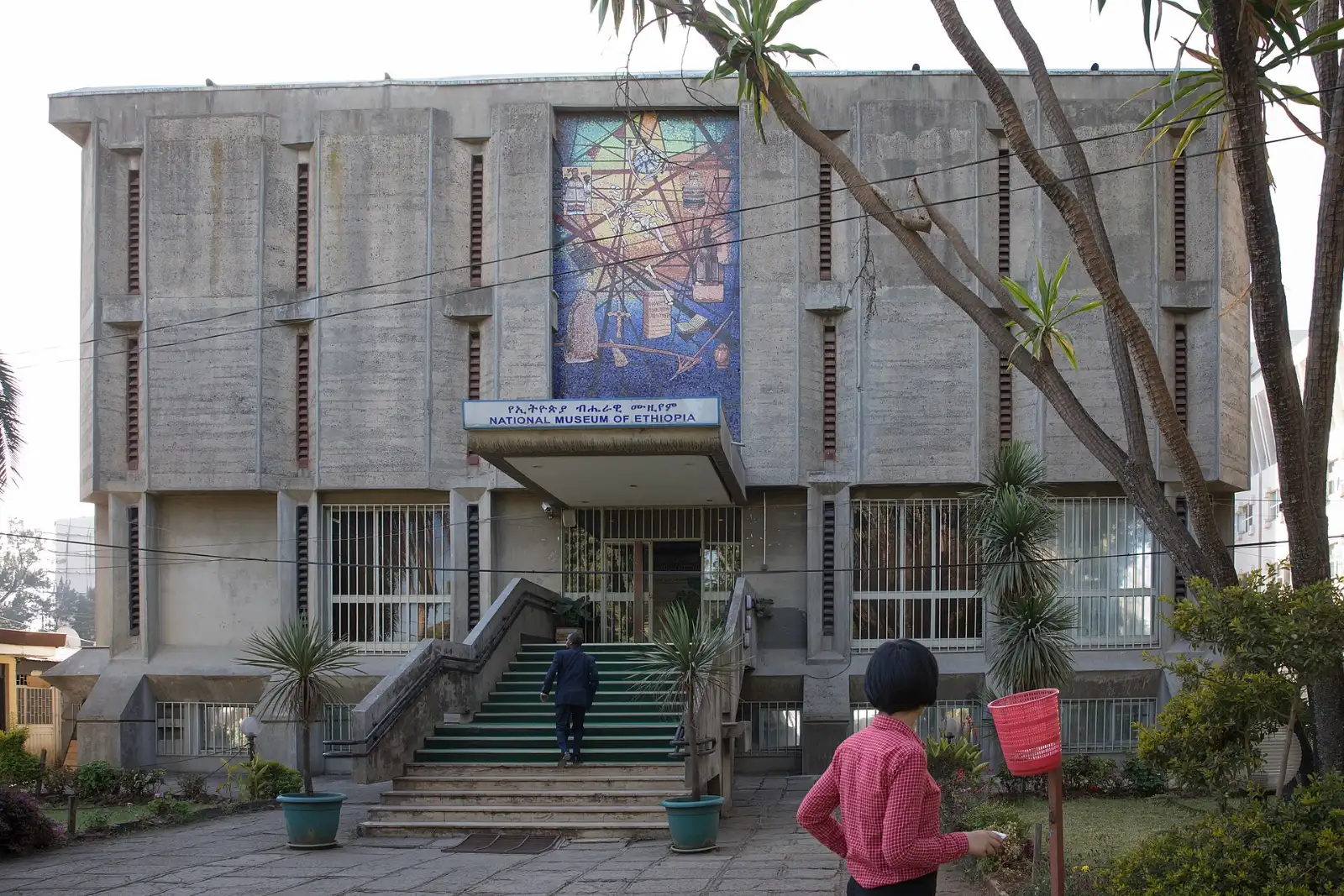
Home of Lucy, the 3.2-million-year-old human ancestor, plus royal treasures and Ethiopian art.
The National Museum of Ethiopia in Addis Ababa is the country's main archaeological and historical museum and the home of Lucy, the 3.2-million-year-old partial skeleton of Australopithecus afarensis found in the Afar region in 1974. Its four floors also cover the 3.3-million-year-old child fossil known as Selam, ancient Aksumite finds, royal regalia and modern Ethiopian art.
The museum stands near Addis Ababa University’s Sidist Kilo campus, a short drive from Arat Kilo. It grew out of the Institute of Archaeology founded in 1958.
The basement is devoted to human origins, the first floor to ancient and medieval history and royal objects, the second to Ethiopian art including works by Afewerk Tekle, and the third to the country’s cultural diversity.
Ethiopia is often called the cradle of humankind, and this is where you come face to face with the evidence. Seeing Lucy, Selam and other fossils, then walking upstairs through Aksum, the emperors and modern art, gives you the whole sweep of Ethiopian history in a couple of hours.
Lucy was discovered on 24 November 1974 at Hadar in the Afar region by a team including Donald Johanson. Named after a Beatles song played in camp, she became the most famous early human ancestor in the world. The gallery usually displays an exact cast, while the original bones are kept in secure storage at the museum and shown only on special occasions.
Selam, a young Australopithecus afarensis found at Dikika, also in Afar, adds another remarkable chapter to the story.
Open year round. Weekday mornings are quiet; school groups can be busy at times. It makes a good rainy-afternoon activity in July and August.
| Period | What to expect |
|---|---|
| Weekday mornings | Quietest galleries. |
| Rainy season | Ideal indoor activity. |
| Any time of year | Pair with nearby city sights. |
The museum is in central Addis Ababa near Sidist Kilo, about 8 kilometres from Bole International Airport, 25 to 40 minutes by car. It is a standard stop on our Addis Ababa city tour.
Allow 1.5 to 2 hours. Combine with the Ethnological Museum, Holy Trinity Cathedral and Unity Park for a full day.
| Trip type | Suggested time |
|---|---|
| Quick visit | One hour for Lucy and the highlights. |
| Standard | Two hours for all four floors. |
| Full day | Add nearby museums and churches. |
Stay in central Addis Ababa: Arat Kilo and Piassa for history, Bole for restaurants and the airport.
Nothing special is needed. Bring a layer for cool indoor galleries and cash in birr for tickets.
Addis Ababa is generally safe for visitors by day. Watch your phone and bag in crowded areas, avoid walking alone late at night, and use a driver or registered ride-hailing car after dark.
The Ethnological Museum, Holy Trinity Cathedral, Unity Park and the Adwa Victory Memorial Museum are all within a short drive.
The original bones are kept at the museum in secure storage. The gallery usually displays an exact cast, with the original shown only on special occasions.
About 3.2 million years old.
In central Addis Ababa near Sidist Kilo and Addis Ababa University.
About 1.5 to 2 hours.
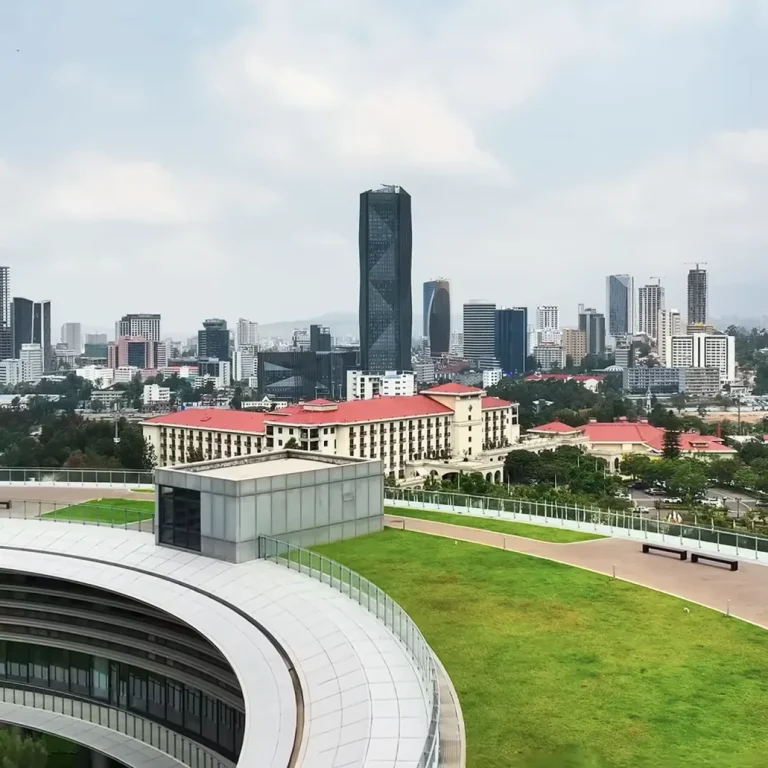
Ethiopia's high-altitude capital, home to Lucy and the gateway to every trip.
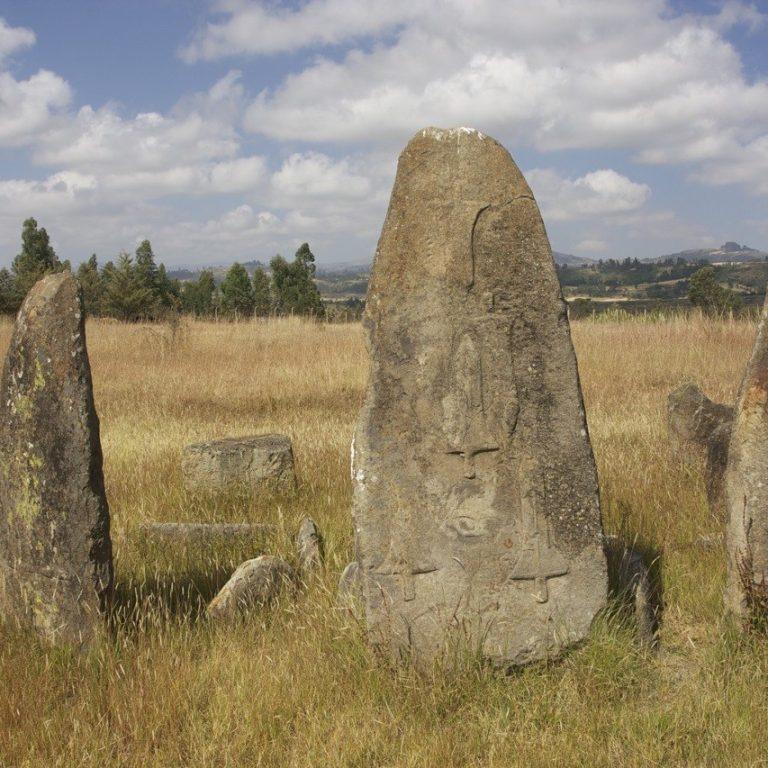
Read More about Addis Ababa →UNESCO-listed field of carved standing stones, south of Addis Ababa.
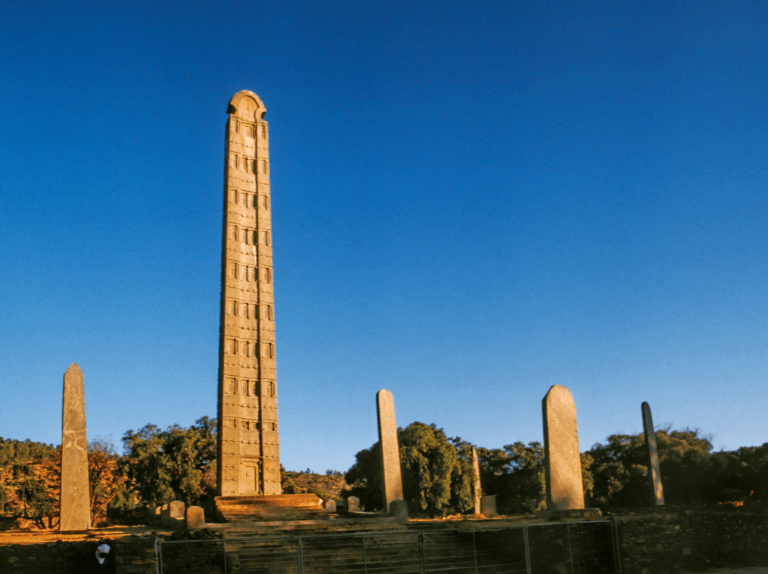
Read More about Tiya Stelae →Towering carved stelae, royal tombs and the claimed Ark of the Covenant.
Read More about Axum →