---------------------------------
Address
Phone: +251 988 111 222
Need help or have a question?
Contact us at: info@driveethiopia.com
Bole, Addis Ababa, Ethiopia
---------------------------------
Address
Phone: +251 988 111 222
Need help or have a question?
Contact us at: info@driveethiopia.com
Bole, Addis Ababa, Ethiopia


Three UNESCO sites almost nobody visits, plus places on Ethiopia's official Tentative List. What each one is, and exactly what reaching it takes.

Most lists of overlooked Ethiopian places are assembled from other lists. This one uses a filter you can check: Ethiopia's own UNESCO paperwork.
Eleven Ethiopian sites are inscribed on the World Heritage List, and a further set sit on the country's Tentative List, which is the register of places the Ethiopian government has formally nominated but which have not been inscribed yet. Several of the most interesting places in the country are on one of those two lists and still receive almost no visitors.
Ten below. For each one, what it is, why so few people go, and what getting there actually requires.
Inscribed by UNESCO in September 2023, and still almost unvisited.
Gedeo sits on the steep eastern escarpment of the Main Ethiopian Rift. It is a working agroforestry system: big shade trees over enset, with coffee growing underneath, worked on slopes that look too steep to farm. Along the ridges are dense clusters of megalithic monuments, and inside the cultivated slopes are sacred forests still used for Gedeo religious ritual.
Access. Off the main road south towards Dilla, on the way to Hawassa and the Sidama country. It is one of the more reachable entries here and one of the least set up for tourism. There is no visitor infrastructure to speak of.
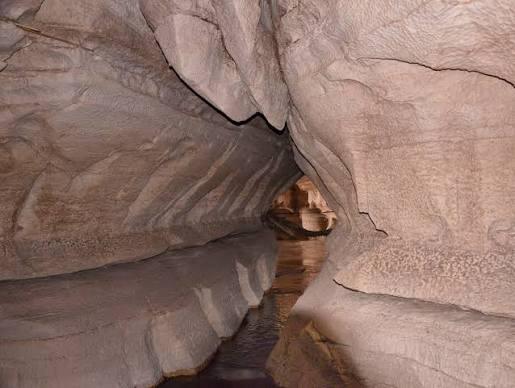
On Ethiopia's UNESCO Tentative List since 14 December 2011, as "Holqa Sof Omar: Natural and Cultural Heritage".
A river cave system in Bale, cut by the Web river, which runs through the rock rather than past it. It is a place of pilgrimage as well as a geological one, holding significance in both local Islamic practice and older Oromo tradition.
Access. Bale zone, well east of the main Goba road, and you will want a 4×4. Going inside means wading. Our Sof Omar guide covers the practicalities.
Also on the Tentative List since 14 December 2011.
A walled shrine complex in Bale and one of the most important Muslim pilgrimage destinations in the Horn of Africa, built around the tomb of a twelfth-century saint. Pilgrims arrive in numbers at set times of year. Foreign visitors, almost never.
Access. Remote, in eastern Bale, on unsurfaced road. This is a full commitment rather than a detour, and it is a working shrine, so visiting means observing the same courtesies you would at any place of worship.
On the Tentative List as an archaeological and palaeontological site in the Ethiopian highlands.
An excavated Palaeolithic site on the upper Awash, with stone tool assemblages spanning a very long stretch of prehistory, plus the obsidian source at Balchit that supplied the toolmakers. Ethiopia is famous for Lucy and the Omo fossils; this is where you see how people actually lived and worked.
Access. South of Addis Ababa on the road towards Butajira, which makes it one of the easiest sites on this list to reach and one of the least visited.
Inscribed by UNESCO in 1980, and most people drive straight past it.
A field of 36 monuments, 32 of them carved stelae covered in symbols that nobody has fully deciphered. It is small, it takes half an hour, and it is one of Ethiopia's oldest World Heritage inscriptions.
Access. On the same Butajira road as Melka Kunture, which makes the two an obvious pairing. It sits close enough to the road that it works as a stop rather than a destination, and it is on the first driving day of our 7-day southern itinerary.
A sixth-century monastery on a flat-topped mountain in Tigray, with no path up.
Access, and read this part before planning around it. The only way in is to climb a leather rope up a cliff face, hauled by the monks. Debre Damo admits men only. Women in a group wait at the base. That is the rule, it is not negotiable, and it is the single most common thing people discover too late. Our Debre Damo guide has the detail.

Rock-hewn churches cut into sandstone towers, and a fraction of Lalibela's visitor numbers.
The Gheralta churches are the ones that require a scramble. Several sit high in the cliffs and are reached by exposed rock, sometimes barefoot, occasionally with a hand from a priest at the top. Abuna Yemata Guh is the one people photograph and the one that stops people who dislike heights.
Access. Tigray, by road, then on foot and upward. Fitness and a head for heights matter more than any permit. See our Gheralta guide.

Inscribed by UNESCO in 2011, and passed through rather than visited.
Dry-stone terracing and walled towns worked continuously for twenty-one generations, more than four hundred years, on ground that gives very little back. It is a living farming system, not a ruin, and it holds the waga grave markers that most people know from photographs without knowing where they come from.
Access. On the main southern route between Arba Minch and the Omo Valley, so most Omo itineraries drive through it. Whether you stop is the only question. Our Konso guide covers it.

The forests where Coffea arabica originates, in Ethiopia's southwest.
Almost every Ethiopian itinerary is built north or south. Jimma and Kaffa are west, which is why the coffee country that the whole world's coffee descends from gets so few visitors. The forest here is the wild genetic reservoir for the species.
Access. West of Addis Ababa by road. It does not combine neatly with either the historic north or the Omo Valley, which is exactly why it stays quiet. Our Jimma and Kaffa guide and the coffee tours both go further.
A volcanic crater lake west of Addis Ababa, with an island monastery in it.
You descend into the crater on foot or on horseback, and there is a monastery on the island in the lake reached by boat. It is close enough to Addis to be a day trip, which is why it is a genuine option for anyone with a spare day rather than a spare week.
Access. West of Addis on a day trip. The descent and climb back out are the physical part. Note the spelling: it appears as both Wenchi and Wonchi, including on our own pages. Our Wenchi guide and the day trip cover both.
Three of them are inscribed World Heritage sites that receive a fraction of Lalibela's visitors. Three more are on Ethiopia's official Tentative List, which means the government has formally put them forward and the paperwork exists in public, whether or not anyone goes.
None of them is undiscovered. They are places with recognised significance and very few visitors, which is a different and more useful thing.
The practical reason most of them stay quiet is routing. Ethiopian itineraries run north to the historic circuit or south to the Omo Valley. Anything west, anything in eastern Bale, and anything that needs a detour off those two lines gets skipped for time rather than for lack of interest.
What are the least visited places in Ethiopia?
Dirre Sheikh Hussein in eastern Bale, Melka Kunture on the Butajira road, and the Gedeo Cultural Landscape near Dilla receive very few foreign visitors, despite Gedeo being a UNESCO World Heritage site inscribed in September 2023 and the other two sitting on Ethiopia's official UNESCO Tentative List.
Can women visit Debre Damo?
No. Debre Damo admits men only, and access is by climbing a leather rope up a cliff face. Women travelling in a group wait at the base. Plan around it rather than discovering it on the day.
What is Ethiopia's UNESCO Tentative List?
It is the official register of sites a country has formally nominated for possible future inscription on the World Heritage List. A site cannot be inscribed unless it appeared on the Tentative List first. Ethiopia's includes Sof Omar, Dirre Sheikh Hussein, Melka Kunture and Balchit, and the Lake Tana island monasteries.
Which off-the-beaten-path sites are easiest to reach from Addis Ababa?
Tiya and Melka Kunture, both on the road south towards Butajira and close enough to work as stops rather than destinations, and Wenchi Crater Lake to the west, which is a day trip.
Do I need a 4×4 for these places?
For Sof Omar, Dirre Sheikh Hussein and the Gheralta approaches, yes. Tiya, Melka Kunture and Gedeo sit on or near surfaced main roads. Wenchi is a day trip where the walking matters more than the vehicle.
Why are these places so quiet if some are World Heritage sites?
Routing rather than obscurity. Ethiopian itineraries run either north to the historic circuit or south to the Omo Valley, and most of these sites need a detour off those two lines. Time is the constraint, not interest.
Two or three of these fit into a normal itinerary without adding much, and one or two need a trip built around them. Knowing which is which is the difference between a good plan and a frustrated one.
Tell us which of these you want to see and we will tell you honestly what fits. We reply within a maximum of two hours, and you will have a detailed itinerary and a quote within 24 hours. The destination guides cover each place in detail, and our Ethiopia tours are the starting point if you would rather adapt something already built.
