---------------------------------
Address
Phone: +251 988 111 222
Need help or have a question?
Contact us at: info@driveethiopia.com
Addis Ababa, Ethiopia
---------------------------------
Address
Phone: +251 988 111 222
Need help or have a question?
Contact us at: info@driveethiopia.com
Addis Ababa, Ethiopia


Chebera Churchura holds nearly a third of Ethiopia's wild elephants. What the counts show, when herds gather, the roads from Addis and the UK advice.
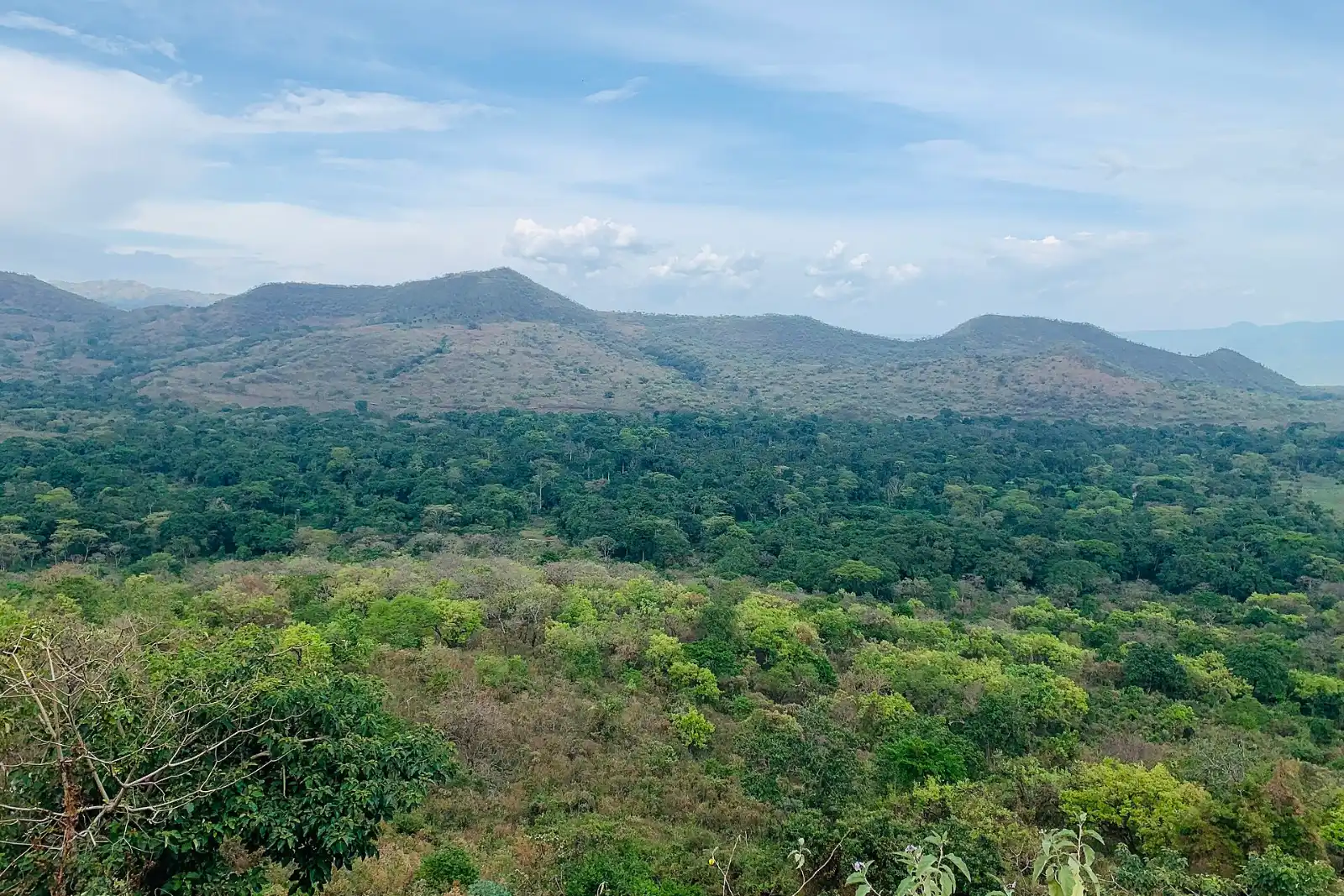
Chebera Churchura National Park is a forested park in southwest Ethiopia, between the Dawuro and Konta zones, and it holds one of the country's main wild elephant populations. The most recent published count, from surveys in 2020 and 2021, estimated about 756 elephants, roughly a third of Ethiopia's total. Researchers recorded more animals, in bigger herds, in the dry season, when most elephants were along the rivers. In its advice updated on 30 October 2026, the UK government has no all-travel warning for the park itself.
What no source gives you is the chance of seeing an elephant on a visit. This guide sets out what the counts show, when the animals are easier to find, how the roads approach the park, and what we could not confirm.
Security advice in Ethiopia is regional, so here is what the UK Foreign, Commonwealth and Development Office (FCDO) says about the places on the way, from its page updated on 30 October 2026.
| Area | What the FCDO says |
|---|---|
| Central, Southern, Sidama and South West regions (formerly SNNPR) | Advises against all travel "to within 10km of the borders with South Sudan and Kenya including the shores of Lake Turkana". The park is not in that border strip. |
| Gurage zone, Central region | "There has been civil unrest in Gurage zone in the newly formed Central region. A number of incidents have turned violent." |
| Oromia towns | Protests occur periodically, with towns in the Wollega and Shewa zones and West Arsi zone, including Shashemene, "particularly affected". |
| Roads outside Addis Ababa | "Avoid driving after dark anywhere outside Addis Ababa." It also suggests travelling in convoy with a second vehicle. |
| Health in the south | It reports an ongoing cholera outbreak in the south of Ethiopia. |
Other governments publish their own advice, so read yours too, and ask your insurer in writing whether a trip to the southwest is covered.
The park sits in the South West Ethiopia Peoples' Region, between the Dawuro and Konta zones. Researchers from Addis Ababa University put its area at 1,410 square kilometres in their 2022 paper, though other sources give smaller figures, so treat the size as approximate.
The same study divided the park into four habitats:
Rivers run through all of it. The study names the Zigna, Shoshima, Wala, Tikurwuha, Mensa and Oma, plus smaller seasonal streams. That riverside forest matters more than its size suggests, as the elephant figures below show.
The honest answer is that the counts disagree, and the methods behind them differ.
| Survey | Method | Result |
|---|---|---|
| July 2005 to March 2006, Addis Ababa University thesis | Dung counts on 45 transects | About 85 elephants, plus or minus 24 |
| 2020 to 2021, Tsegaye, Bekele and Atikem (preprint, July 2022) | Line transect distance sampling, 41 transects of about 197 km | About 756 elephants |
Do not read the two figures as a trend. One counted dung and the other counted animals, and they covered different areas of the park. The 2022 paper also reports a wide margin of error, with a coefficient of variation near 47 per cent. Read 756 as a best estimate with a wide range around it.
What the recent study does show clearly is the shape of the herd. Adults made up about 54 per cent of the animals, sub-adults 19 per cent, juveniles 15 per cent and calves 12 per cent. Herds ranged from a single animal to 149. The researchers saw more females than males and suggest that poachers taking older males for ivory is the likely reason.
We are not going to claim that. The 2022 paper and a December 2025 study in the journal One Health both say Chebera Churchura holds nearly a third of the national population, which the 2022 paper puts at about 1,850 to 1,900 animals. But African Parks, which manages Gambella National Park, describes Gambella as holding Ethiopia's largest remaining elephant population. The sources do not line up, and nobody publishes visitor sighting rates for either park.
Gambella is also under FCDO advice against all travel, so it is not a choice for now. Our Gambella National Park guide explains why.
Studies of the park describe one long rainy season, from March to September with a peak in July, and a dry season from about November or December to February. The sources differ by a month on when the dry season starts.
The 2020 to 2021 count found a clear seasonal pattern:
| Wet season | Dry season | |
|---|---|---|
| Estimated elephants | 686 | 826 |
| Sightings recorded by the researchers | 69 | 79 |
| Mean herd size | 16.5 | 50.25 |
| Where most elephants were | Woodland, 71% | Riverine habitat, 75.8% |
So in the dry months the elephants gathered along the rivers, in fewer and larger herds. The researchers say the higher dry-season count partly reflects better grazing after burning and more open ground, which makes animals easier to count. Open ground should help visitors as well. That is our inference, and nobody has measured it.
The rainy months bring the opposite problem. Elephants spread out into the woodland, and from March to September you should expect wetter, slower roads.
The December 2025 One Health study describes the park as holding the largest concentration of African buffalo in Ethiopia.
Hippos are counted too. A 2019 Addis Ababa University thesis, based on fieldwork from 2015 to 2018, recorded 498 in the wet season and 414 in the dry season, in the park's rivers and lakes. The largest groups, of up to 30, were in the main rivers and lakes in the dry season.
Waterbuck live here as well. The 2022 elephant paper notes their herds changing size with the seasons, as the elephants do.
We have left out the longer species lists that circulate online, because we could not trace them to a dated survey.
There are two road approaches, one from the north through Jimma and one from the east through Wolaita Sodo. We measured both on OpenStreetMap on 9 November 2026, to Tarcha, the main town of Dawuro zone, on the east side of the park. The final stretch to the park headquarters depends on your route and we have not measured it.
| Leg | Distance | Clear-road driving time |
|---|---|---|
| Addis Ababa to Jimma | 349 km | About 5 hours |
| Jimma to Tarcha | 144 km | About 3 hours 10 minutes |
| Addis Ababa to Wolaita Sodo | 327 km | About 4 hours |
| Wolaita Sodo to Tarcha | 160 km | About 3 hours |
Those times assume an empty road. Our own rule of thumb is to add 40 per cent for livestock, towns, road works and stops, which is how our long-distance driving guide plans Ethiopian journeys. On that basis the Jimma route comes to about 11 hours to Tarcha and the Wolaita Sodo route to nearly 10, before the last stretch into the park. With the FCDO's advice against driving after dark, that leaves no margin in a single day, so we would split the trip with a night in Jimma or Wolaita Sodo.
A few practical points for the drive:
We found no current fee schedule, permit rule or accommodation list for the park from the Ethiopian Wildlife Conservation Authority or the regional government. Figures you see on aggregator sites are undated, so we have not repeated them. Before you go, confirm three things in writing: whether a park scout is required, what the entry fee is, and where you will sleep.
The FCDO says malaria is common in Ethiopia below 2,000 metres and that bilharzia is present in most of the country's lakes, so do not swim. The December 2025 One Health study recorded malaria, schistosomiasis (bilharzia) and onchocerciasis in the communities around the park. See a travel clinic well before the trip. Our health and vaccinations guide is a starting point.
Dawuro and Konta communities farm right up to the park edge, and the park's problems are their problems too. The One Health study, based on 2024 fieldwork in five neighbouring kebeles, found encroachment, deforestation, illegal logging, rising poaching of high-value species and frequent conflict between people and wildlife. The hippo thesis records crop raiding and livestock losses as the main sources of that conflict.
The same study says the park is short of money and staff. Expect a working conservation area under pressure, with little built for visitors, and follow your scout's lead on where to walk and how close to go.
Chebera Churchura is remote, and the logistics are hard to pin down in advance. If elephants are not the main goal, the Bale Mountains are the stronger choice for Ethiopian wolf and mountain nyala, and our birding and wildlife tour does not include Chebera. For a custom route to the southwest, a car with driver is the usual way to do it.
The most recent published estimate is about 756, from surveys in 2020 and 2021 released in July 2022. It carries a wide margin of error, and a 2005 to 2006 dung count estimated only about 85, so the true number is uncertain.
The dry season, roughly November or December to February, based on the 2020 to 2021 survey. Researchers then found about three quarters of the elephants in riverine habitat, in larger herds. No source gives a sighting rate for visitors.
As of 30 October 2026, the FCDO has no all-travel warning for the park. It advises against all travel within 10 km of the South Sudan and Kenya borders, reports unrest in Gurage zone, and warns against driving after dark outside Addis Ababa.
By our OpenStreetMap measurement, about 493 km by road to Tarcha via Jimma, or 487 km via Wolaita Sodo, before the last stretch into the park. We would split the drive over two days each way.
A December 2025 study describes the largest concentration of African buffalo in Ethiopia. A 2019 thesis counted 498 hippos in the wet season and 414 in the dry season. Waterbuck are also present.
We found no current permit or fee rules from the Ethiopian Wildlife Conservation Authority. Confirm the entry fee and whether a park scout is required before you set off.
Tell us your dates, how many days you have, and whether elephants are the main goal. We will tell you plainly what we can arrange, what the current advice means for the route, and what is still unconfirmed. You will have a reply within two hours and a detailed itinerary with a quote within 24 hours.
Chebera Churchura photograph by James Moore200, CC BY-SA 4.0, via Wikimedia Commons.
