---------------------------------
Address
Phone: +251 988 111 222
Need help or have a question?
Contact us at: info@driveethiopia.com
Addis Ababa, Ethiopia
---------------------------------
Address
Phone: +251 988 111 222
Need help or have a question?
Contact us at: info@driveethiopia.com
Addis Ababa, Ethiopia


Gambella National Park holds the north end of the kob migration and rare Nile lechwe. The UK advises against all travel there, so here is where to go instead.
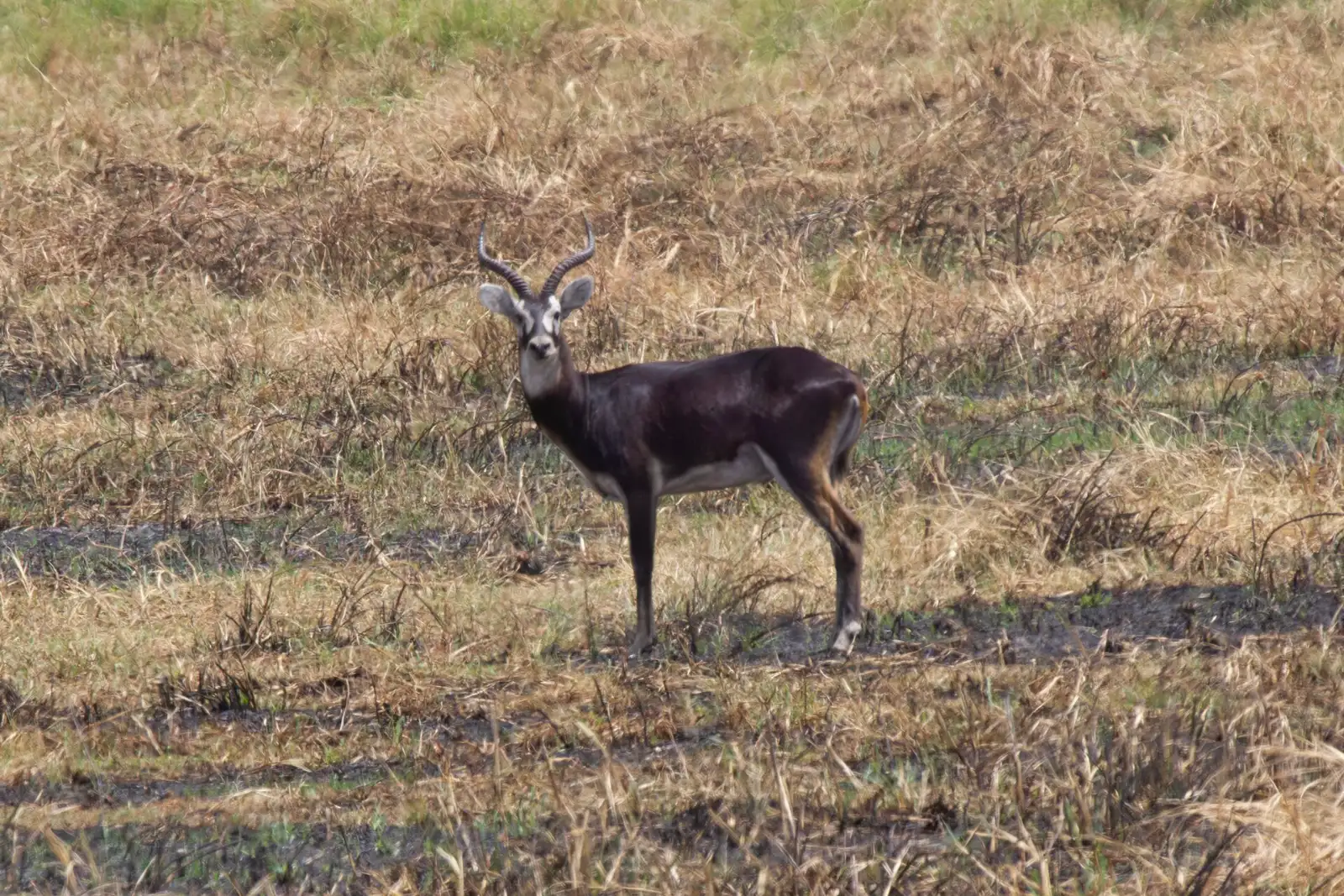
Gambella National Park, in far western Ethiopia, is the northern end of the white-eared kob migration and one of the last places the Nile lechwe survives. Kob use it mainly as a dry-season refuge, from February to May. As of 7 November 2026, the UK government advises against all travel to Gambela region, which includes the park. We would not plan a visit now, and we have no Gambella trip to sell you.
This guide is for reading now and travelling later, if the advice changes. It covers the wildlife, what the numbers do and do not show, the people who live here, and where to watch wildlife in Ethiopia instead. The region is usually spelled Gambela in official advice and Gambella by the park, so you will see both.
| Check | Where it stands | Source and date |
|---|---|---|
| UK advice | "FCDO advises against all travel to Gambela region." | FCDO, page updated 30 October 2026 |
| Risk described | "Large-scale violence, inter-communal clashes and armed attacks occur regularly." | FCDO, 30 October 2026 |
| Risk to visitors | "While foreigners have not been targeted, there's a significant risk of being caught up in violence." | FCDO, 30 October 2026 |
| Main road | All travel is also advised against in West Wollega zone, "including the main Addis Ababa to Gambella road" | FCDO, 30 October 2026 |
| Recent events | Clashes in Gambella city from 13 October, with at least 25 reported dead and more than 80 injured | APA, 17 October 2026 |
Other governments publish their own advice, so read yours as well, and ask your insurer in writing what it would cover.
African Parks, which now manages the park, puts it at about 4,575 square kilometres and calls it the largest national park in Ethiopia. It lies between the Baro River to the north and the Akobo River to the south, with savannah, floodplains, riverine forest and grassland between them. The Duma wetland and the Baro River are both listed as Important Bird Areas.
The legal history is untidy. African Parks dates the park to 1973. Yale Environment 360 reported in 2011 that it had never been formally gazetted and had no clear boundary. A Council of Ministers regulation, No. 334/2014, later designated it and set out its boundaries and administration.
In December 2024, the Ethiopian Wildlife Conservation Authority and the Gambella regional state signed a 10-year renewable agreement with African Parks to manage the park. The first year went on surveys, consultation and building a ranger team.
The headline figure needs care, because it describes a far larger area than this park. In April 2025 the Convention on Migratory Species released maps showing about five million kob and 400,000 tiang moving across more than 100,000 square kilometres. Most of that range is in South Sudan, between Badingilo and Boma national parks. The CMS says "some" animals go further north to Gambella.
So do not read six million as the number passing through this park. Here is what the sources say, and when they said it.
| Source | Figure | What it covers |
|---|---|---|
| CMS, April 2025 | About 5 million kob | The whole migration, mostly in South Sudan |
| African Parks, park page read November 2026 | Hundreds of thousands of kob moving more than 800 km | Between Gambella and Boma-Badingilo |
| Yale Environment 360, March 2011 | More than a million a year | Estimated to come through the Gambella area |
| Addis Ababa University thesis, 2019 | 5,977 in February to April, 446 in May | Line transect counts inside the park, 2016 to 2018 |
These were counted in different ways and for different areas, so they cannot be set side by side as a trend. African Parks says early aerial surveys and transects of the park have been done, but we have not seen a published park-wide total from them. Treat any single number you read for Gambella with caution, including ours.
The season is firmer. The CMS gives February to May for kob in Gambella, and the thesis counts point the same way, with far more kob in the dry months than in May.
The Nile lechwe is a wetland antelope, and the park was created largely for it and the kob. It lives in shallow water at the edge of deep swamp. The IUCN lists it as Endangered.
Most Nile lechwe live in South Sudan, in the Sudd and the Machar marshes. A 1983 aerial survey put the total at 30,000 to 40,000, with about 95 per cent in the Sudd, and later surveys have not covered the full range. We could not find a current count for Ethiopia, so we will not give you one. African Parks describes the park's animals as one of the few remaining populations.
The Duma swamp is the place named most often. Yale Environment 360 called it one of the last refuges of the species in 2011, and carried a former ranger's account that engineers were draining it as farm concessions expanded. We found no recent source on the state of the swamp today.
About 400,000 people live in the area around the park, according to African Parks, including Anuak, Nuer and Majang communities and Omotic peoples. They farm and keep livestock, and they rely on the same land and water as the wildlife.
The violence behind the travel advice is a crisis for them first. Mongabay reported in January 2025 that clashes between Nuer and Anuak communities have recurred for decades, often over access to land. APA reported dozens dead in Gambella city in December 2025. In October 2026, residents gave APA different explanations, some citing Anuak and Nuer tensions and others targeted attacks on non-indigenous residents. Police blamed unidentified armed groups, and residents disputed that. We are not in a position to settle it, and we would be wary of any travel page that claims to.
Pressure on land goes back further. Human Rights Watch reported in 2012 on the forced relocation of Anuak and Nuer villagers, and on large leases of land to commercial farms, which the federal government denied were linked. Mongabay reported in 2025 that investors had taken about 500 square kilometres from the park.
The region also hosts many of Ethiopia's South Sudanese refugees: 441,363 in Gambela as of 31 August 2026, according to UNHCR. MSF reported at least 12 deaths after violence in Itang on 18 September.
African Parks says it has set up community committees in 12 villages, and that crop and livestock losses to wildlife came up early in its consultations.
Getting here has been hard for a long time, and it is harder now.
Visitor numbers were already low. Julian Bayliss, quoted by Mongabay in January 2025, said tourism to Ethiopia's parks outside the Simien is "very, very low". African Parks said in April 2026 that it is paying more attention to tourism in the long term, and it has not published visitor arrangements that we could find.
These places are not under the all-travel advice that covers Gambela. None of them has a migration on this scale, but you can plan a wildlife trip to them now.
| Place | What you go for | FCDO position, 30 October 2026 |
|---|---|---|
| Bale Mountains | Ethiopian wolf, mountain nyala, highland birds | Bale zone is not on the list of areas it advises against. It notes demonstrations there, and protests in West Arsi zone including Shashemene |
| Arba Minch and Nechisar | Plains zebra, Lake Chamo crocodiles and hippos | In the southern regions, all-travel advice covers land within 10 km of the South Sudan and Kenya borders. It also notes civil unrest in those regions and a cholera outbreak in the south |
| Rift Valley lakes | Waterbirds, hippos | Parts of the route are in East Shewa zone, where advice is against all but essential travel outside named corridors |
For birds, our guide to birding in Ethiopia sets out the sites and seasons. Our Great Rift Valley tour is the short option. Our birding and wildlife tour includes Bale over 14 days, though it also visits Awash and the Jemma Valley, so ask us to check that route against current advice before you commit.
We will not give you an itinerary for Gambella, but these are the things to look for before you start planning one.
If that happens, the CMS dates suggest aiming for February to May. Check them against the park's own guidance by then.
We would not. As of 7 November 2026, the UK advises against all travel to Gambela region, including the park, and clashes were reported in Gambella city in October 2026. We have no Gambella trip on offer.
The Convention on Migratory Species says Gambella is a dry-season refuge for kob from February to May. Only some of the migration goes this far north. Most of the range is in South Sudan.
We could not find a current park-wide total. A count for 2016 to 2018 recorded 5,977 kob in February to April and 446 in May, and African Parks says hundreds of thousands move between Gambella and South Sudan.
In the wild, only in South Sudan and in the Gambella area of Ethiopia. Most live in South Sudan's Sudd. The IUCN lists the species as Endangered, and we found no current count for Ethiopia.
We found no current permit or fee rules from the wildlife authority or African Parks, and older figures predate the 2024 management agreement. Check with those two bodies directly if the travel advice changes.
The Bale Mountains are the strongest choice for Ethiopian wolf and mountain nyala, and Arba Minch has plains zebra and Lake Chamo crocodiles. Neither is under the all-travel advice as of 30 October 2026, though the FCDO has narrower warnings to read first.
Tell us your dates and which animals matter most to you. We will suggest a route outside the areas under all-travel advice and tell you plainly what the current warnings mean for it. You will have a reply within two hours and a detailed itinerary with a quote within 24 hours.
White-eared kob photograph by Kristof Zyskowski, CC BY 4.0, via Wikimedia Commons.
