---------------------------------
Address
Phone: +251 988 111 222
Need help or have a question?
Contact us at: info@driveethiopia.com
Addis Ababa, Ethiopia
---------------------------------
Address
Phone: +251 988 111 222
Need help or have a question?
Contact us at: info@driveethiopia.com
Addis Ababa, Ethiopia


Which vehicle for which Ethiopian route: Land Cruiser, Prado, Hilux, sedan and minibus compared, plus the minimum for the Omo Valley and the Danakil.
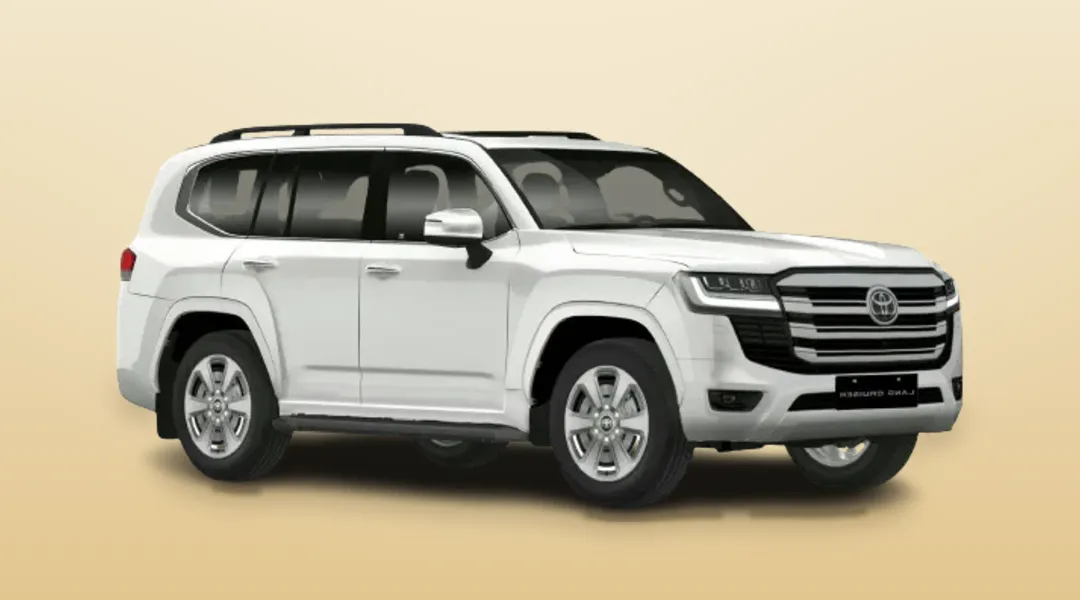
The minimum vehicle for the Omo Valley is a 4×4 with a driver. The road south from Addis Ababa is largely surfaced, but past Konso the roads between Jinka, Turmi and the market villages are not, and a saloon car is the wrong vehicle from Jinka onwards. For the Danakil the answer is stricter: not one 4×4 but a convoy of them, with a driver who has done the route before, because the terrain and the distances make a single vehicle a bad idea.
For Addis Ababa, day trips on tarmac and the Rift Valley lakes along the expressway, a sedan is enough. Everything else in this guide sits between those two ends.
| Vehicle | Seats | Luggage | Drive and gearbox | Best for | Daily rate |
|---|---|---|---|---|---|
| Sedan | Up to 4 | 2 large bags | 2WD, automatic | Addis Ababa, airport runs, paved highways | From $60 with a driver, from $50 self-drive |
| Toyota Land Cruiser SUV | Up to 5 | 4 large bags | 4×4, automatic | Long drives in comfort, the northern circuit, VIP travel | Quoted by route |
| Toyota Land Cruiser Hardtop | Up to 5 | 4 large bags | 4×4, manual | Rough, remote and unsurfaced routes: the Omo Valley, Bale, Danakil | Quoted by route |
| Toyota Prado | Depends on version | Depends on version | 4×4 | Mixed tarmac and gravel, smaller groups | Quoted by route |
| Toyota Hilux | Double cab | Open load bed | 4×4 | Field work, gear-heavy trips | Quoted by route |
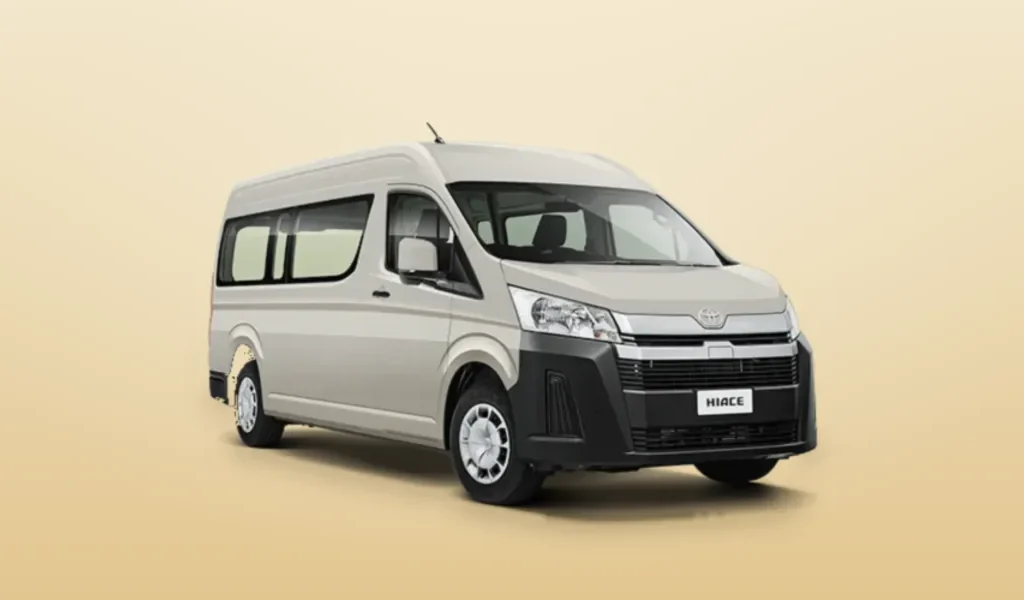
| Minibus or van | Up to 12 | 10 large bags | Manual, driver included | Groups and families on surfaced roads | Quoted by route |
The seats, luggage and gearbox figures for the sedan, both Land Cruisers and the minibus are the ones on our car hire with a driver page. Prado and Hilux versions vary, so we confirm the exact layout in your quote.
On price, car hire with a driver starts from $60 a day and self-drive from $50. What you pay depends on the vehicle, the route and the number of days, so the 4x4s are quoted per trip rather than given a single day rate.
| Route | Road surface | Minimum vehicle |
|---|---|---|
| Addis Ababa and day trips on tarmac | Surfaced | Sedan |
| Rift Valley lakes along the expressway | Surfaced | Sedan |
| Northern circuit: Bahir Dar, Gondar, Lalibela | Long mountain roads that change character without warning | Land Cruiser SUV or Hardtop |
| Bale Mountains and the Sanetti Plateau | High plateau road, forest tracks | 4×4 |
| Omo Valley beyond Konso | Unsurfaced around Jinka, Mago and Turmi | 4×4, Hardtop preferred |
| Danakil Depression | Remote, no fuel stations, extreme heat | Convoy of 4x4s |
The city's roads are tarmac, and so are the day trips most visitors take, out to Debre Libanos or south towards the lakes. A sedan is the sensible choice here and the cheapest. You can hire one self-drive for the city and paved highways. Our guide to driving in Ethiopia on a foreign licence covers the paperwork.
Addis Ababa to Bahir Dar, Gondar, Lalibela or Axum means long days on mountain roads whose surface and traffic change without warning. A 4×4 with a driver is the safe and comfortable option. The Land Cruiser SUV is the one built for comfort on long drives.
Check the travel advice before you plan this route. As of 25 September 2026, the UK Foreign, Commonwealth and Development Office advises against all travel to the Amhara region, which includes Bahir Dar, Gondar and Lalibela.
The Sanetti Plateau is crossed by what is described as the highest all-weather road in Africa, and much of the wildlife viewing is done from or near a vehicle. A 4×4 with good clearance is the vehicle for the plateau and for the forest tracks in Harenna. Our Bale Mountains guide covers the route.
The road south is largely surfaced until Konso. After that a 4×4 is not optional. The unsurfaced roads between Jinka, Turmi and the market villages are what fails in the wet, and the southern deyr rains from October to December are when they are worst.
The Land Cruiser Hardtop is the vehicle we list for rough, remote routes like these. Our seven-day Omo Valley tour runs the route, and the Omo Valley guide covers visiting communities.
The Danakil is not a place you drive into independently. Travel is by a convoy of 4x4s rather than a single vehicle, carrying fuel for long distances without stations and all the water for the trip. The heat is extreme, with daytime air temperatures passing 50°C in the hot months. Our Danakil guide describes the trip.
Check the travel advice before planning a Danakil trip. As of 25 September 2026, the UK advises against all travel within 50 kilometres of the Tigray boundary and all but essential travel to the rest of Afar. It also reports that foreign nationals are currently unable to fly into airports in Afar.
The vehicle is half the answer. The other half is who drives it. Outside the main corridors, roads are rough, signage is limited, and traffic mixes cars, pedestrians and livestock at any hour. A local driver knows the routes, the checkpoints, and which road is open this month.
The UK government also advises against driving after dark anywhere outside Addis Ababa, because vehicles often have no lights and livestock stray onto the roads, and suggests considering travelling in convoy with at least one other vehicle. On a long leg that runs late, a driver who knows where to stop is what keeps you off the road at night.
That is why we recommend a car with a driver for anything beyond the city and paved highways. Our drivers speak English, and fuel, insurance and the driver are included in the daily rate. On overnight trips outside Addis Ababa, the driver's meals and accommodation are not included, and your quote shows them.
A 4×4 with a driver. The road south is largely surfaced to Konso, but the roads between Jinka, Turmi and the market villages are unsurfaced, and a saloon car is the wrong vehicle from Jinka onwards. They are worst in the October to December rains.
A convoy of 4x4s with experienced drivers, not a single vehicle. The Danakil is remote, has no fuel stations, and is extremely hot. Check current travel advice first, because the UK advises against all but essential travel to most of Afar.
We don't recommend it. These are long mountain roads that change without warning, and a 4×4 with a driver is the safe choice. Both are also in the Amhara region, where the UK currently advises against all travel.
Both are 4x4s. On our rental pages, the Land Cruiser Hardtop is the vehicle listed for rough, remote and unsurfaced routes, and the Land Cruiser SUV for comfort on long drives. The Prado is a smaller 4×4 SUV. Tell us your route and we will recommend which suits it.
Car hire with a driver starts from $60 a day. A 4×4 is quoted by route, because the price depends on the vehicle, the roads and the number of days. Fuel, insurance and the driver are included.
Self-drive starts from $50 a day and suits confident drivers in Addis Ababa and on paved, well-marked routes. For rural, mountain and remote routes we recommend a car with a driver.
Tell us your route, your dates and how many people are travelling, and we will tell you which vehicle fits and what it costs. You will have a reply within two hours and a detailed itinerary with a quote within 24 hours.
Request a vehicle with a driver, see self-drive options, book an airport transfer, or send us a message.
