---------------------------------
Address
Phone: +251 988 111 222
Need help or have a question?
Contact us at: info@driveethiopia.com
Addis Ababa, Ethiopia
---------------------------------
Address
Phone: +251 988 111 222
Need help or have a question?
Contact us at: info@driveethiopia.com
Addis Ababa, Ethiopia


Awash National Park from Addis Ababa: what a day trip or one night covers, the falls, Filwoha hot springs, Fentale, oryx and kudu, lodges and travel advice.
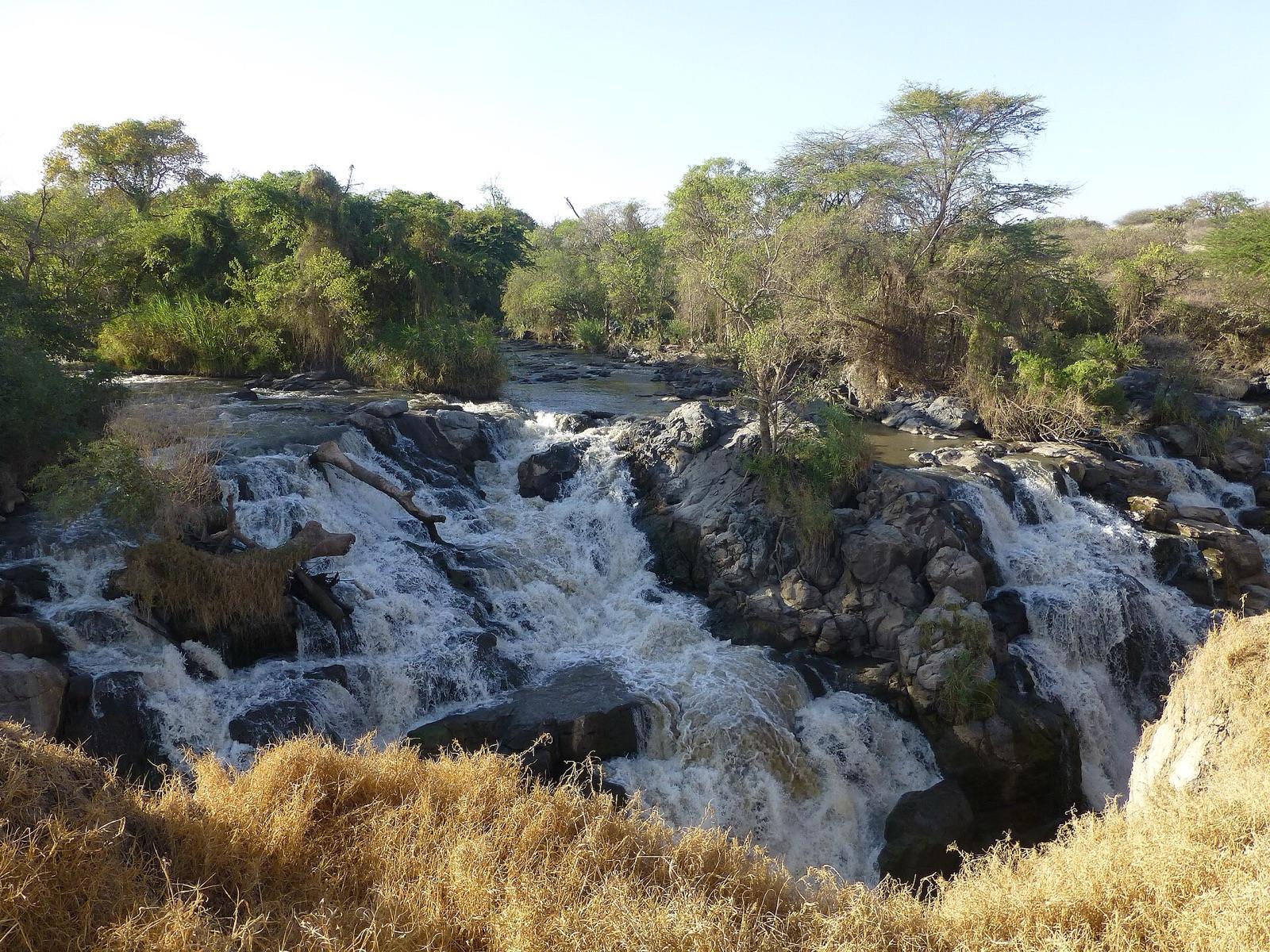
Awash National Park is about 225 kilometres east of Addis Ababa on the main road to Dire Dawa and Djibouti. On a clear road the drive takes around three hours, and lorry traffic on the Djibouti corridor often adds more. A day trip is possible, but it means about six hours in the car for a few hours in the park, in the hottest part of the day. One night at the falls or the hot springs gives you the cool early morning, when the animals are out.
Before you plan anything, read the current travel advice. As of 16 October 2026, the UK government advises against all but essential travel to all of East Shewa zone in Oromia, apart from the Addis Ababa to Adama expressway and a few other corridors, and to the rest of Afar region outside the border areas. Awash National Park spans the north-east corner of East Shewa and the southern tip of Afar, so the whole park falls inside that advice. Travel against it can invalidate your travel insurance. We cover the detail further down.
| Name | What it is |
|---|---|
| Awash Falls | The waterfall where the Awash River drops into its gorge, on the park's southern edge |
| Filwoha hot springs | Hot springs among palm groves in the upper Kudu Valley, in the north of the park |
| Mount Fentale | A dormant volcano at the western end of the park, rising to about 2,007 metres |
| Illala Saha plains | The open grassland south of the main road, where most game drives go |
| Kudu Valley | The valley north of the road, running up towards Filwoha |
| Beisa oryx | A grey antelope with long straight horns, and the animal the park is known for |
| Kudu | Both greater and lesser kudu live in the park |
| Karrayyu | Oromo pastoralists who herd livestock in and around the park |
Awash was established as a national park in 1966. Most of it lies at around 900 metres, among acacia woodland and grassland, and the Addis Ababa to Dire Dawa highway runs straight through the middle.
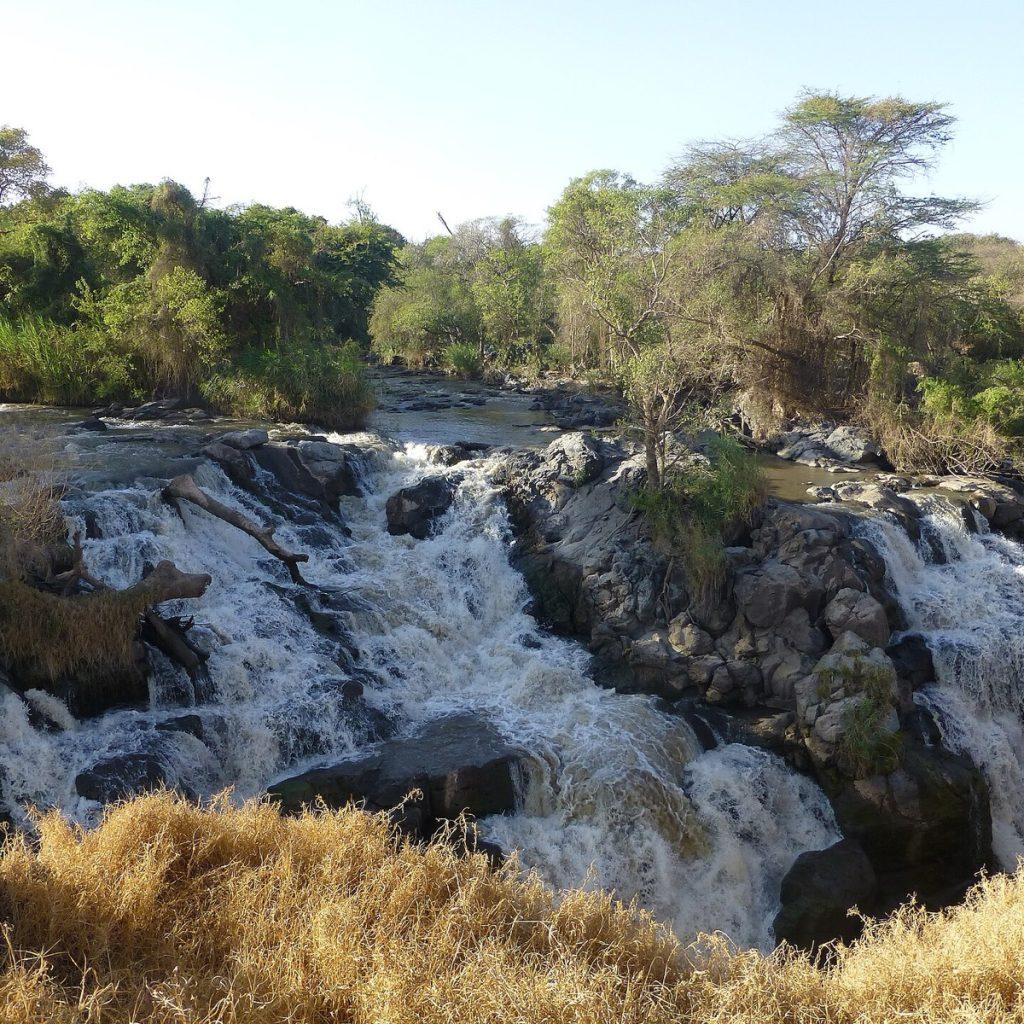
The Awash River forms the park's southern boundary. At the falls it pours over a wide shelf of dark rock and drops into a gorge, breaking into several channels around the boulders. How much water you see depends on the season.
Awash Falls Lodge sits on the edge of the gorge above the falls, so if you stay there the falls are a short walk from your room. Keep well back from the edge, and stay out of the river: crocodiles live in the Awash.
In the north of the park, at the head of the Kudu Valley, hot springs rise among groves of doum palms. The palms make it one of the greenest corners of a dry park. Doho Lodge sits at the springs and, according to its listings, has pools fed by them.
Ask your guide whether you can bathe in them on the day, and don't swim anywhere in the river.
Fentale rises over the western end of the park, and you see it from most of the plains. Travel writer Philip Briggs describes it as crowned by a crater about 350 metres deep. The black lava flows that cross the main road just west of Metehara came from Fentale, in an eruption in the early 1800s.
The volcano is not entirely quiet. In late 2024 and early 2025 the area around Fentale had a run of earthquakes as its activity increased. Check the current situation with your guide before planning a walk on the mountain.
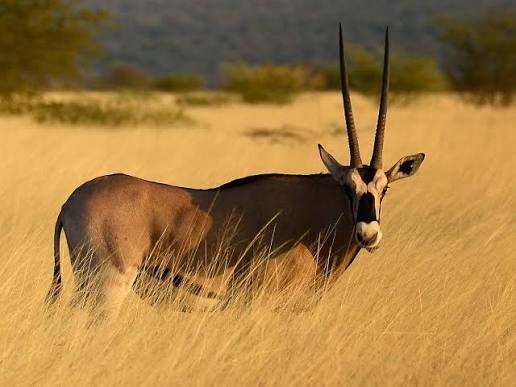
Awash has more than 80 mammal species. The ones you are most likely to see are grazers of dry, open country:
Lion, leopard, cheetah and hyena live in the park, but sightings are rare, and the animal numbers are smaller than in the big East African parks. Awash rewards patience and early starts rather than a midday drive. If big cats are the reason for your trip, it's the wrong park.
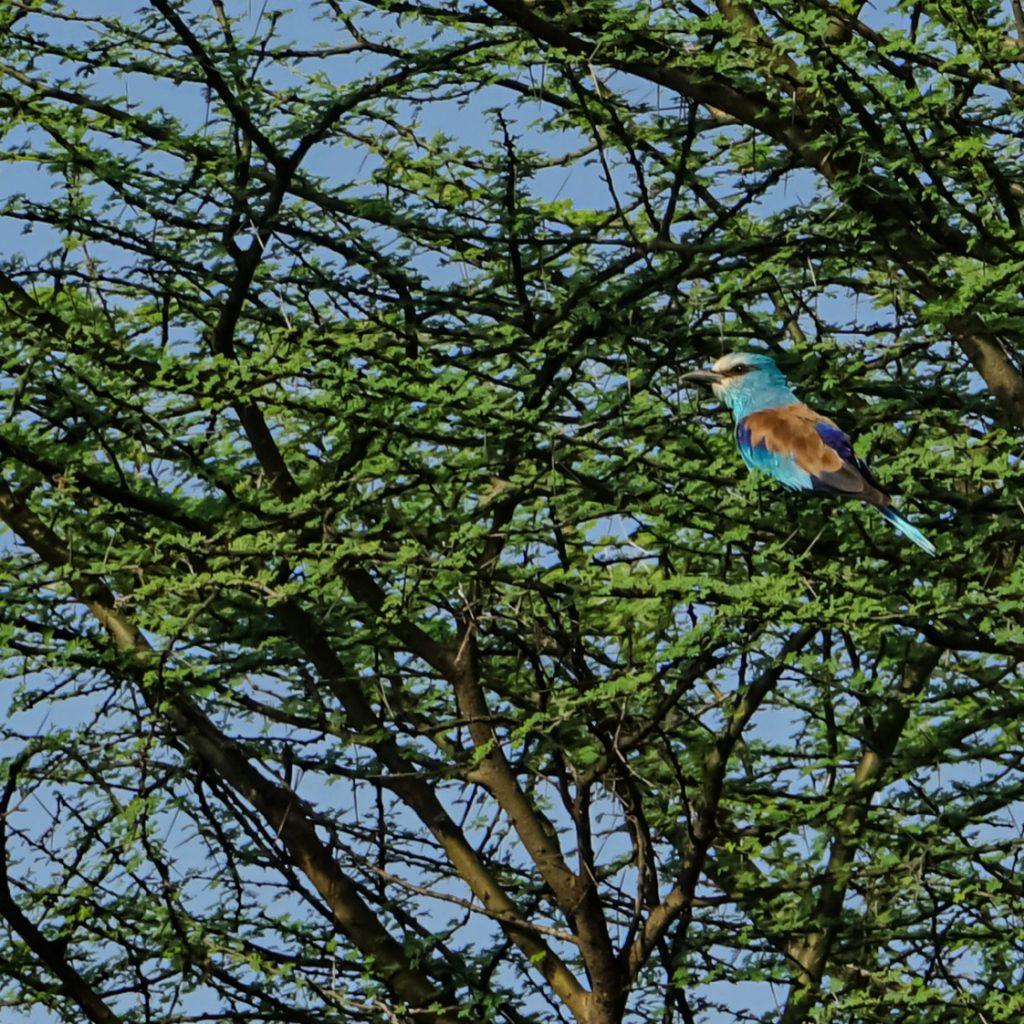
Estimates for the bird list range from more than 350 species to over 450. Awash is the nearest place to Addis Ababa for dry-country birds that never turn up in the highlands, such as bustards, coursers and ground hornbills, and the woodland along the river adds more. Our birding guide to Ethiopia explains where Awash fits on a birding loop.
| Day trip | One night | |
|---|---|---|
| Driving | About six hours there and back | The same, split over two days |
| Time in the park | A few hours around midday | An afternoon drive and an early-morning drive |
| What you see | The falls and a short drive on the plains | The falls, the plains, Filwoha and more animals |
| Heat | The hottest hours | Cool mornings and evenings |
The measured drive from central Addis Ababa is about 190 kilometres to Metehara, on the park's western side, and about 220 kilometres to Awash town, just past its eastern edge. On a clear road that is two and a half to three hours. The first section runs on the expressway to Adama, and after that the road is shared with the lorries running to and from Djibouti.
A day trip covers the falls and a short drive on the plains. For wildlife, stay a night. The animals are most active in the first hours after sunrise and the last hours before dark, and you are only in the park at those times if you sleep there.
Neither lodge is large, so book ahead, especially from October to February.
The dry season, roughly October to February, is the most comfortable time and the best for game drives, with animals gathering near water and the tracks in good condition. Awash is hot all year, and hottest before the rains. The main rains, from June to September, turn the park green and are good for birds, but some tracks get muddy.
Awash lies far below the 2,000 metre line under which the UK's National Travel Health Network and Centre reports a high risk of malaria in Ethiopia. Talk to a travel clinic about antimalarials, and bring insect repellent, sun protection and more water than you think you need. Our Ethiopia travel health guide covers malaria by region.
The UK Foreign, Commonwealth and Development Office's advice for Ethiopia, updated on 16 October 2026, covers the whole route east of Adama:
Other governments publish their own advice, and it can differ. Check yours, and check that your insurance covers you, before you book. We follow the advice closely and will tell you plainly whether we can run a trip to Awash on your dates.
About 225 kilometres east, on the main road to Dire Dawa and Djibouti. On a clear road the drive is around three hours, and lorry traffic often makes it longer.
Yes, but it means about six hours of driving for a few hours in the park, in the midday heat. A day trip covers the falls and a short game drive. One night lets you see the animals in the cool early morning.
Beisa oryx, Soemmerring's gazelle, greater and lesser kudu, Salt's dik-dik, warthogs and baboons are the most likely. Lion, leopard and cheetah live in the park, but sightings are rare. The bird list runs to several hundred species.
Awash Falls Lodge sits above the falls inside the park, and Doho Lodge sits at the Filwoha hot springs. There are also simple hotels in Awash town and Metehara.
As of 16 October 2026, the UK government advises against all but essential travel to the whole park, which lies in East Shewa zone and southern Afar. It also reports attacks on vehicles on the road between Adama and Awash. Check your own government's advice and your insurance before you book.
The dry season, roughly October to February, for game drives and cooler mornings. The park is hot all year.
Tell us your dates and what you most want to see, whether that is oryx on the plains, the birds or the falls, and we will tell you honestly whether Awash works for your trip under the current advice. You will have a reply within two hours and a detailed itinerary with a quote within 24 hours.
Read our Awash National Park destination guide, see the two days in Awash on our Birding and Wildlife tour, browse our day trips from Addis Ababa, or send us your plans.
