---------------------------------
Address
Phone: +251 988 111 222
Need help or have a question?
Contact us at: info@driveethiopia.com
Addis Ababa, Ethiopia
---------------------------------
Address
Phone: +251 988 111 222
Need help or have a question?
Contact us at: info@driveethiopia.com
Addis Ababa, Ethiopia


Travelling Ethiopia alone as a woman: what the attention is like, what to wear, where to stay, how to get around and which regions the FCDO advises against.
Women do travel Ethiopia alone, and many come home with nothing worse than a sore neck from being stared at. The honest answer is more mixed than that, though. The UK Foreign Office's Ethiopia advice, updated on 16 October 2026, notes "a number of incidents of sexual harassment of women" and says mugging is on the rise in parts of Addis Ababa. Large parts of the north are under advice against all travel.
So the practical answer is this. Expect attention, dress conservatively, stay in hotels with security on the door, and do not use the road network alone. A driver, or a guide, makes the biggest single difference. You can ask for a female guide.
This guide covers what the attention is actually like, what to wear and where, how to choose a bed, and how to get around and back at night.
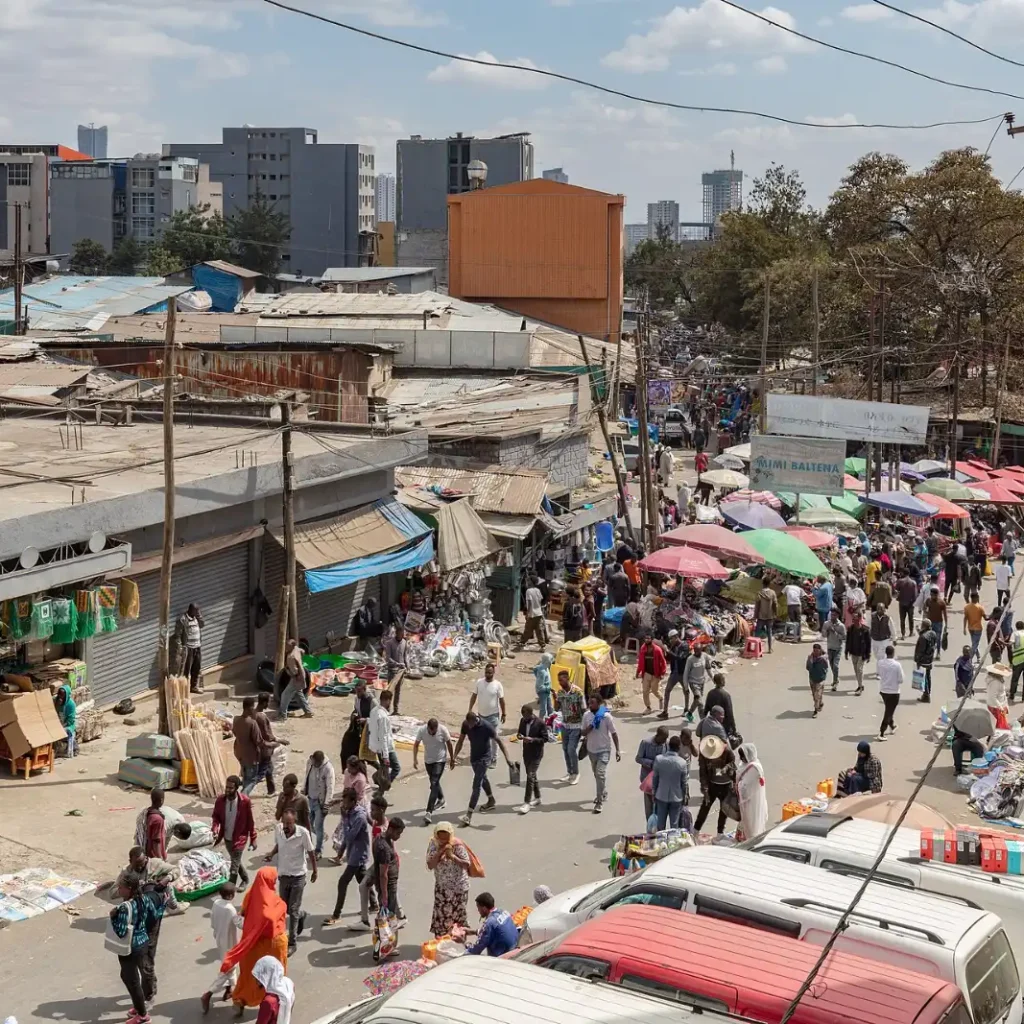
The first thing most solo women notice is visibility. Outside the business districts of Addis Ababa, a foreign woman on her own is unusual, and people will look, call out and sometimes follow you for a while. Children often do it more than adults.
Most of it is curiosity. Some of it is not. Rough Guides puts it bluntly: many female travellers are persistently approached by men in a way that can turn "creepy or genuinely threatening". Personal accounts from solo women run the whole range, from two months without a single uncomfortable moment to repeated unwanted advances.
Company changes the experience more than anything else. A guide or driver beside you turns most approaches into a short conversation in Amharic that ends quickly.
Clothing helps too. Covered shoulders and legs tell people you know where you are. And place matters: a hotel compound or a church courtyard is a very different setting from a bus station or a small-town bar.
None of this means staying in your room. It means planning the parts of the day where you are most exposed, which are usually transfers, bus stations and evenings.
Safety in Ethiopia is regional, and the map matters more than any general verdict. This is the UK FCDO position as updated on 16 October 2026. Check it again before you book, because it has changed several times this year.
| Area | FCDO advice, 16 October 2026 |
|---|---|
| Tigray region | Against all travel. Civilian flights to and from Tigray were suspended on 22 September 2026 |
| Amhara region | Against all travel. This covers Lalibela, Gondar, Bahir Dar and the Simien Mountains |
| Afar region | Against all travel within 20km of Eritrea and 50km of Tigray. All but essential travel to the rest |
| Gambela region | Against all travel |
| Oromia region | Against all travel to the Wollega zones and parts of West and North Shewa. All but essential travel to most of East Shewa outside the main expressway corridors, and to Guji and West Guji except the Hawassa to Mega road |
| Southern regions (formerly SNNPR) | Against all travel only within 10km of the South Sudan and Kenya borders, including the shores of Lake Turkana |
That leaves Addis Ababa and much of the south with no area-wide warning. It does not mean those areas are free of risk. The FCDO flags rising crime in named parts of the capital, and it notes that kidnapping for ransom has occurred in parts of Oromia, Amhara and Somali regions.
The advice also says unrest can start with no notice, and tells travellers to follow the advice of local authorities and their tour operator. Where road closures are reported, it suggests checking with reputable tour operators in the area, because not every social media report is accurate.
The FCDO's own line is short: women "are expected to dress conservatively, especially when visiting religious sites". In practice, the further you go from central Addis Ababa, the more that matters.
| Setting | What works |
|---|---|
| Central Addis Ababa | Long trousers, skirts or dresses past the knee. Short sleeves are fine in Bole and the hotel districts |
| Towns and rural areas | Loose long trousers or a long skirt, shoulders covered, nothing tight. A scarf for the dust and the stares |
| Churches and monasteries | Shoulders and knees covered, a scarf or shawl over your head, shoes off at the door |
| Predominantly Muslim areas | Arms and legs covered. Take more care during Ramadan, which the FCDO singles out |
| Festivals | Muted colours and covered shoulders. Ethiopians wear white, and you do not need to |
A large scarf is the most useful thing in the bag. It covers your head and shoulders at a church, keeps the dust off on a long drive, and warms you up when the highland evening turns cold. Our packing list for Ethiopia has the rest, region by region.
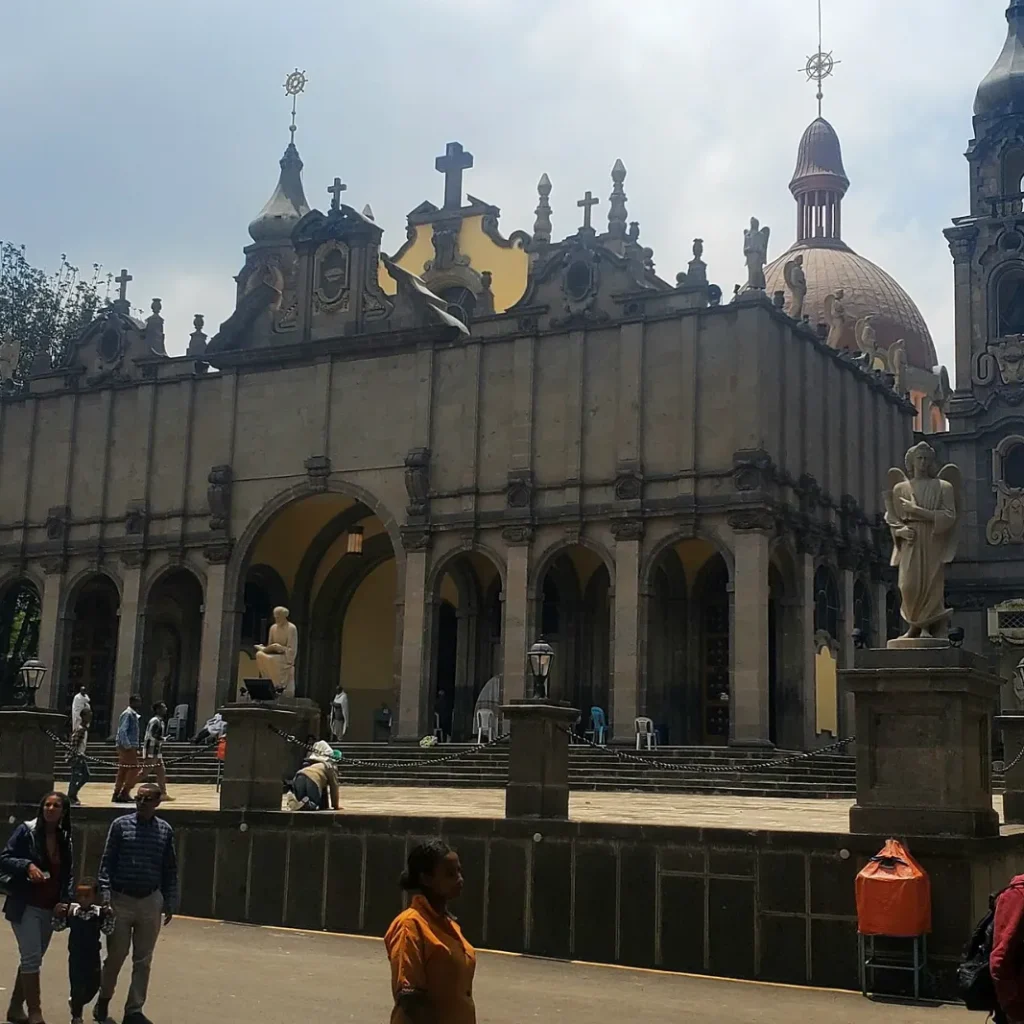
Ethiopian Orthodox churches are working places of worship, with priests living and praying in them. Men and women both cover up and take their shoes off before going in.
A few monasteries admit men only. Debre Damo in Tigray is the best known, reached by a leather rope up a cliff. Some convents admit women only. If a site on your route is closed to you, a guide will know before you arrive, which saves the drive.
The FCDO asks for particular care at Orthodox sites outside Addis Ababa, especially in rural areas.
Where you sleep sets the tone for the evening. The two filters that matter most for a solo woman are a guarded entrance and a location you can reach safely by car after dark.
Our neighbourhood guide to where to stay in Addis Ababa sets out the hotel districts and what each is like after dark.
Getting from A to B is where solo travel in Ethiopia is hardest. Distances are long, the roads are slow, and the public options put you in the most exposed position for hours at a time.
The FCDO's advice is to use only airport buses or taxis organised by your hotel or travel company. If you book your own, it says to choose a yellow or app-based taxi rather than the blue and white ones. It also flags pickpockets and bag-snatchers around Bole International Airport, so keep your phone out of sight until you are in the car.
App-based taxis are the simplest option during the day and the safest one at night. The FCDO advises against travelling alone in five named areas that have seen knifepoint robberies of foreign and Ethiopian nationals: Bole Medhanealem, Bole Atlas, Meskel Square, Yeka Hills and Entoto. It recommends road transport over walking, especially after dark.
Our guide to driving in Addis Ababa explains why GPS is unreliable in the city, which the FCDO also notes. It matters if you are trying to check a driver's route on your phone.
This is where a car with a driver earns its cost. The FCDO advises against driving after dark anywhere outside Addis Ababa, reports that buses from one region have been attacked while passing through another, and notes fuel shortages and long queues at petrol stations nationwide. All three are much easier to manage with someone local at the wheel.
Hiring a car with a driver puts someone local at the wheel who can plan each day so you arrive before dark, and keeps you off bus station platforms entirely. If you want to see the inside of a local bus, take one short daytime hop with your driver meeting you at the other end.
Most solo women who have a bad experience in Ethiopia have it after dark, so plan your evenings more than your days.
Ethiopia's emergency services number is 939. The FCDO warns that the call will probably be answered in Amharic, which is one more reason to keep a local contact's number saved.
You can ask for a female guide. Drive Ethiopia has English-speaking female guides on the team and works with more on a freelance basis, so say so when you enquire and we will match you where the dates allow.
A female guide changes some things a male guide cannot. Some women simply find it easier to ask questions, share a table and move through a crowded market with another woman beside them.
A guide of either gender will tell you which sites are open to women, which roads to avoid this week and where it is fine to walk alone. That local knowledge is the main reason the FCDO keeps pointing travellers back to their tour operator.
For most first-time solo women, a private trip with a driver and guide is the best fit. You set the pace, you are never alone on the road, and nobody else's plans decide where you sleep. It is also the only format that lets you ask for a female guide for the whole trip.
Joining a group spreads the cost and gives you company at dinner, but it only works if the group's dates and route fit yours. Our Ethiopia tours are tailor-made, so the route and the dates are built around you. For a wider look at how different travellers use the country, see our Ethiopia itineraries by traveller type.
It depends on where you go and how you travel. The UK FCDO advises against all travel to Tigray and Amhara as of 16 October 2026, and notes incidents of sexual harassment of women. In Addis Ababa and much of the south, solo women travel with a driver or guide without serious problems, but expect attention.
Loose long trousers or a skirt past the knee, and tops that cover your shoulders outside central Addis Ababa. At churches, cover your shoulders, knees and head, and take your shoes off. A large scarf covers most situations.
Yes. Drive Ethiopia has English-speaking female guides on the team and works with more on a freelance basis. Ask when you enquire and we will match you where the dates allow.
For most solo women, a private trip with a driver and guide works better than a group. You are never alone on the road, you set the pace, and you can ask for a female guide. A group suits you if its dates and route already match yours.
Most churches, yes, with shoulders, knees and head covered and shoes removed. A few monasteries admit men only, Debre Damo in Tigray being the best known.
Use transport arranged by your hotel or tour company from the airport. In the city, the FCDO advises yellow or app-based taxis rather than the blue and white ones, and road transport rather than walking after dark.
The safest solo trip to Ethiopia is a planned one: the route checked against the current advice, a driver who knows it, and a bed with a guard on the gate at the end of each day.
Tell us your dates, where you want to go and whether you would like a female guide. You will have a reply within two hours and a detailed itinerary with a quote within 24 hours. Send us your enquiry, or start from our Ethiopia tours.
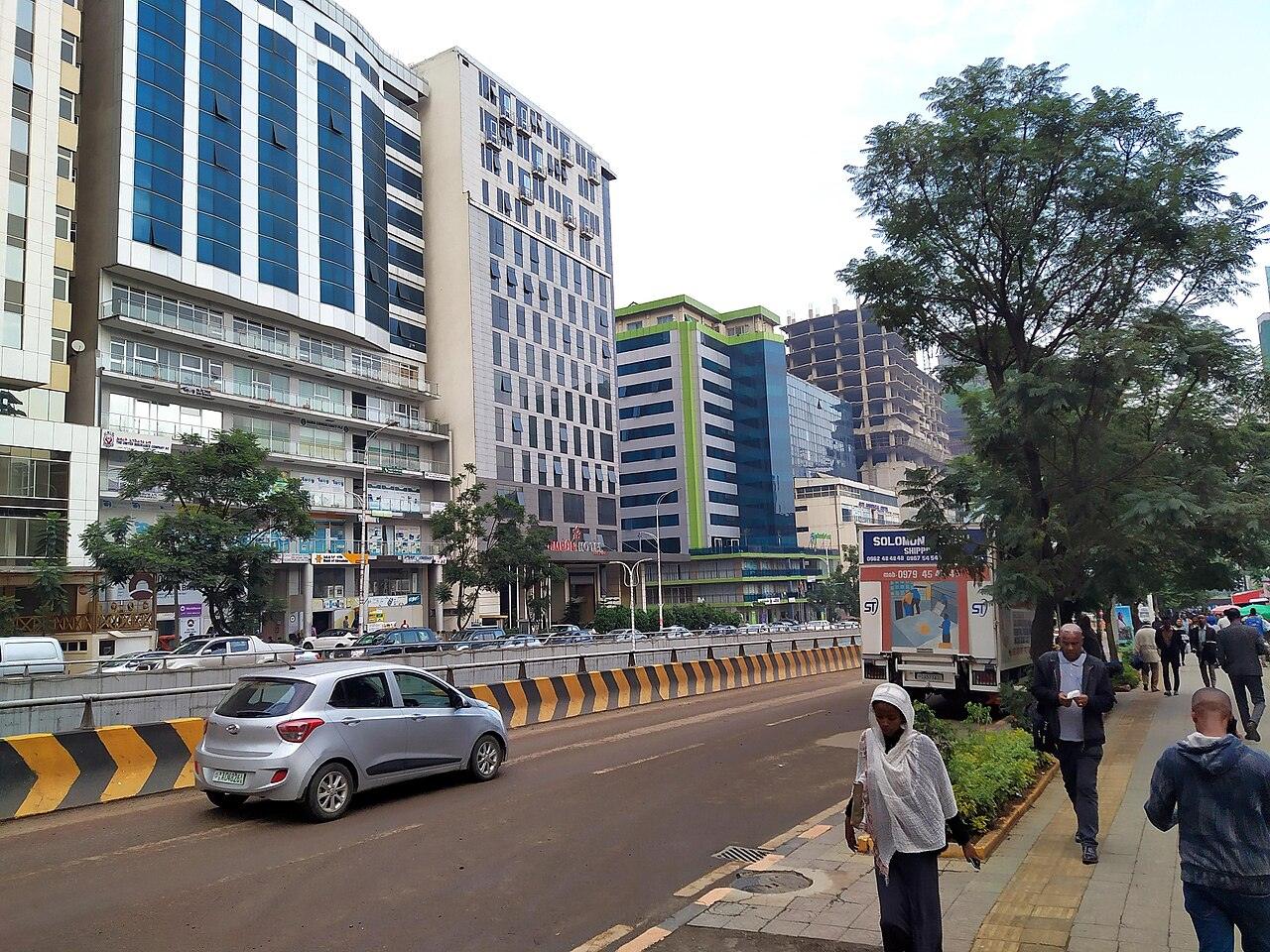
Feature photograph: Bole Road, Addis Ababa, by Radosław Botev, CC BY 3.0 PL.
