---------------------------------
Address
Phone: +251 988 111 222
Need help or have a question?
Contact us at: info@driveethiopia.com
Addis Ababa, Ethiopia
---------------------------------
Address
Phone: +251 988 111 222
Need help or have a question?
Contact us at: info@driveethiopia.com
Addis Ababa, Ethiopia


Lalibela, the Simien Mountains, the Danakil Depression, Bale Mountains and Axum, with what each is really like, how long you need and when to go.
Ethiopia's five outstanding destinations are Lalibela, the Simien Mountains, the Danakil Depression, Bale Mountains National Park and Axum. Between them they cover an eight-hundred-year-old church complex carved downwards into solid rock, a 4,000 metre escarpment full of animals that live nowhere else on earth, an active lava lake, the last stronghold of Africa's rarest carnivore, and the capital of a kingdom that minted its own coins while Rome was still standing.
They sit a long way apart, so a first trip usually means choosing two rather than attempting all five. What follows is what each one actually involves, how long it takes, and which of our tours reaches it.
| Destination | Region | What it is | Time needed | Best months |
|---|---|---|---|---|
| Lalibela | Amhara | Eleven rock-hewn churches, still in daily use | 2 days | October to March |
| Simien Mountains | Amhara | Escarpment trekking, geladas, Walia ibex | 3 to 4 days | October to March |
| Danakil Depression | Afar | Lava lake, sulphur springs, salt flats | 4 days | November to February |
| Bale Mountains | Oromia | Ethiopian wolf, Sanetti Plateau, Harenna Forest | 3 to 4 days | November to March |
| Axum | Tigray | Stelae field, Aksumite kingdom ruins | 2 days | October to March |
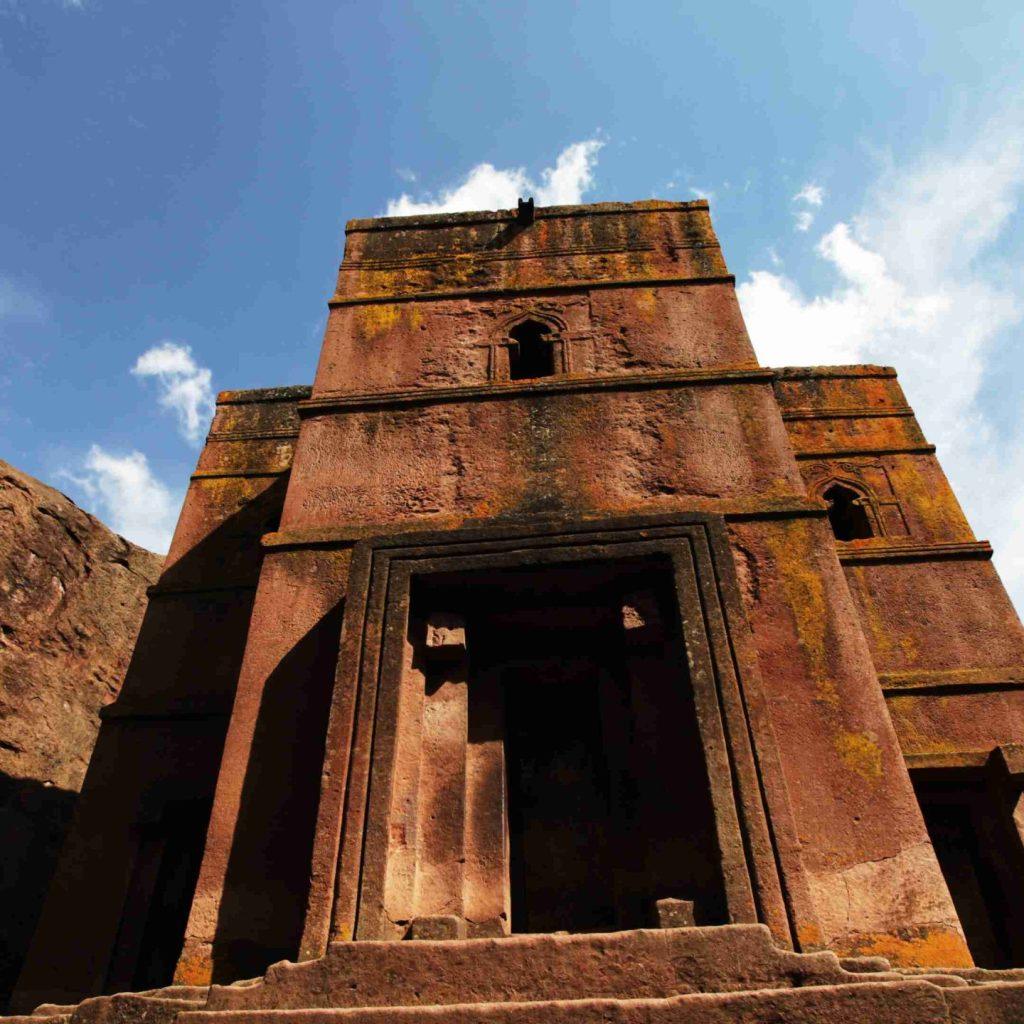
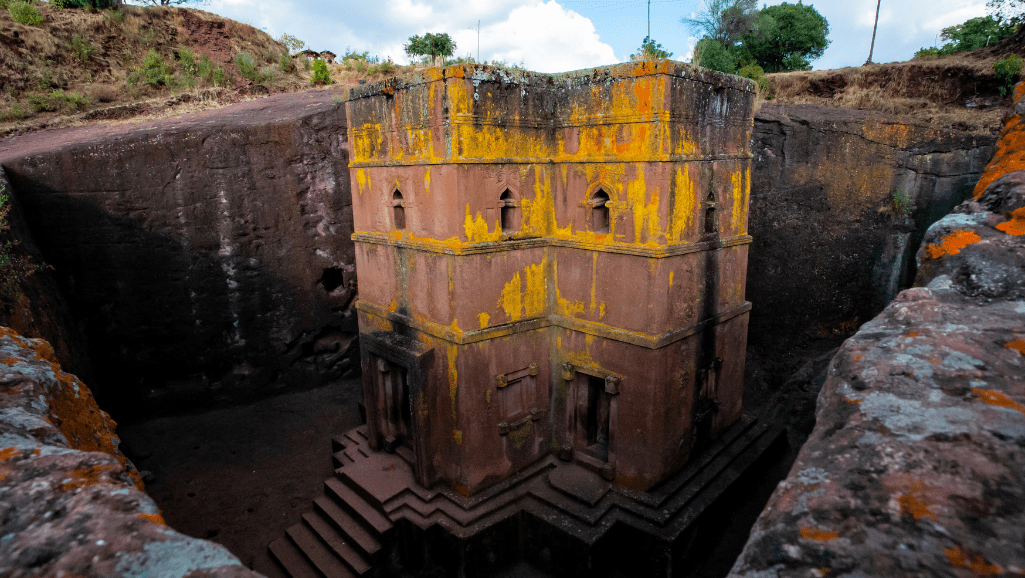
Eleven churches cut downwards into red volcanic rock in the twelfth and thirteenth centuries, connected by trenches and tunnels. The best known, Bete Giyorgis, is carved in the shape of a Greek cross and sits in a pit roughly twelve metres deep, which is why the photographs are always taken looking down at its roof.
Lalibela is not a ruin, which surprises most visitors. The churches are in daily use by the Ethiopian Orthodox Tewahedo Church, priests live and work in them, and pilgrims come in their thousands at Genna in January. You remove your shoes before entering, you dress to cover shoulders and knees, and some spaces are restricted or closed during services. You are a guest in an active place of worship rather than a visitor to a monument.
Time needed: two full days. One day covers the two main clusters at a rush; two lets you see them properly and add Yemrehanna Kristos, a church built inside a cave about 40km out.
Honest caveats: Lalibela sits at roughly 2,500 metres, so allow for the altitude on your first day. The protective shelters built over several churches are functional rather than beautiful and they do appear in your photographs. And the trench floors are uneven and often wet.
Full practical detail, including flights from Addis Ababa, how long the entrance ticket stays valid and how the two church clusters fit into a day, is in our Lalibela travel guide.
How we cover it: Lalibela is Day 5 of our seven-day Undiscovered Ethiopian History tour, which reaches it by internal flight after Bahir Dar, Gondar and the Simien Mountains, and gives Day 6 to Yemrehanna Kristos.
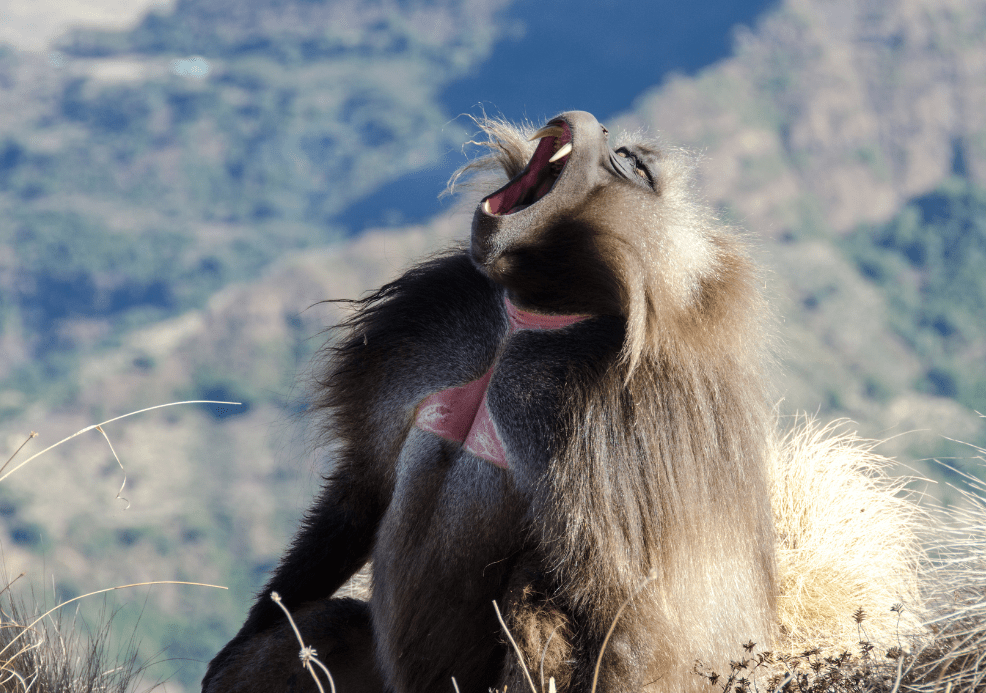
A collapsed volcanic plateau that has eroded into a wall of pinnacles and gorges running for dozens of kilometres, with drops of over a thousand metres from the escarpment edge. Ethiopia's highest peak, Ras Dashen at 4,533 metres, sits at its eastern end.
The Simien's headline animals live nowhere else on earth. Gelada monkeys graze in troops of several hundred on the grasslands, close enough to walk past you, and they are the only surviving grass-eating primate on earth. Walia ibex pick their way along the cliff faces. The Ethiopian wolf is present but rarely seen here, and Bale is the better bet for it.
Time needed: three to four days to trek properly. A single day from Gondar gets you to a viewpoint and the geladas, which is a real experience but not the park.
Honest caveats: this is high, cold work. Camps sit between 3,200 and 3,600 metres and nights drop below freezing, which catches people out in a country they associate with heat. Trekking requires a scout, and a guide is normal. If you are only interested in the geladas, be honest with yourself that you are booking a day trip rather than a trek.
How we cover it: Day 4 of the Undiscovered Ethiopian History tour, and Days 2 and 3 of our nine-day Natural Wonders of Ethiopia tour, which pairs the Simien with Bale.

One of the lowest and hottest inhabited places on the planet, more than 100 metres below sea level, where the African, Arabian and Somali plates are pulling apart. Erta Ale holds one of the world's few persistent lava lakes. At Dallol, acidic springs deposit yellow, green and orange salts into formations that look like nothing else on earth. Camel caravans still cut salt slabs from the flats by hand.
Time needed: four days, which is what the geology and the driving distances demand.
Honest caveats: more than anywhere else on this list, the Danakil is not a comfortable trip and should not be sold as one. Daytime temperatures regularly pass 45C. You sleep on camp beds outdoors because it is too hot indoors. There is no running water and medical facilities are distant. The walk to Erta Ale's crater is usually done at night to avoid the heat. If you dislike heat, dust or basic conditions, this is the one to drop.
How we cover it: our four-day Danakil Depression tour takes in Lake Afdera, Erta Ale and Dallol.
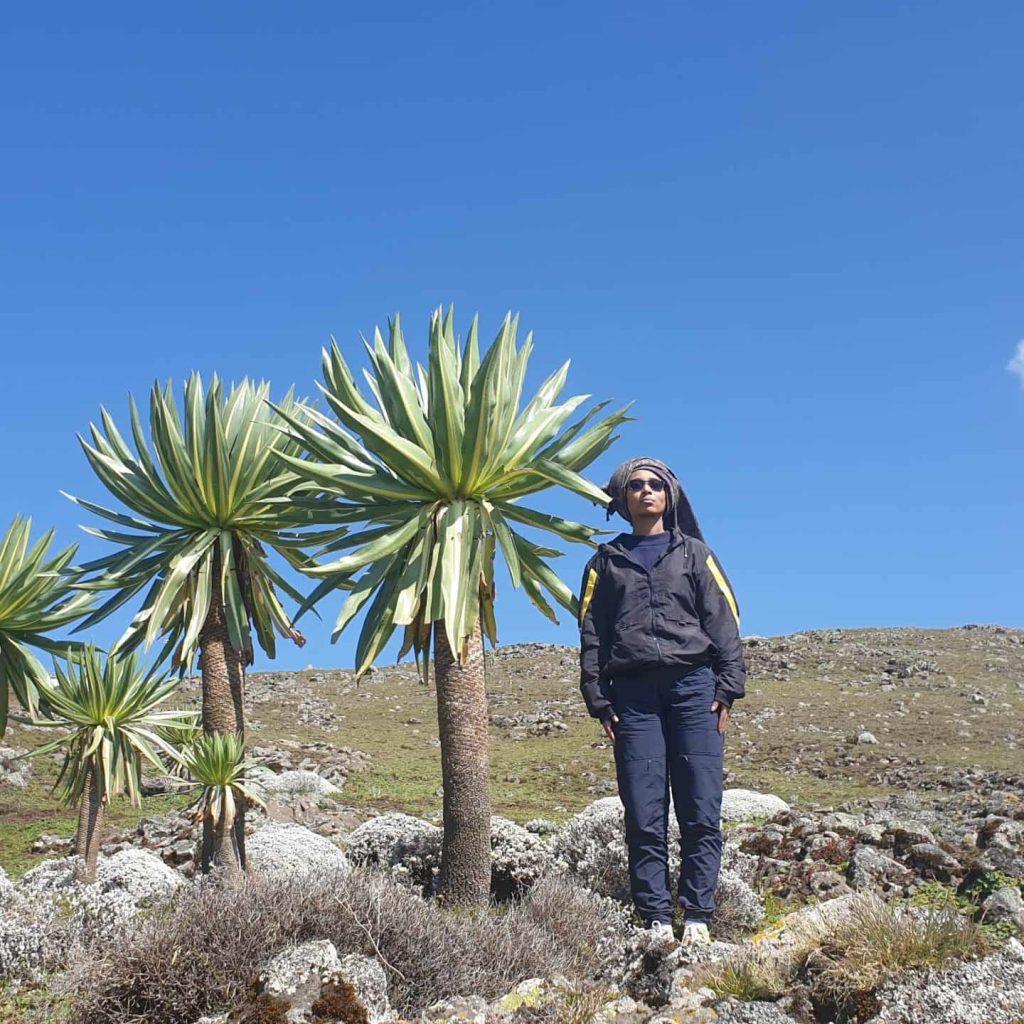
The quietest of the five and, for wildlife, arguably the richest. Bale holds the largest surviving population of the Ethiopian wolf, the rarest canid in the world, with only a few hundred left in total. The Sanetti Plateau, which the road crosses at around 4,000 metres, is the best place on earth to see one, hunting giant mole rats in open Afroalpine moorland.
Drop off the southern side of the plateau and the terrain changes completely into the Harenna Forest, a moss-hung cloud forest that feels like a different country. At Dinsho, on the northern side, mountain nyala and Menelik's bushbuck graze near the park headquarters, and both are endemic.
Time needed: three to four days to cover Dinsho, the Sanetti Plateau and Harenna properly.
Honest caveats: the wolf is genuinely endangered and sightings are never guaranteed, whatever anyone promises. The plateau sits above 4,000 metres with no shelter, and the drive across it is long and often wet. Bale gets a fraction of the visitors the northern circuit gets, which is part of its appeal and also means fewer facilities.
How we cover it: Days 6 to 8 of the nine-day Natural Wonders of Ethiopia tour, and Days 4 to 6 of our fourteen-day Birding and Wildlife tour, which also covers Awash, Yabelo and the Rift Valley lakes.
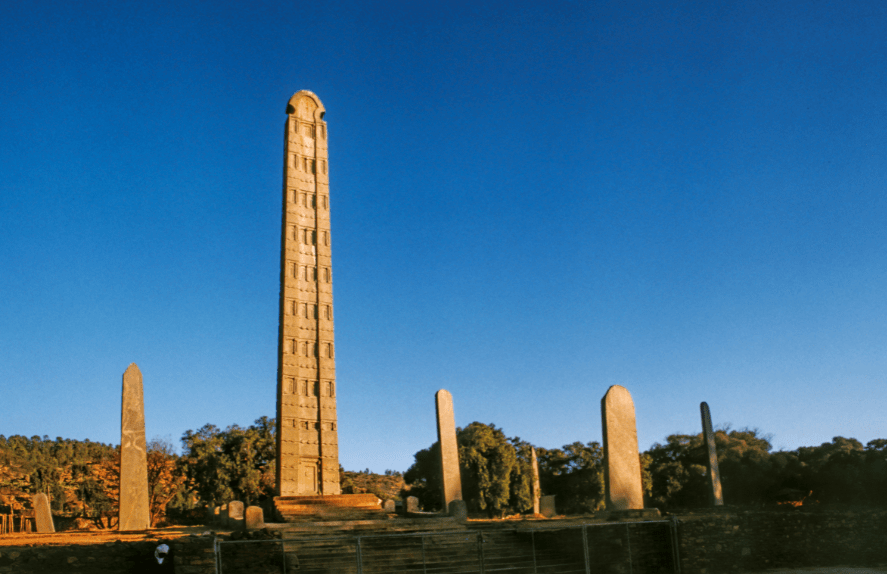
The capital of the Aksumite kingdom, which controlled trade between Africa, Arabia and the Mediterranean, minted its own coinage, and adopted Christianity in the fourth century. What remains above ground is a field of carved granite stelae, the tallest standing one around 24 metres, cut as single pieces of stone and raised as grave markers. The largest of all, now fallen and broken, would have stood over 30 metres and is thought to be the heaviest single block of stone humans ever attempted to erect.
The Church of St Mary of Zion here is where the Ethiopian Orthodox Church holds that the Ark of the Covenant is kept. One guardian monk is permitted to see it. Nobody else is, which visitors should know before arriving hopeful.
Time needed: two days for the stelae field, the museum, the tombs and Dungur.
Honest caveats: Axum asks more of a visitor's imagination than Lalibela does. Much of the site is foundations and fragments, and it rewards a good guide more than almost anywhere else in the country.
How we cover it: Axum is the one destination on this list we are not running at the moment, and the only one of the five without a place in our itineraries. Tell us if it is what you came for and we will let you know as soon as that changes. Everything else we run is on our Ethiopia tours page.
Distances are long and the terrain is demanding. Domestic flights link Addis Ababa with the main northern towns and save days over driving, and Ethiopian Airlines has historically discounted them for passengers arriving on its international flights, which is worth asking about when you book.
On the ground, the practical options are a vehicle with a driver, which is what most visitors choose, or self-drive, which is only sensible if you have driven in comparable conditions before. Roads outside the main corridors range from good tarmac to gravel, livestock on the road is constant, and driving after dark is best avoided. We cover both through our Ethiopia car rental service, including airport transfers.
What is the best destination in Ethiopia for a first visit? Lalibela. Its eleven rock-hewn churches are the country's most striking single sight, they are reachable by a short internal flight from Addis Ababa, and two days is enough to see them properly.
What is the best time of year to visit Ethiopia? October to March, after the main rains end in September and before the heat builds. For the Danakil Depression, narrow that to November to February, because temperatures there become punishing outside those months. January brings Genna and Timkat, which are extraordinary to witness and busy to travel in.
Is it safe to travel to Ethiopia right now? Yes, for four of the five destinations in this guide. We run trips to Lalibela, the Simien Mountains, the Danakil Depression and the Bale Mountains, with local guides and drivers who know the conditions on each route and adjust the plan when they change. Axum is the exception, and we are not running trips there at the moment. One practical note before you book: several governments publish travel advice for Ethiopia that is more cautious than conditions on the ground, and that advice can affect whether your travel insurance is valid. Check your own country's guidance, then talk to us about your specific route.
How many days do you need in Ethiopia? Ten to fourteen days for a first trip covering the historic north or a combination of mountains and wildlife. Under a week, stay close to Addis Ababa and the Rift Valley rather than trying to cross the country.
Can you see the Ethiopian wolf? Yes, most reliably on the Sanetti Plateau in Bale Mountains National Park, which holds the largest remaining population. Sightings are never guaranteed. Fewer than a few hundred survive in total.
Do you need a guide in Ethiopia? For the Simien Mountains a scout is required and a guide is standard practice. For the Danakil, the FCDO advises travelling only with a recognised tour company. At Axum and Lalibela a good guide changes the visit substantially, because much of what matters is not self-evident.
Tell us what you want to see and how long you have, and we will tell you what is realistic right now, including where current travel advice affects the route. We respond within two hours and send a detailed itinerary and quote within 24 hours.
