---------------------------------
Address
Phone: +251 988 111 222
Need help or have a question?
Contact us at: info@driveethiopia.com
Bole, Addis Ababa, Ethiopia
---------------------------------
Address
Phone: +251 988 111 222
Need help or have a question?
Contact us at: info@driveethiopia.com
Bole, Addis Ababa, Ethiopia


Genna falls on 7 January at Lalibela and Timkat on 19 January at Gondar, twelve days apart. This is one route with two departure windows, so you pick the festival.
Read more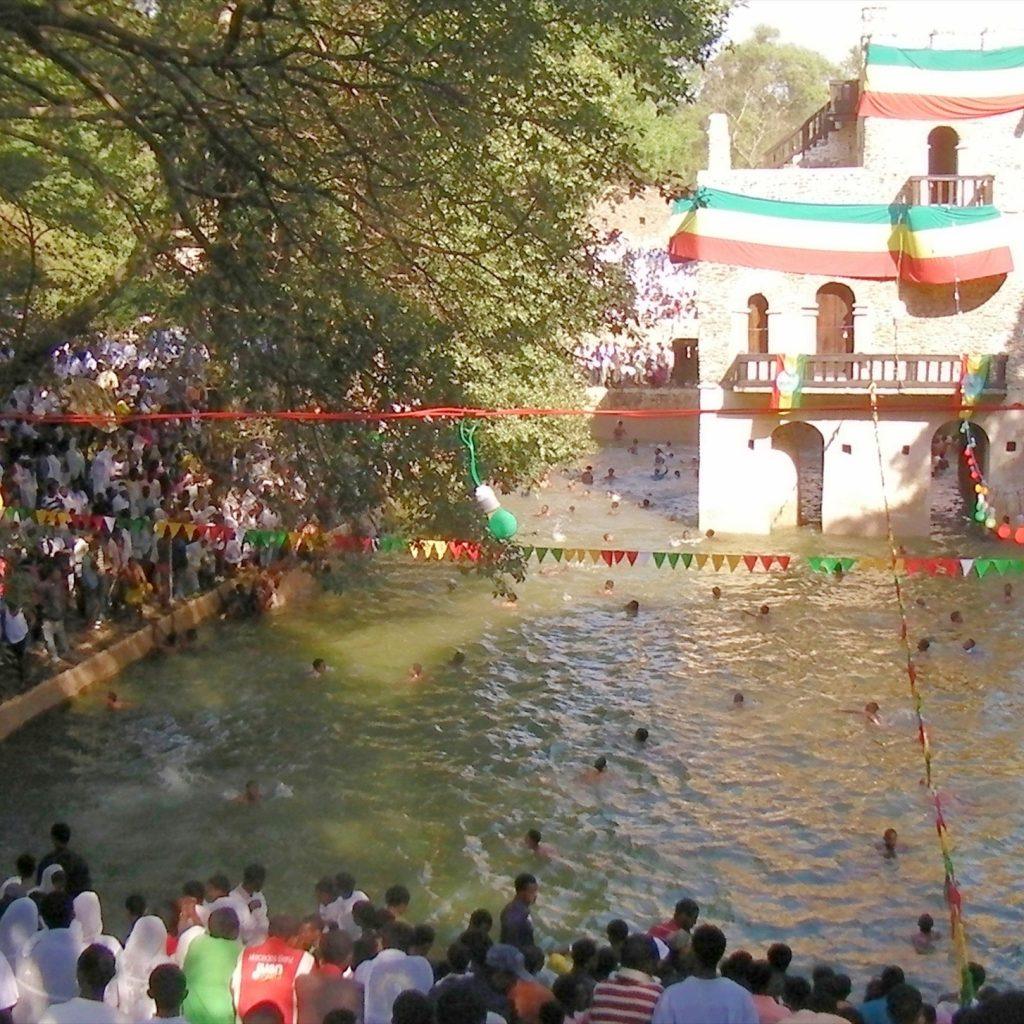
January holds the two festivals most travellers come to Ethiopia for, and they sit twelve days apart. Genna, Ethiopian Christmas, falls on 7 January and is at its most extraordinary at Lalibela, where pilgrims arrive in white from across the country and spend the night among the rock-hewn churches. Timkat, the Ethiopian Epiphany, falls on 19 January and belongs to Gondar, where the tabot is carried in procession to Fasilides Bath and the pool is filled for the dawn blessing. UNESCO inscribed Timkat on the Representative List of the Intangible Cultural Heritage of Humanity in 2019.
No eight-day itinerary can contain both, so this tour runs the same northern route on two departure windows. The Genna departure is timed so that your full day at Lalibela is 7 January. The Timkat departure is timed so that your two days at Gondar are the Ketera eve on 18 January and the festival morning on 19 January. The route, the vehicles and the flights are identical; only the calendar changes.
If you want both festivals in one trip you need roughly a fortnight rather than a week, and we will happily build that instead. Tell us which matters more and we will say plainly which departure suits you.
You land at Bole International Airport and we meet you and transfer you to your hotel. A light day, and a deliberate buffer: on a festival-dated trip a missed connection is the one thing that cannot be made up later.
A morning flight north to Lalibela and a first afternoon among the churches, which are cut down into the rock rather than built on it and are still in daily use.
On the Genna departure this is 7 January, Ethiopian Christmas, and the day is given over to the festival: pilgrims in white, all-night services and the churches at their most extraordinary. On the Timkat departure this is an ordinary full day at Lalibela, with the option of a day trip out to Yemrehanna Kristos, a built church sheltered inside a cave.
A short flight to Gondar, imperial capital from the seventeenth century. The afternoon goes to Fasil Ghebbi, the walled royal enclosure of stone castles and one of Ethiopia's UNESCO World Heritage sites.
Debre Berhan Selassie in the morning for the painted ceiling of winged angel faces. On the Timkat departure this is 18 January, Ketera, and the late afternoon and evening belong to the procession: the tabot of each parish carried to Fasilides Bath and left there overnight under guard, with chanting through the night.
On the Timkat departure this is 19 January, and it starts before dawn at Fasilides Bath for the blessing of the water, then the procession of each tabot back to its church, which is the more colourful half of the two. On the Genna departure the day is Gondar at leisure, with the castles, the market and the surrounding hills.
The drive south to Bahir Dar, where the Abbay leaves Lake Tana. One road day, and the one leg of the northern circuit worth taking on the ground.
A boat to the island monasteries in the morning, then the flight back to Addis Ababa where the tour ends.
The dates are fixed by the church calendar. Genna is 7 January. Timkat is 19 January, and the Ketera eve procession, which is the half most visitors miss, is on 18 January. Ethiopia keeps its own calendar, so these can land a day either side in some Gregorian years. Confirm your year with us before booking international flights.
January is the dry season and the best walking weather of the year in the northern highlands, which is part of why the festivals are so heavily attended. It is also the tightest week in Ethiopian travel for beds. Accommodation in Lalibela for Genna and in Gondar for Timkat books out further ahead than anything else in the country, so this is the one trip where booking late genuinely costs you the trip.
You fly into Addis Ababa Bole International Airport and we meet you there. From Addis Ababa the northern legs are flown: the roads to Lalibela and Gondar are long mountain routes that would consume most of an eight-day trip.
The Gondar to Bahir Dar leg is driven, because it is a straightforward road day and the country it crosses is worth seeing from the ground. The return from Bahir Dar to Addis Ababa is flown.
Not in eight days. Genna is 7 January and Timkat is 19 January, twelve days apart, so a single trip covering both needs roughly a fortnight. This tour runs the same route on two departure windows so you can choose one, and we can build the longer version if you want both.
Lalibela. Ethiopian Christmas among the rock-hewn churches draws pilgrims from across the country and is the most striking setting in Ethiopia for it. Book far ahead: Lalibela beds for Genna are the tightest of the year.
Gondar, where the ceremony centres on Fasilides Bath. Timkat is celebrated nationwide, including at Lalibela and in Addis Ababa, but the flooded pool at Gondar is the image most people have in mind.
Because the procession is the eve. On 18 January each parish carries its tabot, a replica of the Ark of the Covenant, to the water accompanied by chanting and crowds, and it stays there overnight for the dawn blessing. Booking only the morning of the 19th means seeing half the festival.
As far ahead as you can. January around the two festivals is the busiest week of the Ethiopian travel year and accommodation in Lalibela and Gondar is the first thing to disappear.
No. Every trip we run is tailor-made and private. The festival days are fixed by the calendar, but everything around them can be adjusted to your dates, pace and interests.
We reply to every enquiry within 2 hours, and send a detailed itinerary and quote within 24 hours.