---------------------------------
Address
Phone: +251 988 111 222
Need help or have a question?
Contact us at: info@driveethiopia.com
Addis Ababa, Ethiopia
---------------------------------
Address
Phone: +251 988 111 222
Need help or have a question?
Contact us at: info@driveethiopia.com
Addis Ababa, Ethiopia


Why the castles and the escarpment are planned as one trip, what a day in the park really gets you, and how to fit both in three or four days.
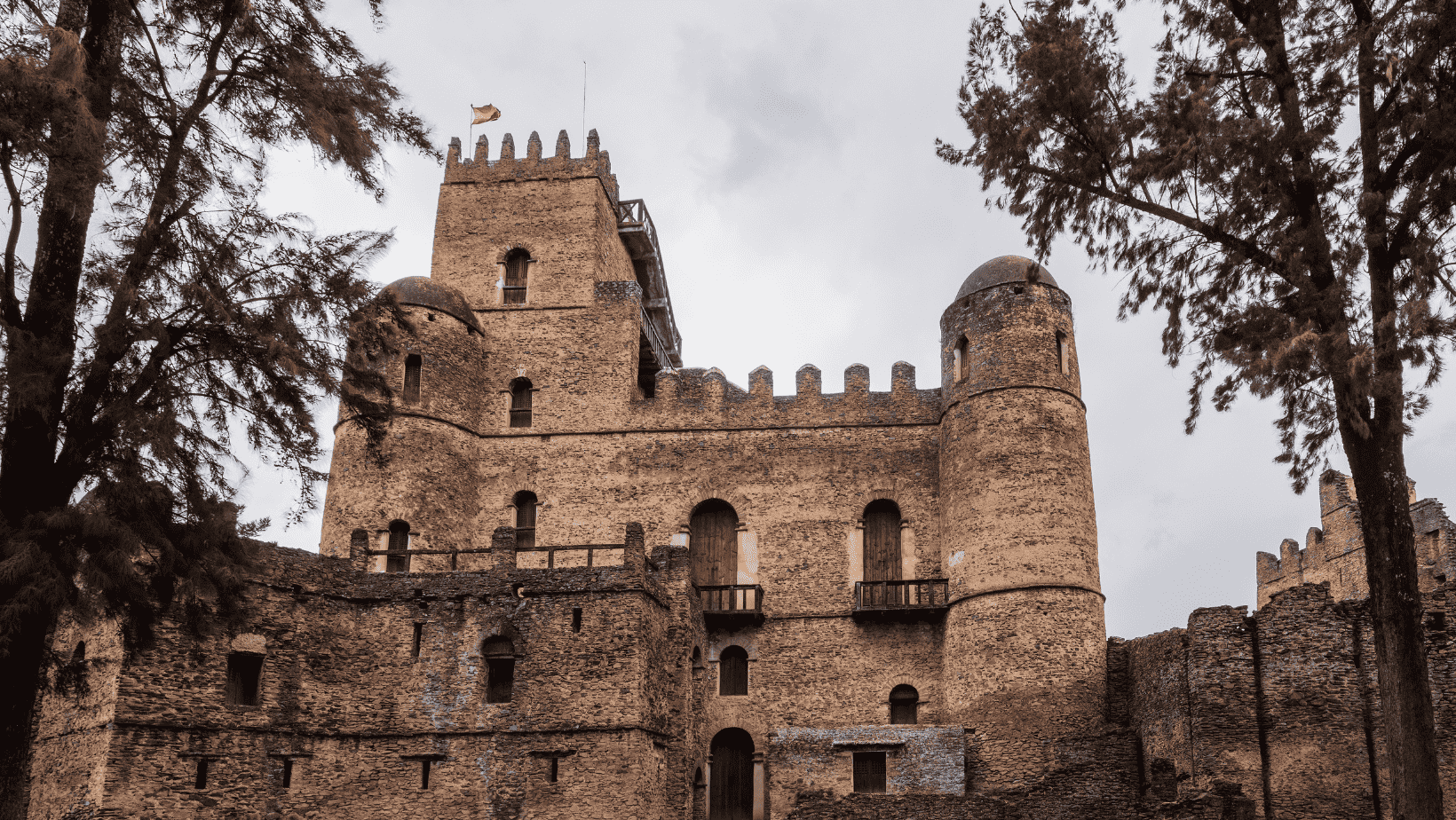
Gondar and the Simien Mountains are about 100 km apart and almost nobody visits one without the other. Gondar has the airport, the hotels and the castles. The Simien has the escarpment and the geladas. Gondar is where you sleep before and after, and the park is the reason you came north of Bahir Dar.
Three days covers both at a sensible pace: a day on the castles, a day in the park, and a day of travel split either side. Four is better if you want to walk rather than look.
Gondar is the gateway. Debark, the town at the Simien park headquarters where permits are issued and scouts assigned, is about 100 km from Gondar. There is no realistic way to reach the park that does not pass through.
That geography is why the two appear on every northern itinerary as a pair, including our own seven-day historic route. It is also why treating them as one destination with two halves is a better way to plan than treating them as two stops.
The contrast is the point. Gondar is seventeenth-century imperial architecture, dense and built. The Simien is Afroalpine, empty and vertical. Doing them back to back is the most abrupt change of register on the northern circuit.
Fasil Ghebbi, the Royal Enclosure, is the reason Gondar exists on itineraries. It is a walled compound of castles, palaces and halls raised by successive emperors from the seventeenth century, and it looks unlike anything else in the region. Emperor Fasilides built the earliest and largest of them.
Debre Berhan Selassie is the church people remember. Its ceiling is covered with rows of winged angel faces looking down, and its walls carry murals of biblical scenes. It survived when much of Gondar did not.
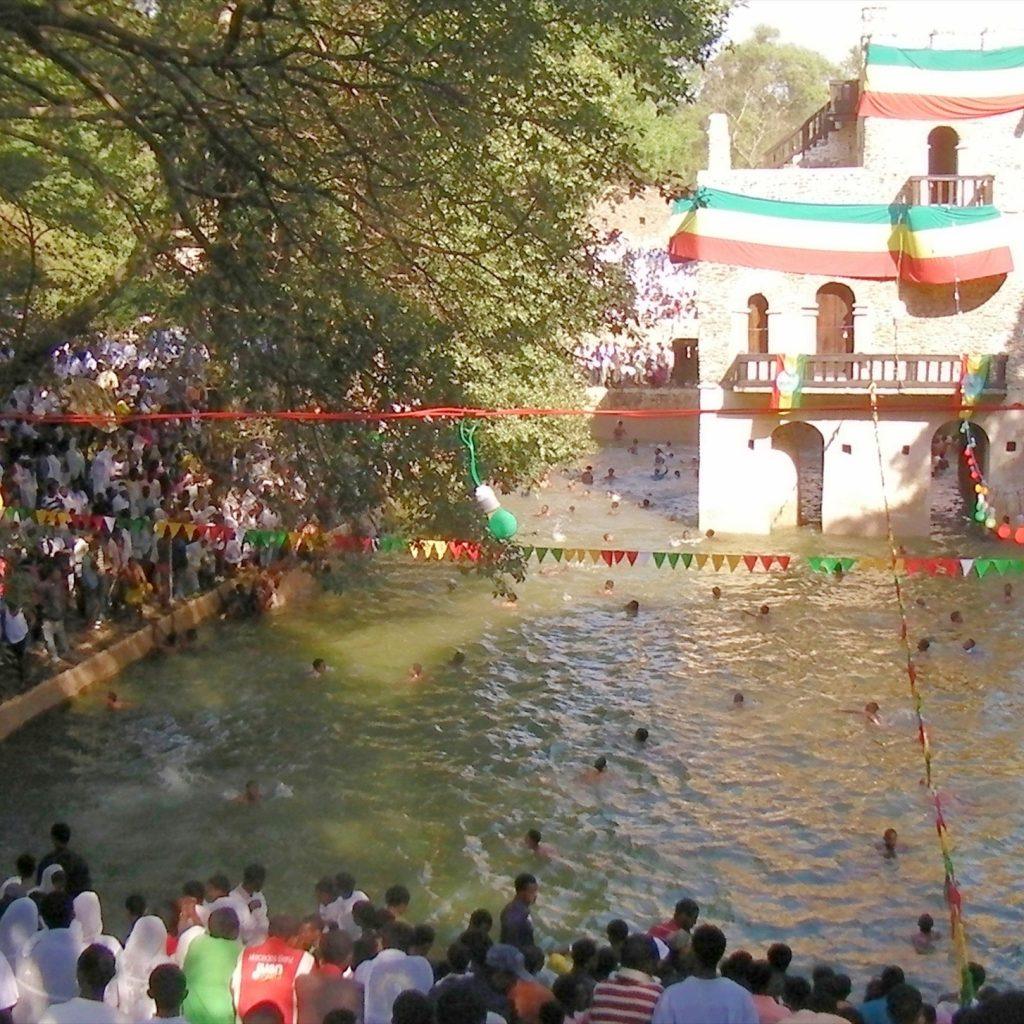
Fasilides' Bath is a stone pool a short drive from the centre, filled once a year for Timkat on 19 January, when it becomes the focus of the celebration and people enter the water. Outside January it is an empty pool with trees growing through the walls, and still worth the visit for that alone.
Allow a full day. Half a day covers the enclosure and the church at a brisk pace and leaves the bath out.
From Debark, a day in the park gets you escarpment viewpoints and gelada troops, reliably. The geladas are grazing primates found only in the Ethiopian highlands, they live in troops that can run to hundreds, and they are relaxed enough around people that you sit near them rather than watch through binoculars.
What a day does not get you is the range. The classic viewpoints, Imet Gogo at about 3,926 metres and the Bwahit pass at about 4,200 metres, are trekking days rather than drive-up stops. Ras Dashen, at about 4,550 metres the highest point in Ethiopia, needs the better part of a week on its own.
If walking is the point rather than the view from the road, our Simien trekking routes guide compares the three, five and eight day options and what each one asks of you.
Two rules that are not optional. An armed community scout is compulsory for every visitor, including day visitors who never camp. A guide is required on top of that for any multi-day trek. Both are arranged at Debark along with the permit.
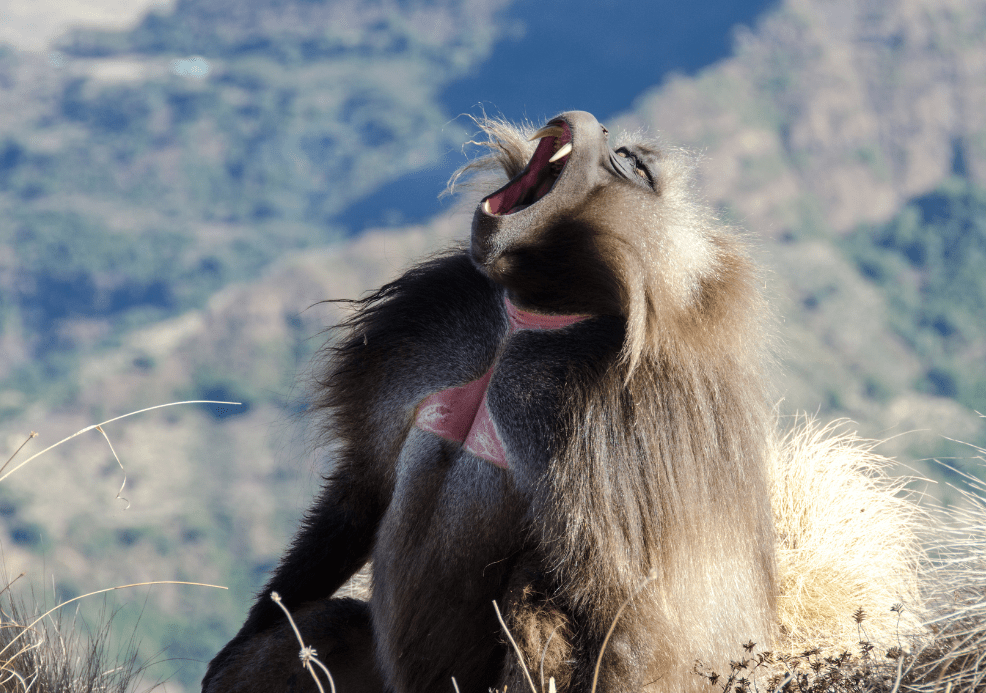
Gelada. Certain, on any route length. The Simien holds the largest population.
Walia ibex. Endemic to the Simien and found nowhere else on earth, most often on the crags around Chennek. That is deeper into the park than a day trip from Debark usually reaches.
Lammergeier. The bearded vulture works the escarpment updraughts and is a regular sight from the cliff edges.
Ethiopian wolf. Present, and genuinely uncommon here. Fewer than 500 adults survive in total and the Simien holds a small fraction of them. If a wolf is the reason for your trip, the Bale Mountains are the better bet by a wide margin.
| Day | Where | What |
|---|---|---|
| Day 1 | Arrive Gondar | Fasil Ghebbi and Debre Berhan Selassie. Fasilides' Bath if time allows |
| Day 2 | Gondar to Debark, into the park | About 100 km. Permits and scout at Debark, then escarpment viewpoints and geladas |
| Day 3 | Simien, then back to Gondar | A second park morning, or an early return and the rest of Gondar |
| Day 4 | Optional | A proper walking day in the park, or fly onward |
Budget more time for the Gondar to Debark leg than the distance suggests. Published times for those 100 km run from about 1.5 hours to 3, which tells you the road surface and traffic decide it rather than the kilometres. Plan on the longer figure and be pleased if it is quicker.
Gondar sits above 2,100 metres. Debark is higher. The park viewpoints are higher again, and Bwahit is above 4,000.
This is not a trekking article and most people doing the Gondar and Simien pairing are not trekking, which is exactly why it goes unmentioned. Take the first day gently, drink more water than feels necessary, and do not treat a park day as a rest day.
October to March. The kiremt rains run June to September and the escarpment spends much of that period in cloud, which removes the reason most people come.
January is the exception worth planning around. Timkat on 19 January turns Fasilides' Bath into the centre of the celebration and fills Gondar. That is either the reason to come or the reason to shift your dates, and accommodation books out well ahead either way. Our best time to visit guide sets out the calendars.
How far is the Simien Mountains from Gondar?
About 100 km to Debark, the town at the park headquarters where permits are issued and scouts assigned. Published driving times vary widely, from roughly 1.5 hours to 3 for the same distance, so plan on the longer figure.
How many days do you need for Gondar and the Simien Mountains?
Three at a sensible pace: a day on the Gondar castles, a day in the park, and travel split either side. Four lets you add a proper walking day rather than viewpoints from the road.
What is there to see in Gondar?
Fasil Ghebbi, the walled Royal Enclosure of castles and palaces raised from the seventeenth century; Debre Berhan Selassie church, with its ceiling of winged angel faces; and Fasilides' Bath, a stone pool filled once a year for Timkat on 19 January.
Do you need a scout in the Simien Mountains?
Yes. An armed community scout is compulsory for every visitor, including day visitors who never camp. A guide is required in addition for any multi-day trek. Both are arranged at Debark with the park permit.
Can you see the Simien Mountains in one day?
You can see the escarpment viewpoints and gelada troops in a day from Debark, and that is what most people on the northern circuit do. You cannot see the range itself. Imet Gogo, the Bwahit pass and Ras Dashen are trekking days.
Will I see geladas in the Simien Mountains?
Almost certainly. They are the most reliable wildlife sighting on the northern circuit, they graze in the open rather than in trees, and troops can number in the hundreds. Walia ibex are harder and usually seen deeper in, around Chennek.
What is the best time to visit Gondar and the Simien?
October to March, after the kiremt rains have finished. Cloud sits on the escarpment through June to September. January brings Timkat, which is spectacular at Fasilides' Bath and fills the town.
The pairing works at three days and it works at eight. The difference is entirely how much of the Simien you want on foot.
Send us your dates and your walking appetite and we will tell you what fits. We reply within a maximum of two hours, and you will have a detailed itinerary and a quote within 24 hours. Our seven-day northern route includes both, and the ten-day version gives the park more room.
