---------------------------------
Address
Phone: +251 988 111 222
Need help or have a question?
Contact us at: info@driveethiopia.com
Addis Ababa, Ethiopia
---------------------------------
Address
Phone: +251 988 111 222
Need help or have a question?
Contact us at: info@driveethiopia.com
Addis Ababa, Ethiopia


All eleven churches named and described, why the count varies, what a ticket covers, and the shoes-off rule that catches visitors out.
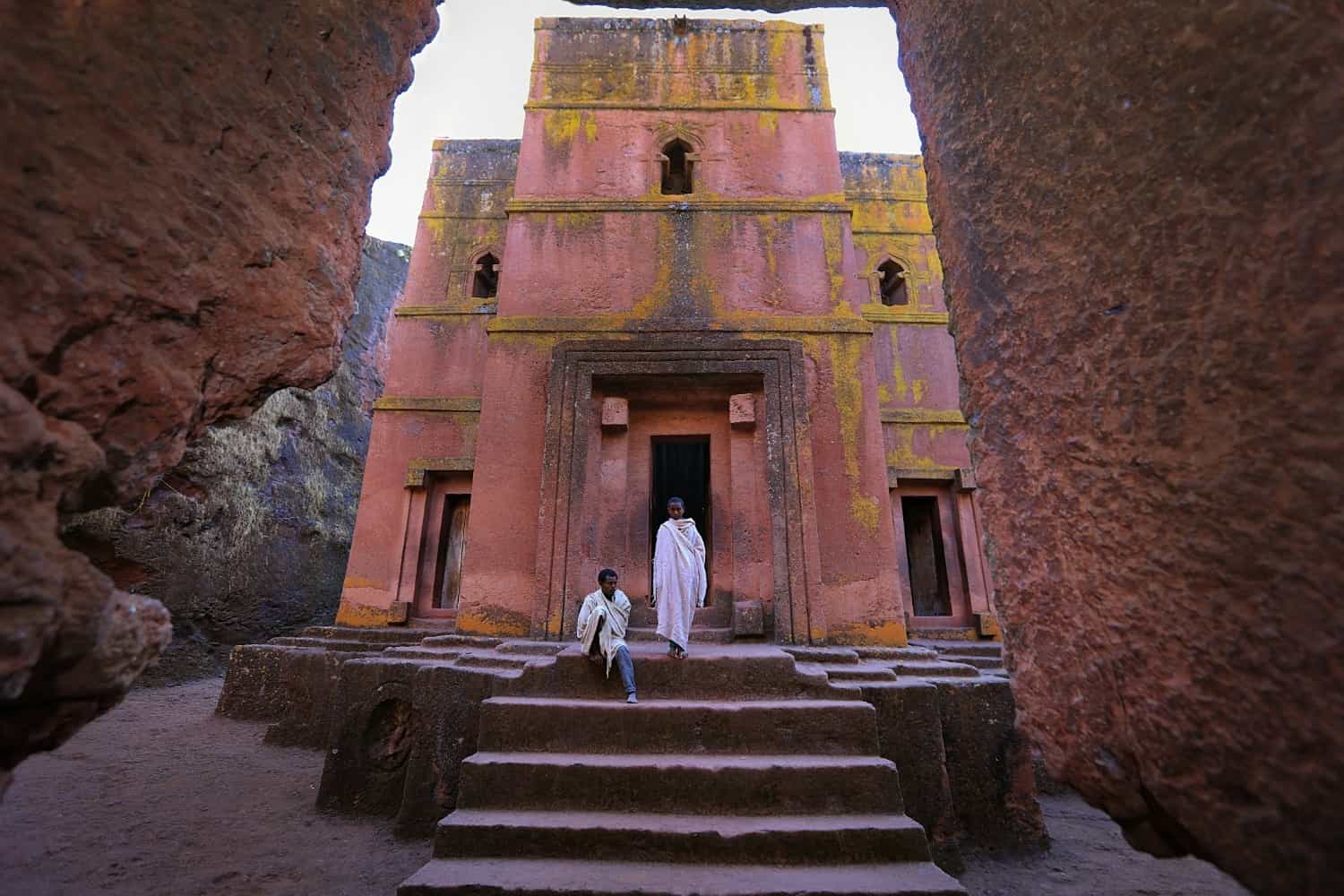
Lalibela has eleven rock-hewn churches, carved down into the volcanic rock rather than built up from it, in the late twelfth and early thirteenth centuries. They sit in two connected clusters either side of a channel called the Jordan, with a single church, Bete Giyorgis, standing apart from both. UNESCO inscribed the site in 1978, among the first anywhere in Africa.
They are not ruins. All eleven are working churches with a resident clergy and a congregation, which is the thing that most changes how a visit feels.
This page covers what each church is, how the site is laid out, and the practical rules that catch people out. For where to stay, how to get there and how the town fits a wider trip, see our Lalibela destination guide.
Before the list, the thing that confuses everyone. You will see the number given as eleven almost everywhere, and then find sources that name ten or twelve.
The reason is Bete Golgotha Mikael, which is a paired church under one roof. Some counts treat Golgotha and Mikael as two, some as one. Bete Lehem, a small structure associated with Abba Libanos, is also counted differently depending on who is counting.
Eleven is the standard figure and the one the site itself uses. It is worth knowing why it moves, because a guide telling you there are twelve is not necessarily wrong.
Five churches, on the north side of the channel, connected by trenches and tunnels.
Bete Medhane Alem, the House of the Saviour of the World. The largest monolithic rock-hewn church in the world, surrounded by rectangular columns cut from the same rock. If you see one church in Lalibela, it is usually this or Bete Giyorgis.
Bete Maryam, the House of Mary. Generally held to be the oldest of the group and the most densely decorated inside, with carved and painted detail across the columns and ceiling. It is also the most actively used by worshippers, so it is the one where you are most likely to be standing among a congregation rather than looking at architecture.
Bete Golgotha Mikael, the paired church described above. Golgotha holds the tomb attributed to King Lalibela himself, and contains carved relief figures that are unusual in Ethiopian church art. Access is restricted in part.
Bete Meskel, the House of the Cross. Small, cut into the north wall of the courtyard rather than freestanding.
Bete Denagel, the House of Virgins. Also small, and a chapel in scale rather than a full church.
Five churches on the other side, reached through the tunnels and trenches that connect the site.
Bete Amanuel, the House of Emmanuel. The finest carving on the site by most assessments, its exterior cut to imitate the layered wood-and-stone walling of Aksumite building. If you care about how they were made, this is the one to spend time on.
Bete Gabriel-Rufael, the House of Gabriel and Raphael. Reached across a walkway above a deep trench, and unusual in plan, which has led to suggestions it served a purpose other than a church originally.
Bete Abba Libanos, the House of Abbot Libanos. Cut so that it remains attached to the rock at the roof rather than freed on all sides, which makes it a useful illustration of how the carving was done.
Bete Lehem, the House of Holy Bread. A small structure associated with Abba Libanos, and part of why the count varies.
Bete Qeddus Mercoreus, the House of Saint Mercoreos. Partly collapsed and less visited than the rest.
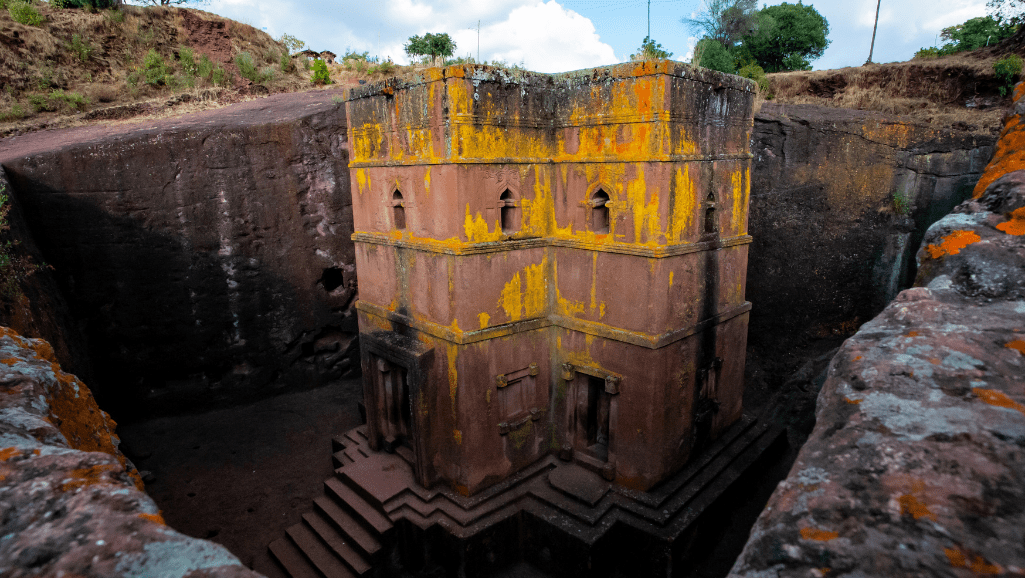
The one everybody photographs, and the one that stands alone.
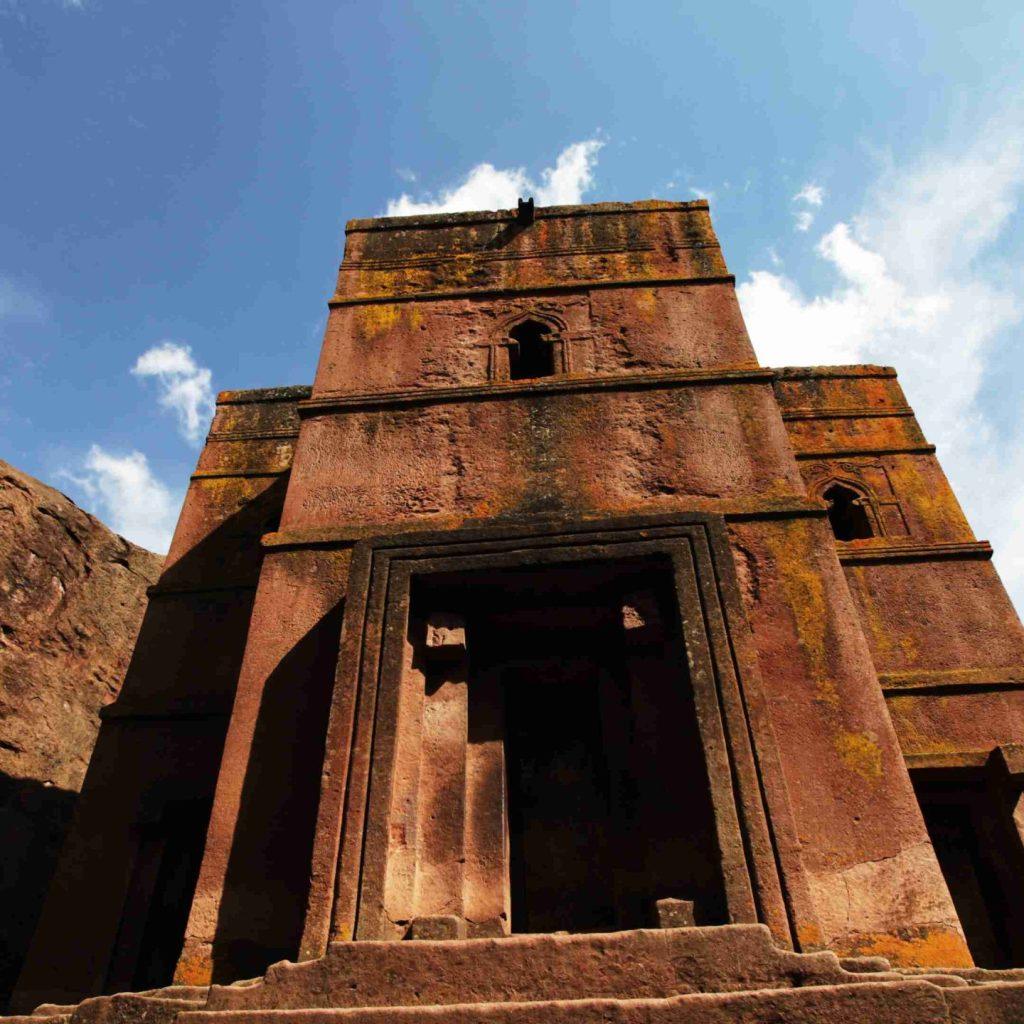
Bete Giyorgis is cut in the shape of a Greek cross, sunk into a rectangular pit about twelve metres deep, freestanding on all sides. It is generally considered the best preserved of the eleven and among the last carved, which is the likeliest explanation for its condition.
The photograph everybody takes is from the rim, looking down onto the roof, where the cross shape reads clearly. To go inside you walk down a trench cut into the rock. Both are worth doing and they are quite different experiences.
Give it its own visit rather than tacking it onto the end of a group. The light on the rim changes what the shot looks like, and it is the one church where the approach matters as much as the interior.
One ticket covers all eleven churches. You buy it once, at the ticket office, not at each church. It is valid for more than a single day, which matters because seeing all eleven properly in one go is a lot.
We are not going to print a figure. Published amounts in circulation differ by a factor of two, and the reason is structural rather than sloppy reporting: the fee is set by the church authorities in Lalibela rather than by a national body, so it is not fixed by statute and it has been revised more than once. Confirm the current amount with your operator or at the office before you go, and bring cash.
That is also the answer to the most common complaint about Lalibela, which is that people arrive expecting one number and find another. It is not a scam. It is a locally set fee.
Shoes come off at every church, all eleven of them, so you will do it eleven times in a day. The floors are stone and carpet, which makes a pair of socks the single most useful thing in your bag. Our Ethiopia packing list covers what else the churches ask of you.
Cover shoulders and knees. This is a working religious site with a congregation present, not a monument.
A guide is effectively necessary, and not for the reason you think. The interiors are dark, much of what matters is unlabelled, and the connective logic of the site, which trench leads where and what the layout represents, is not self-evident from walking it.
There is a midday break. The churches generally close for a period in the middle of the day and reopen in the afternoon. Plan around it rather than turning up at one o'clock.
Services run in the early morning. If you want to see the churches in use rather than as architecture, that is when. It is also the best light for Bete Giyorgis from the rim.
Photography inside is restricted in places, and flash is a problem for painted surfaces. Ask rather than assume.
A full day covers the eleven at a brisk pace. Most itineraries split it into the northern group in the morning and the southeastern group plus Bete Giyorgis in the afternoon.
Two days is the better answer if you have them. It lets you take the early morning service at least once, revisit Bete Giyorgis at a different hour, and slow down inside Bete Maryam and Bete Amanuel rather than moving through them.
Add a day for what is outside the town. Asheton Maryam and Yemrehanna Kristos are both within reach of Lalibela and both are worth the trip, the latter being a wholly different kind of building.
If you are weighing Lalibela against other Ethiopian destinations rather than fitting it in, our comparison of Lalibela, the Simien Mountains and the Danakil sets out who each one suits.
The historic north is dry from October to February, and January brings Genna, the Ethiopian Christmas on 7 January, which fills Lalibela and is the single busiest date in its year. Accommodation books out well ahead for it.
That is either the reason to come or the reason to avoid the date, and it depends entirely on whether you want the churches full or quiet. Our best time to visit guide covers how this fits the rest of the country.
How many rock-hewn churches are there in Lalibela?
Eleven is the standard figure. The number occasionally appears as ten or twelve because Bete Golgotha Mikael is a paired church that some sources count as two, and Bete Lehem is sometimes counted with Bete Abba Libanos rather than separately.
How many days do you need in Lalibela?
One full day covers all eleven churches at a brisk pace, usually the northern group in the morning and the southeastern group with Bete Giyorgis after lunch. Two days is better, because it lets you attend an early morning service and return to Bete Giyorgis in different light. A third day allows Asheton Maryam or Yemrehanna Kristos outside the town.
Who built the churches at Lalibela and when?
They are attributed to King Gebre Meskel Lalibela of the Zagwe dynasty, who ruled around 1181 to 1221, placing the carving in the late twelfth and early thirteenth centuries. They were cut downward into volcanic rock with hammers and chisels rather than built up in blocks.
How much does it cost to enter the Lalibela churches?
One ticket covers all eleven and is valid for more than one day. We do not publish the amount because it is set by the church authorities in Lalibela rather than nationally, it has been revised more than once, and figures currently in circulation differ by a factor of two. Confirm it with your operator before travelling and bring cash.
Do you have to take your shoes off in the Lalibela churches?
Yes, at every church, so eleven times over a full day. The floors are stone and carpet, which makes a pair of socks the most useful thing in your bag. Shoulders and knees should also be covered, because these are working churches with a congregation rather than monuments.
Which is the most impressive church in Lalibela?
Bete Giyorgis is the most photographed, cut as a Greek cross in a pit about twelve metres deep and freestanding on all sides. Bete Medhane Alem is the largest monolithic rock-hewn church in the world. For carving quality, Bete Amanuel is usually judged the finest, its exterior cut to imitate Aksumite layered walling.
Is Lalibela a UNESCO World Heritage Site?
Yes, inscribed in 1978, among the first sites anywhere in Africa to be listed.
Can you visit Lalibela in one day?
You can see the eleven churches in a day, but it is a full one and it leaves no room for an early service, a second look at Bete Giyorgis, or the churches outside town. Most people who have done it in a day say they would give it two.
Lalibela is usually one stop on a northern circuit rather than a destination on its own, and the question worth asking is not whether to go but how many days to give it and what to put either side.
Tell us your dates and what else you want to see and we will tell you how it fits, including whether your dates land on Genna. We reply within a maximum of two hours, and you will have a detailed itinerary and a quote within 24 hours. The historic north tour is the circuit Lalibela sits on.
