---------------------------------
Address
Phone: +251 988 111 222
Need help or have a question?
Contact us at: info@driveethiopia.com
Addis Ababa, Ethiopia
---------------------------------
Address
Phone: +251 988 111 222
Need help or have a question?
Contact us at: info@driveethiopia.com
Addis Ababa, Ethiopia


Two nights suits most people. A hydro station has taken most of the falls' flow since 2003, so the dry-season half day is the one to cut.
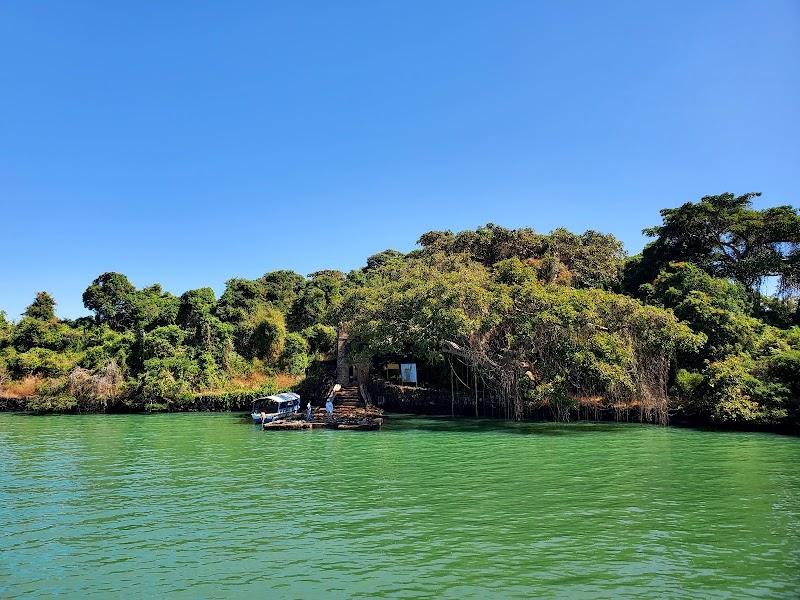
Two nights is the right answer for most people: one day for a Lake Tana boat trip and the city, one for the Blue Nile Falls. On a tight northern route you can compress it into a single packed day, and if you are travelling in the dry season you may want to, for a reason almost nobody mentions before you book.
The falls are not what they were. Since 2003 a hydroelectric station has taken most of the flow out of them except during the rainy season. They run from a trickle in the dry months to over 400 metres wide when the rains are in, over a drop of 42 metres. Which means the months that suit the rest of northern Ethiopia are the months the falls are at their weakest, and the month the falls are spectacular is the month the roads are worst.
That tension is the whole planning problem for Bahir Dar. Here is how to resolve it.
Bahir Dar sits at 1,820 metres where the Abbay leaves Lake Tana, which makes it the one place in Ethiopia where you can stand at the start of the Blue Nile. The city is compact and walkable, with a waterfront and a market, and it is one of the easier northern stops to reach: domestic flights from Addis Ababa are the fastest route, and by road it is a long day.
| What | How long |
|---|---|
| Lake Tana boat trip, nearest monasteries | Half a day |
| Lake Tana boat trip, reaching the more distant islands | A full day |
| Blue Nile Falls, round trip from Bahir Dar including the walk | Half a day |
| Bahir Dar city, waterfront and market | A few hours, on foot |
Two nights lets you take the boat and the city on one day and the falls on the other without rushing either. One night means choosing between them, or doing both badly.
Fees are charged on arrival at each monastery and at the falls, and there is the boat hire on top. Rates move, so confirm them with us or locally before you travel rather than budgeting off a figure you read somewhere.
This is the part worth reading twice, because it decides your itinerary.
The Blue Nile Falls are about 30 km south of Bahir Dar. In Amharic they are Tis Abay, "great smoke", and the falls themselves are often called Tis Issat. At full flow they are four streams spread over 400 metres and dropping 42, and the name makes complete sense.
Then in 2003 the Tis Abay II power station came online and diverted most of the river through a tunnel. A journalist who visited that November described a thin ribbon of water down a dark cliff where a curtain half a mile wide had been. Outside the rainy season, that is broadly still the situation: the station takes most of the flow, and what reaches the lip is a fraction of what the photographs show.
So the honest guidance is seasonal:
In the rains, roughly June to September, the falls are genuinely impressive and worth the half day. This is the one time of year they look like the pictures.
In the dry season, roughly October to March, manage your expectations hard. The walk is pleasant, the gorge is real, the old Portuguese bridge is worth crossing, and the water may be modest. If your northern route is tight, this is the half day to cut.
The awkward part is that October to March is exactly when Bahir Dar and the northern circuit are otherwise at their best, with clear skies and easier roads. Nobody gets both. Decide which you came for.
The lake is the stronger half of Bahir Dar regardless of season, and it is what makes two nights worthwhile rather than one.
Painted monastery churches sit on the islands and on the Zege peninsula, round thatched walls covered in bright Biblical murals, most of them still in use. A half-day boat trip reaches the closest of them. The ones people usually name:
Ura Kidane Mehret, on the Zege peninsula, the most visited and the one most often photographed for its murals.
Azwa Maryam, also on Zege, usually paired with Ura Kidane Mehret on the same half-day run.
The more distant islands, including Kebran Gabriel, Narga Selassie, Daga Estifanos and Tana Qirqos, which need the full day rather than the half.
Hippos, which sit mostly near the Blue Nile outflow, so the stretch of water closest to the city is where you are most likely to see them.
Access rules differ between monasteries and some do not admit women. That is worth asking about before the boat leaves rather than at the jetty, and any operator arranging the trip should tell you without being asked.
Cut to a single day if any of these apply.
You are travelling October to March and the falls are not the reason you came. Take the boat, see the monasteries, walk the waterfront, fly out the next morning.
You are fitting Bahir Dar between Gondar and Lalibela on a week-long route and something has to give. Bahir Dar compresses better than Lalibela does.
You are not especially drawn to church murals. The monasteries are the point of the lake, and if religious art is not your thing the half day is enough to say you saw it.
Give it three nights if you want the distant islands as well as the close ones, or if you are here in the rains and want the falls without the risk of one bad weather day taking them away.
Bahir Dar is usually the second or third stop on the historic circuit, and it pairs naturally with Gondar, which is a few hours north and is castles rather than water. Our guide to Gondar and the Simien Mountains covers that leg and what it needs.
For the whole circuit in one trip, our Undiscovered Ethiopian History route runs Addis Ababa, Bahir Dar, Gondar, the Simien Mountains and Lalibela, which is the sequence most people end up wanting once they see the distances.
If you are still working out the shape of the whole trip, how many days you need in Ethiopia sets out what a week and a fortnight each get you, and when to visit has the season detail that the falls question depends on.
For the detail on each place, we have full guides to Bahir Dar and Lake Tana and to the Blue Nile Falls.
How many days do you need in Bahir Dar? Two nights suits most travellers: one day for a Lake Tana boat trip and the city, one for the Blue Nile Falls. One night works if you skip the falls, which is a reasonable choice in the dry season. Three nights lets you reach the more distant lake monasteries.
When do the Blue Nile Falls have the most water? During the rainy season, roughly June to September. Since 2003 a hydroelectric station has taken most of the flow out of the falls outside the rains, so they vary from a trickle in the dry months to over 400 metres wide when the rains are in, over a 42 metre drop.
Are the Blue Nile Falls worth visiting in the dry season? The walk, the gorge and the old Portuguese bridge are still worth a half day if you have it, but the water will be modest and it will not resemble the photographs. On a tight northern itinerary between October and March, this is the half day to cut.
How far are the falls from Bahir Dar? About 30 km south. Allow half a day for the round trip including the walk to the viewpoints.
Which Lake Tana monasteries can you see in half a day? The closest ones, typically Ura Kidane Mehret and Azwa Maryam on the Zege peninsula. Reaching the more distant islands such as Kebran Gabriel, Narga Selassie or Daga Estifanos needs a full day on the water.
Can you see hippos on Lake Tana? Hippos are present and sit mostly near the Blue Nile outflow, which is the stretch closest to Bahir Dar. Sightings are not guaranteed on any given trip.
Is Bahir Dar worth including at all? Yes, for the lake rather than the falls. It is the one place you can stand where the Blue Nile leaves Lake Tana, the painted island churches are unlike anything else on the circuit, and it is among the easiest northern stops to reach by air.
The Bahir Dar question is really a season question, and it is the kind of thing worth settling before you book flights rather than after.
Tell us your dates and the places on your list, and we will tell you honestly whether the falls will be running when you arrive and whether Bahir Dar deserves one night or two on your route. You will have a reply within two hours and a detailed itinerary with a quote within 24 hours.
Plan your northern route with us, or if you would rather drive it yourself, see our car rental options.
