---------------------------------
Address
Phone: +251 988 111 222
Need help or have a question?
Contact us at: info@driveethiopia.com
Addis Ababa, Ethiopia
---------------------------------
Address
Phone: +251 988 111 222
Need help or have a question?
Contact us at: info@driveethiopia.com
Addis Ababa, Ethiopia


Why Konso is a UNESCO site: the stone terraces, walled towns, mora and waga grave markers explained, plus New York and visiting from Arba Minch.

Konso holds UNESCO World Heritage status for its stone. Over more than 400 years, or 21 generations, the Konso people have built dry-stone terraces across steep, dry hillsides to hold soil and water, and walled towns on the hilltops above them. UNESCO inscribed the 55 square kilometre landscape in 2011 as a living cultural tradition, under criterion (iii) for the Konso's intensive and systematic use of stone, and criterion (v) as an outstanding example of traditional human settlement.
People farm the terraces and live in the walled towns today, which is the point of the listing.
Konso sits about 87 kilometres by road south of Arba Minch, on the way to Jinka and the Omo Valley. Many southern itineraries pass through it on the way. This guide is for anyone who wants to know what they are looking at.
| Name | What it is |
|---|---|
| Paleta | A walled town, built on a hilltop for defence, inside one to six rings of dry-stone walls |
| Terraces | Stone-reinforced fields on the slopes, some up to 8 metres high, that stop the soil washing away |
| Mora | A communal space inside a walled town, used for gatherings and ceremonies. Some towns have as many as 17 |
| Waga | Carved wooden grave markers commemorating respected men, often grouped with figures of their wives and adversaries |
| Daga-hela | Generation-marking stones, quarried, moved and raised in a ritual process |
| Karat | The main town of Konso, also spelt Karati, and where visits are arranged |
| New York | Eroded red sandstone pinnacles near Gesergiyo, named by the Konso for their resemblance to skyscrapers |
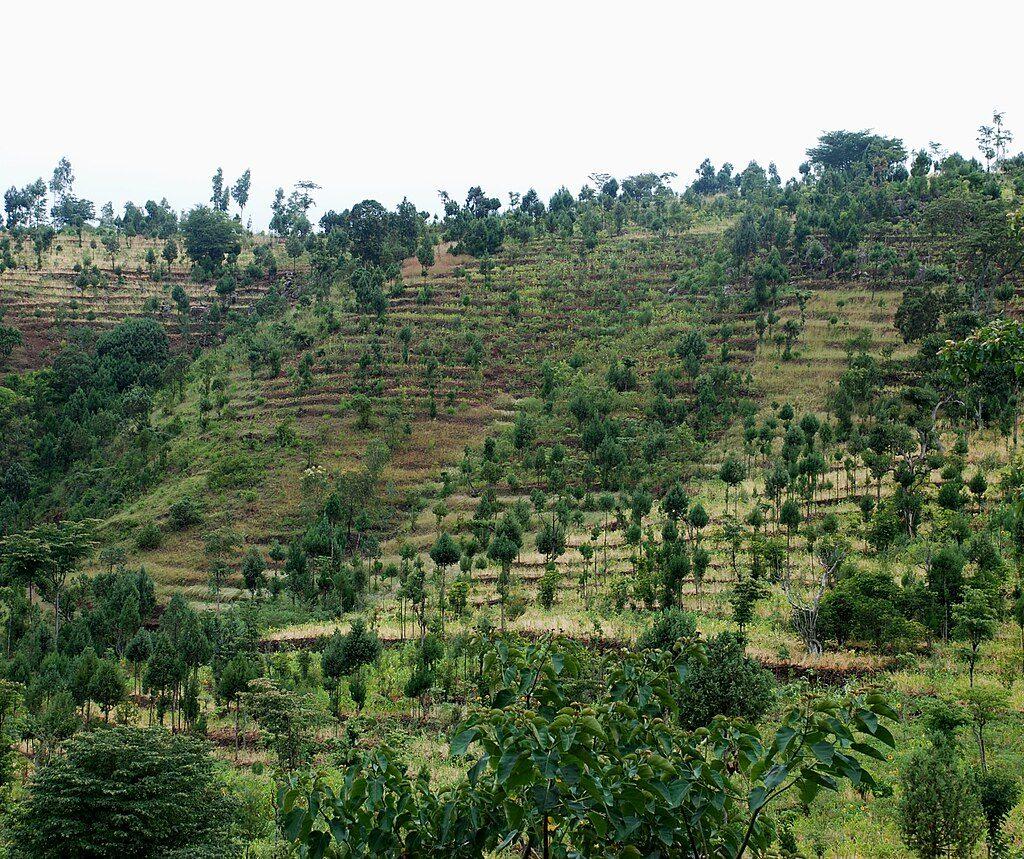
The terraces are the reason the landscape exists in this form. Konso is dry, the slopes are steep, and rain that runs straight off a hillside takes the soil with it. The terraces stop that. They are cut into the slopes and reinforced with stone, some of them as much as 8 metres high, and building and maintaining them takes the work of whole families.
What grows on them is mostly sorghum and maize as staples, with cotton and coffee as cash crops. Seen from the road, the terracing runs across whole hillsides, and it is easy to mistake the scale for natural contour until you look at a single wall up close.
The Konso built their towns on high ground chosen for defence. A paleta sits inside one to six concentric rings of dry-stone walls, mostly of basalt boulders, and the oldest inner walls can stand up to 4 metres high and 2.5 metres thick. Inside, the houses are packed tightly together.
The open spaces inside the walls are the mora. They are the town's communal and ceremonial places, and UNESCO notes that they still keep a central role in Konso life. Some towns have as many as 17 of them. Your guide will show you the mora in the town you visit. They belong to the people who use them, so follow your guide's lead on where you can stand and sit.
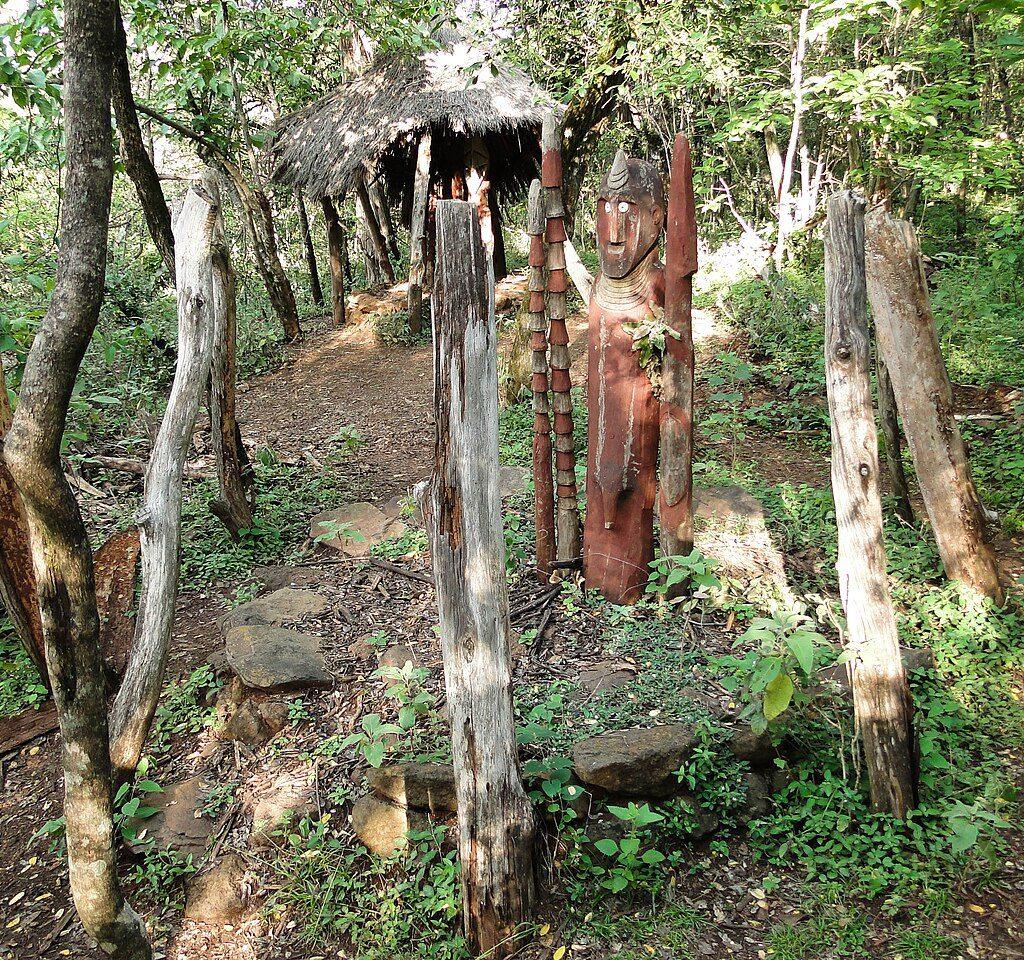
The waga are the most distinctive thing in Konso and the most easily misunderstood. They are carved wooden statues raised to commemorate respected men, traditionally a man who had killed an enemy or a dangerous animal. A group of waga tells a story: the man himself, his wives, and sometimes the adversaries he overcame, along with important events in his life.
UNESCO describes them as a living testimony to funerary traditions that are on the verge of disappearing. Some are now kept in the museum in Karat.
The waga also have a second life you should know about. Small waga are carved specifically for sale to visitors. Buy those if you want one. Never buy anything offered as an old grave marker, because a real waga belongs on a grave.
The Konso organise their society through a generation system, and they mark the passing of each generation by raising a stone. These daga-hela are quarried, carried and set upright in a ritual process. UNESCO describes this tradition as what makes the Konso one of the last megalithic peoples, meaning a living culture that still raises standing stones.
Your guide can point out the generation markers in the towns you visit and explain how the generations are counted.
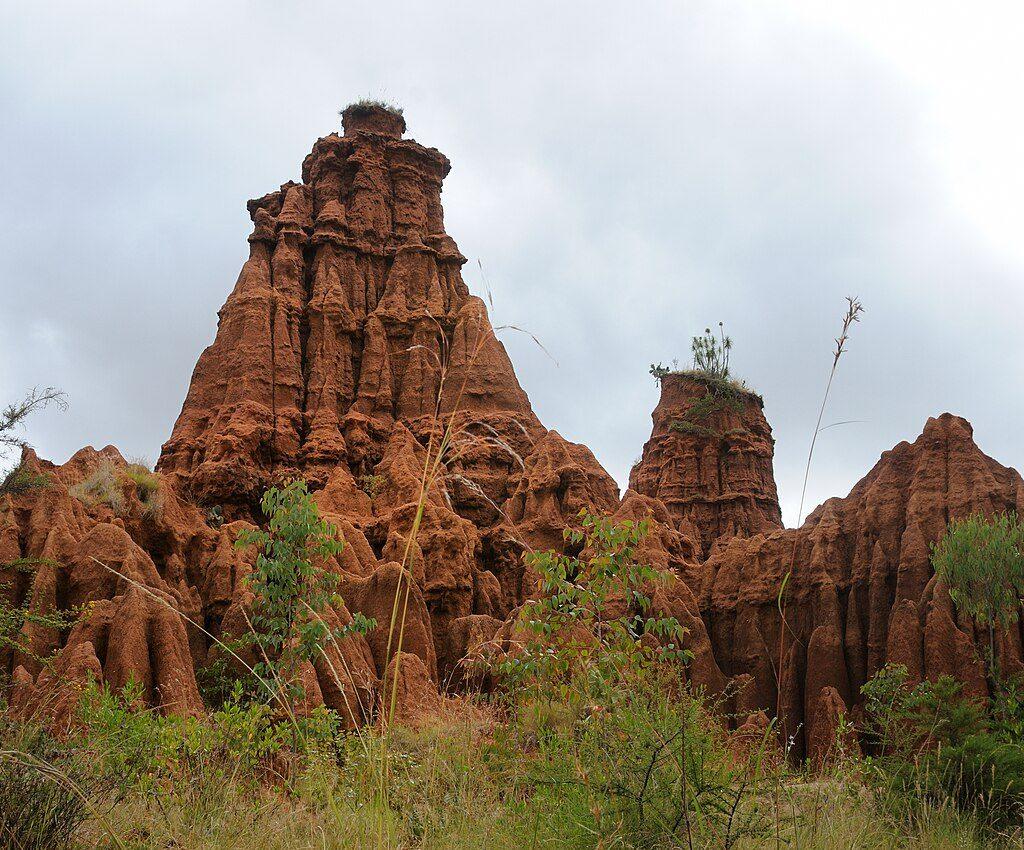
A short drive from the walled towns, near the village of Gesergiyo, seasonal rain cutting through an otherwise dry ravine has eroded red sandstone into tall pinnacles and deeply scored walls. The Konso call the place New York, because the pinnacles reminded people of skyscrapers. A local legend ties the formations to the Konso sky god, searching for a buried sacred drum.
It is a geological site rather than a cultural one, and it makes a good contrast to the villages. The tourist information centre in Karat can include it in a walk.
Konso is about 87 kilometres by road south of Arba Minch. Karat, the main town, is where every visit starts.
All visitors report to the Konso Tourist Information Centre in Karat, pay the entrance fee and take a compulsory local guide before visiting any of the traditional villages. The villages are people's homes, and the guide is how a visit is arranged with them. We don't publish the fee, because it is set locally and changes. Ask us and we will confirm the current figure.
The villages visitors are most often taken to are Mecheke, Dokatu, Gamole and Buso. Mecheke, on a hilltop with groups of waga, is one of the oldest walled towns, with more than 400 years of history. The centre can also arrange longer walks that take in several villages, the Doha hot springs and the Gesergiyo formations.
How long to allow:
Past Konso the road to Jinka, about 151 kilometres further on, is where a 4×4 stops being optional. Our guide to vehicles for each route explains why.
Konso is a working farming community, and a few things matter:
Our responsible guide to the Omo Valley covers the same questions further south.
The Konso area has seen serious conflict and land disputes in recent years. In 2022 the UN described Konso as a priority hot spot because of continuing conflict and adverse weather.
As of 25 September 2026, the UK Foreign, Commonwealth and Development Office does not advise against travel to Konso. In the southern regions its advice covers only the areas within 10 kilometres of the borders with South Sudan and Kenya. Local conditions can change faster than published advice, so check your own government's current advice close to your trip, and ask us about the situation on the ground when you enquire.
For its stone. The Konso have built dry-stone terraces and walled hilltop towns over more than 400 years, or 21 generations. UNESCO inscribed the 55 square kilometre landscape in 2011 as a living cultural tradition, for its intensive use of stone and as an outstanding example of traditional human settlement.
Carved wooden grave markers that commemorate respected men, traditionally a man who had killed an enemy or a dangerous animal. A group of waga can show the man, his wives and his adversaries. UNESCO describes the tradition as on the verge of disappearing.
A communal space inside a walled town, used for gatherings and ceremonies. Mora keep a central role in Konso life, and some towns have as many as 17.
A set of eroded red sandstone pinnacles near Gesergiyo, which the Konso named New York because they resemble skyscrapers. The tourist information centre in Karat can include it in a walk.
About 87 kilometres by road, heading south towards Jinka. Konso is usually visited on the drive from Arba Minch into the Omo Valley.
Yes. All visitors report to the Konso Tourist Information Centre in Karat, pay the entrance fee and take a compulsory local guide before visiting any of the traditional villages.
Konso is on the road south whether you stop or not. Tell us how much time you want there, an afternoon in one walled town or a full day with New York, and we will build it into your southern trip. You will have a reply within two hours and a detailed itinerary with a quote within 24 hours.
See the seven-day Omo Valley tour, read the southern itinerary day by day, or see our guides to Konso and Arba Minch.
