---------------------------------
Address
Phone: +251 988 111 222
Need help or have a question?
Contact us at: info@driveethiopia.com
Addis Ababa, Ethiopia
---------------------------------
Address
Phone: +251 988 111 222
Need help or have a question?
Contact us at: info@driveethiopia.com
Addis Ababa, Ethiopia


A walled old town in eastern Ethiopia, a UNESCO-listed holy city.
Harar Jugol is the fortified old town of Harar in eastern Ethiopia, a UNESCO World Heritage Site enclosed by stone walls. Known as a holy city of Islam with many mosques and shrines, it is famous for its narrow, colourful alleys, lively markets and the nightly feeding of wild hyenas outside the walls.
Harar Jugol is the walled historic core of Harar, a city in eastern Ethiopia roughly 500 km from Addis Ababa. The town sits within defensive stone walls pierced by gates, and inside is a dense maze of narrow lanes, courtyard houses, markets, mosques and shrines. Often described as one of Islam’s holy cities, Harar has been a centre of Islamic learning and trade for centuries. UNESCO inscribed Harar Jugol as a World Heritage Site in 2006, recognising its architecture, urban layout and living cultural traditions. Many travellers simply call it Harar, and the old town is the heart of any visit.
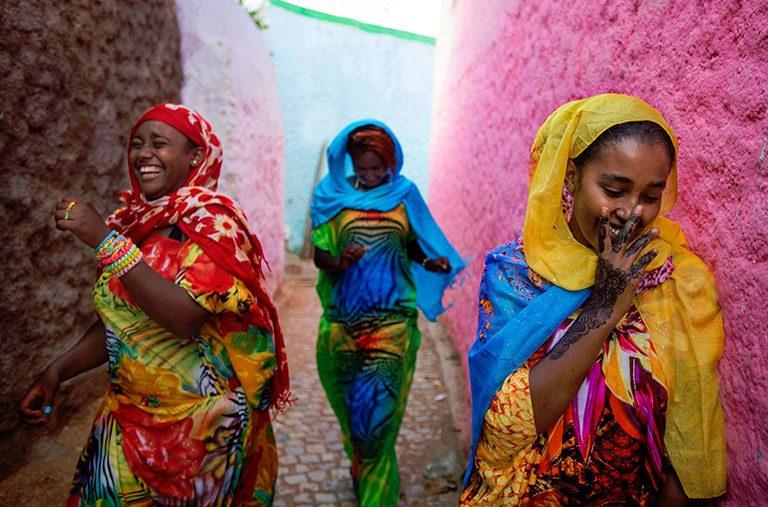
Harar feels distinct from anywhere else in Ethiopia. The colour-washed walls, carved doors and tight alleys reward slow wandering, and the markets are among the most atmospheric in the country. The town is packed with historic mosques and shrines and has a long tradition of religious learning. After dark, the famous hyena men feed wild hyenas by hand just outside the walls, a genuinely unusual sight rooted in local custom. Add the house associated with the French poet Arthur Rimbaud, who lived here, and Harar offers a rich, walkable mix of faith, trade, history and street life.
Harar grew into an important walled city and centre of Islamic scholarship and commerce, linking the Ethiopian highlands with trade routes toward the coast. Its walls and gates defined the old town for centuries, and within them developed a distinctive style of house, mosque and shrine. For a period Harar was an independent city-state before being incorporated into the wider Ethiopian state in the late nineteenth century. The poet Arthur Rimbaud spent time here in the 1880s working as a trader, and a house in the town now carries his name. This layered past underlies the town’s UNESCO recognition.
Harar is best explored on foot, with the old town as your base:
Harar sits in the eastern highlands and is pleasant much of the year, though the drier months make walking the town and travelling there easier. Rains can fall in the spring and again in summer. Religious festivals bring extra life to the town and can be a memorable time to visit, though accommodation fills up, so book ahead.
| Period | What to expect |
|---|---|
| October to February | Generally drier and comfortable for exploring the old town on foot. |
| March to May | Spring rains possible; can be wetter and warmer. |
| June to September | A wetter stretch in parts; still visitable with some rain. |
| Religious festivals | Atmospheric but busy; book accommodation well ahead. |
Harar lies in eastern Ethiopia, roughly 500 km from Addis Ababa near the city of Dire Dawa. Many travellers fly to Dire Dawa and continue to Harar by road, which is the quickest option; confirm current flight schedules and fares, as they change. Driving from Addis Ababa is a long journey usually broken over more than one day, sometimes combined with a stop near Awash; confirm the current drive time and route conditions before setting out.
One full day lets you walk the old town and see the hyena feeding in the evening, but two days is more comfortable and gives time for the markets, a house visit and the Rimbaud house without rushing. Those combining Harar with the eastern route or a wider trip may want longer.
| Trip type | Suggested time |
|---|---|
| Quick visit | 1 day plus the evening hyena feeding |
| Recommended | 2 days for the old town, markets and museums |
| With eastern add-ons | 3 days or more |
Harar has guesthouses and small hotels both inside and just outside the walls, including restored traditional Harari houses that let you stay within the old town’s atmosphere. Inside Jugol, Rewda Waber Harari Cultural Guest House and Amir Cultural Harari Guesthouse are family-run houses in the traditional style, and Harari Guest House sits about 70 metres from the main gate with a handful of rooms. Outside the walls, Harar Ras Hotel and Wonderland Hotel are the larger conventional options. Beds inside Jugol are genuinely few, so book ahead, particularly around festivals, and confirm current rates directly.
Bring comfortable walking shoes for the uneven alleys and modest clothing suited to a conservative, religious town; covering shoulders and knees is respectful, and a scarf is useful for women near religious sites. Pack sun protection for daytime and a light layer for cooler highland evenings, plus a torch for the hyena feeding after dark. Carry small notes for entry fees and the hyena men, and always ask before photographing people, especially at markets and shrines.
Harar is a welcoming town and the old town is generally comfortable to explore, ideally with a local guide who knows the alleys and explain customs. Eastern Ethiopia’s security situation can vary by area and date, so check your government’s current travel advisory before you travel and again near departure. At the hyena feeding, follow the hyena men’s instructions closely, keep a sensible distance, and take normal precautions with valuables in crowded markets.
Harar pairs well with the wider east. Awash National Park, with its wildlife, hot springs and gorge, lies along the road between Addis Ababa and Harar and makes a natural stop. Dire Dawa, the nearby transport hub, is where many travellers arrive by air. With more time and the right planning, adventurous travellers link the east with a trip to the Danakil Depression further north. Addis Ababa is the usual gateway for the whole route.
Harar Jugol is the walled old town of Harar in eastern Ethiopia, a UNESCO World Heritage Site known as a holy city of Islam, with historic mosques, shrines and colourful alleys.
UNESCO inscribed Harar Jugol in 2006 for its distinctive architecture, urban layout within the walls, and living cultural and religious traditions.
They are local men who feed wild hyenas by hand outside the town walls after dark, a long-standing custom that visitors can watch and sometimes take part in for a fee.
Many travellers fly to nearby Dire Dawa and continue by road; driving from Addis Ababa is a long journey usually split over more than one day. Confirm current schedules first.
One full day plus the evening hyena feeding covers the highlights, but two days is more relaxed and allows time for the markets, house-museums and the Rimbaud house.
It is a restored merchant's house associated with the French poet Arthur Rimbaud, who lived and traded in Harar in the 1880s; it is now a small museum.
Modest clothing that covers shoulders and knees is respectful in this conservative, religious town, and a scarf is useful for women near mosques and shrines.
The old town is generally comfortable to explore, ideally with a local guide. As the eastern region's situation can change, check your government's current travel advisory before you travel.
Savanna, a river gorge waterfall and a volcano east of Addis
Read More about Awash National Park →Ethiopia's high-altitude capital, home to Lucy and the gateway to every trip.
Read More about Addis Ababa →Neon sulphur springs, salt flats and a lava lake in Earth's hottest lowland.
Read More about Danakil Depression →